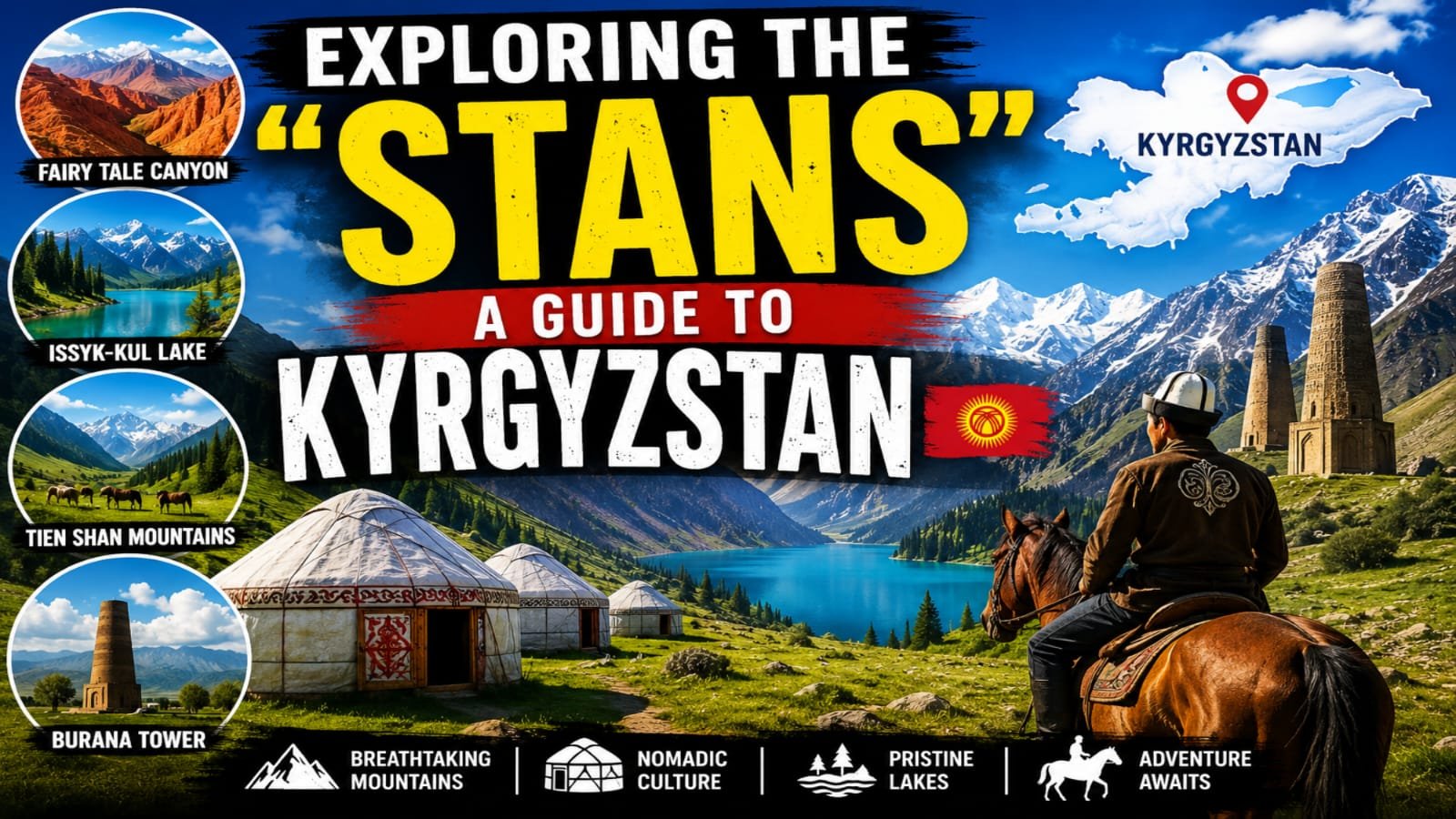
If you’ve ever tumbled down the Central Asian rabbit hole—satellite maps, dusty photos, van windows steaming with tea—you’ve probably noticed something. The region is full of “stans,” Afghanistan. Pakistan, Kazakhstan, and Uzbekistan. (2) Turkmenistan and Kyrgyzstan. The word itself is simple enough: it means land that is bound up with a people. But once you actually go there, “stan” feels less like a label and more like a mood. A vow. A place where your plans are smaller than the horizon. The one that surprised me the most is Kyrgyzstan.
It’s not because it’s flashy—at least not in the way people mean “travel.” Kyrgyzstan is silent. It’s dramatic without being showy. You don’t arrive somewhere, and you just know what to do next. You get there, and you start to figure it out: how to buy bread that looks like it belongs on a sculpture, how to share a ride with someone who speaks just enough English to laugh, and how to read the weather by looking at the mountains instead of your phone.
This guide is a combination of practical advice and the little things you won’t find in brochures. Imagine walking with someone who’s been there and remembers the awkward moments too—because honestly, that’s what makes a trip real.
Kyrgyzstan’s Position among the “Stans”
First, the obvious. Kyrgyzstan is not the largest country in the region and does not possess the tourism infrastructure that, say, Kazakhstan has built. But it has something harder to engineer, something that feels like it takes over your perception: mountains.
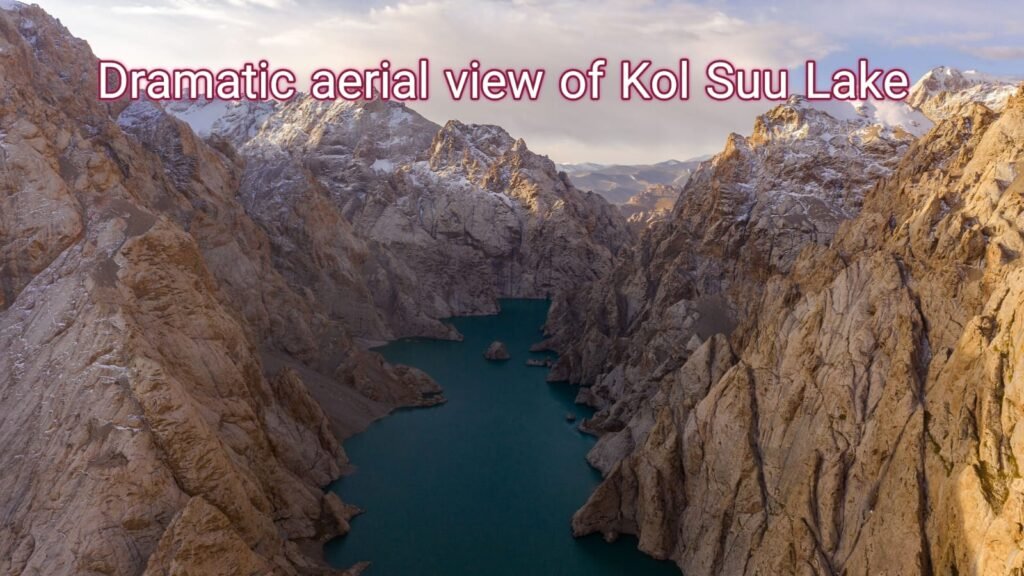
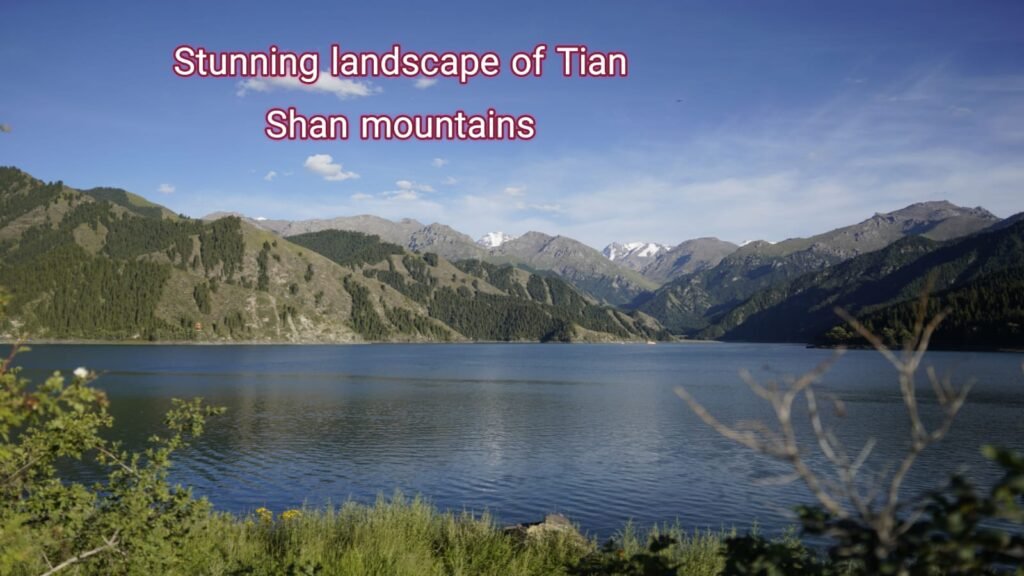
The Tian Shan mountain range runs like a spine through Kyrgyzstan, which is positioned between large neighbors like a folded sheet of paper. This explains why a lot of tourists wind up taking “the same loop”: Bishkek to Ala Archa, then eastward into Issyk-Kul, and finally further into the lowlands where it is difficult to distinguish between grazing life and civilization.
The atmosphere of Kyrgyzstan may seem familiar to those from other “stans”—tea first, hospitality as a reflex, markets where you can acquire anything if you’re patient—but it also feels very different. Even the speed has changed. Here, people don’t seem to be in a rush to prove anything. And to be honest, a significant portion of the attractiveness is that.
First Things First: The Feelings of Kyrgyzstan
Contrast comes to mind when I consider Kyrgyzstan. fairly relaxed cities, particularly Bishkek. Even if you spend hours exploring, you’ll still feel like you’re only getting started. Nature is like a constant reminder of your diminutive size, yet it doesn’t ask for permission. The way people discuss the weather, the roads, and mountain life exhibits a sort of resiliency. There is a utilitarian edge to even their casual talks.
The nation is made up of layers: villages with yurts and horses, high mountain lakes that appear artificially enhanced even when you gaze at them with your own eyes, and metropolitan streets with Soviet geometry. Additionally, there is the human element, which includes local families, accommodating drivers, and guides who insist on bringing you “just a little further” because the scenery is worthwhile.
It seems as though Kyrgyzstan is still figuring out what it wants to be in the world of travel. It’s not a grievance. It’s a chance.
Ideal Time to Visit (And Why Weather Is More Important Than You May Imagine)
The majority of people will tell you that “summer is best,” and they wouldn’t be incorrect. However, the seasons in Kyrgyzstan are more than just a setting; they are the driving force. Late Spring to Early Fall In general, this is your sweet spot, particularly if your itinerary calls for road trips to mountain regions, hikes, and lake time.
May and June: **Greener valleys, fewer people, and wildflowers.
Warm days, congested roadways, and occasionally extreme temperatures in lower regions characterize July and August.
September: **A more relaxed atmosphere. air that is cooler. The light could seem surreal.
Winter
Traveling in the winter is feasible, but it’s a different endeavor. Go for it if you enjoy skiing or are at ease in the cold. Don’t undervalue it, though. Even “simple” routes can become a discussion due to snow.
The weather in Kyrgyzstan may change rapidly, which is something I discovered the hard way. Include flexibility in your schedule if you’re organizing a mountain day. Start early, but don’t expect that being “early” will keep you out of the rain or clouds. The sky will sometimes simply do what it pleases.
Arriving and Getting Around
Arriving: The Standard Entry Point is Bishkek.
The capital, Bishkek, is where most visitors arrive. It’s a fantastic starting point because there are enough transportation alternatives there to create a route. Bishkek usually makes the most sense if you’re flying.
The roads are generally good but not always predictable.
The roads in Kyrgyzstan are in better shape than most people realize, but you still have to be mindful of geography. Long travel times, seasonal washouts, and mountain passes are all real. Recognize that your schedule may be stretched if you plan to travel domestically frequently. This is not a place where a spreadsheet dictates how each hour is spent. It goes more like this: you move, you wait, you share, and you keep going.
*How About Taxis, Marshrutkas, and Guides?
Shared vans, or marshrutkas, are popular and reasonably priced, but if you’re uncomfortable on lengthy travels, they might not be the best option. When it comes to flexibility, taxis are invaluable, particularly on infrequent trips. In mountainous regions, guides **are worthwhile. In addition to language, guides can occasionally assist with scheduling, logistics, and determining the best course of action as circumstances change. Don’t treat your trip to the mountains as a “just show up” event. Kyrgyzstan rewards preparation, even for seasoned travelers.
Bishkek: The Calm Start You Didn’t Expect
The term “transit city” is frequently used to characterize Bishkek, yet it is inaccurate. Yes, you can make adjustments, restock, and continue connecting there. However, it also functions independently.
Activities in Bishkek
Get a sense of how folks actually spend a workday by taking a stroll around the center. Try the local cuisine, particularly if you can locate establishments that serve regional specialties like lagman (noodles) and manti (dumplings). If you like to see ingredients in person, go to marketplaces. It’s one of those enjoyable travel experiences that becomes a memory. Bishkek can set the mood, even if you are just there for a day or two. The city teaches you to stop battling the place by slowing down just enough.
A Brief Remark on Etiquette
Like most of Central Asia, Kyrgyzstan has its own social rhythms. Being kind, patient, and modest with your loudness in public areas is helpful, but you don’t have to become formal. It’s more than just hospitality when someone gives you tea; it’s a custom. Acknowledge it. It’s a fast way for people to connect.
The “Easy” Mountain Day That Isn’t Easy: Ala Archa National Park
Ala Archa National Park is typically the solution if you want a mountain fix without committing to a multi-day hike. Compared to more distant, deeper areas, you can get there rather quickly from Bishkek. You can select different pathways based on your level of fitness and ambition.
Don’t let “nearby” deceive you, though. Elevated day treks may feel different than you anticipate. At first, your body may gently tell you that you are older than you were five years ago. That is typical. It is a component of travel. In case the weather changes, have a strategy for where you’ll turn around, water, and layers. “Turn around” is a skill, not a sign of failure, in the mountains.
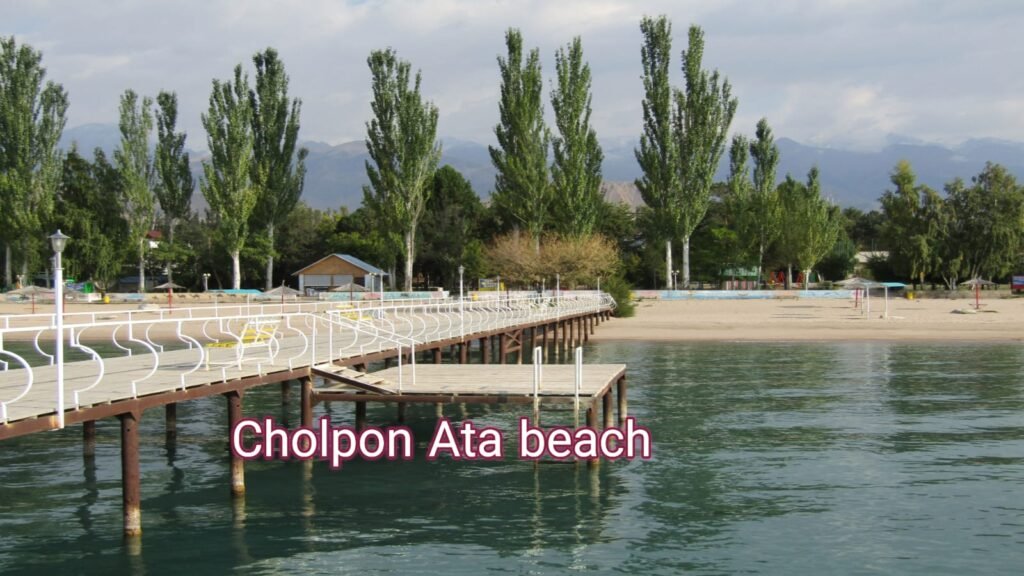
Issyk-Kul: The Lake That Is Not Seasonal
There’s a reason why Issyk-Kul is Kyrgyzstan’s most popular travel destination. It’s spacious, lovely, and oddly adaptable; depending on when you visit, it may feel like summer vacation, peaceful autumn, or something quite different.
Why People Adore It
Even when you’re merely driving or strolling, the scenery never changes. While still connected to the mountains, it’s a respite from them.
The outdoors is not a rare sight but rather a part of everyday life in Central Asia.
How to Go About It
You might be let down if you’re hoping for a beach vacation that is just like any other. The lake experience in Kyrgyzstan is not about congested resorts and beach culture. It’s more about roaming, fresh air, and scenery. If you’re staying close to the lake, consider taking one or two day trips. Not ten. Just a handful, since Issyk-Kul is also a place to unwind and enjoy the environment.
Beyond the Major Stops: The True Kyrgyz Experience
At this point, Kyrgyzstan becomes “a place you lived inside for a while” rather than “a destination.” The most memorable experiences in the nation frequently occur when traveling: the chance meetings, the shared rides, and the moments when someone offers you something cozy. If you merely follow a rigid itinerary of hotels and landmarks, that stuff doesn’t happen. To venture off the usual paths.
Think about concentrating on a single theme:
- Trekking and mountains
- Pastures and horse culture
- Nomadic customs (including those that are still practiced, not merely simulated)
- Local cuisine and small villages
Travelers who are willing to accept that their plans may change due to uncontrollable circumstances are rewarded in Kyrgyzstan. The road closes occasionally. The pass can occasionally vary. Sometimes a local guide may tell you that if you wait a few hours, you will see a better valley. And occasionally they are correct.
Trekking in Kyrgyzstan: Be mindful of the scale.
Trekking is one of the greatest ways to see Kyrgyzstan, but if you approach it carelessly, it’s also one of the simplest ways to fall into trouble.
The following are things you ought to be concerned about:
Select routes that are appropriate for your speed.
There are “hard” hikes in Kyrgyzstan that can make your legs reconsider everything. Choose something doable if you’re not accustomed to elevation and difficult terrain. If you feel strong later, you can always add more.
Be prepared for variations in temperature.
Mornings and nights in the mountains may be harsh, especially during the warmer months. Add layers. Think twice if you’re the type of person who depends on a single “good jacket.”
Never assume that you will have cell service.
Your phone could as well be a decorative item in some places. If you can, download maps, but keep in mind that being offline does not guarantee that the signal will come back. Be prepared for a lack of connectivity.
Guides are not limited to novices.
For local context, safety, and route knowledge, even seasoned hikers frequently hire guides. Additionally, a guide can assist you in avoiding time-wasting or dead-end excursions. The optimal path isn’t always clear-cut, and occasionally the “obvious” path is incorrect.
Although the mountains are stunning, they are also quite large. They will treat you well if you respect that. Traditional Cuisine: What to Eat and How to Place an Order Without Giving It Too Much Thought You don’t have to turn every meal into a gastronomic research project to enjoy yourself in Kyrgyzstan. Eat what the natives eat. Whether you’re sensitive, ask whether it’s spicy, and don’t be scared to try something you can’t pronounce with confidence.
You’ll probably come across the following classics:
Lagman is a filling noodle meal that frequently includes meat and veggies. Beshbarmak is a dish that is frequently served at festivities and is closely linked to Kyrgyz culture.
- **Manti:** steamed dumplings.
- **Shashlik:** barbecued beef, a popular dish in the area.
Additionally, tea culture is important. Tea is always offered, sometimes as a brief gesture and other times as a full-fledged conversation. Tea is more than just a beverage if you accept it. You’re agreeing to be connected. Indeed, there are occasions when tea is served with sweets. That sweetness is frequently perceived as friendliness in Kyrgyzstan. Cards, Money, and the Truth About Spending
Though less romantic, this phase has a greater impact on your experience than you may realize. Even in 2026, you can’t assume every place takes cards. Carry some cash. Use ATMs where available, but don’t build a day trip around the idea that you’ll definitely find one. If you’re booking tours or paying guides, you’ll likely need cash as well. Keep a little buffer money aside for unexpected costs—like transport changes, extra fees, or simply because you stumble on something you want to support.
Safety: What’s Realistic vs. What’s Fear-Based
Let’s keep this grounded.
Kyrgyzstan is generally a place where travelers can move safely, especially if they use common sense. The bigger risks tend to be environmental rather than criminal—altitude, weather, road conditions, and the “my plan didn’t work” moments.
Practical safety advice:
- Be cautiou with mountain travel** if you’re not prepare for elevation and changing conditions.
- Avoid risky shortcuts** just because they look shorter on a map.
- Use reputable guides** for remote routes if you’re unsure.
- If you’re respectful, prepared, and flexible, your safety situation improves dramatically.
Cultural Notes: The People Make the Place
There’s a temptation to talk about “landscapes” as if they’re the main character. In Kyrgyzstan, the main character is often the human one—because you’ll meet people who treat travel like it’s part of their world, not something they’re hosting for strangers.
You might get invite into a conversation over tea. You might be ask where you’re from, and you might notice how quickly locals can read your mood—whether you want to talk or just observe. And sometimes you’ll experience that travel awkwardness: the moment you realize you’re struggling with language, but you don’t want to seem rude. The good news is that gestures and patience go a long way. People understand. Hospitality isn’t only verbal.
A 10-Day Plan Example (Flexible, Not Rigid)
You didn’t ask for a strict itinerary, and I won’t pretend Kyrgyzstan travels like a train schedule. But if you want a rough shape, here’s a realistic way many people plan a trip:
Day 1–2: Bishkek**
- Easy walking, markets, food
- One cultural day and one rest day
- Day 3: Ala Archa**
- A day hike
- Return before it gets too late
- Day 4–6: Issyk-Kul**
- Lake time, optional local excursions
- Let your days breathe
- Day 7–10: Mountain region (tied to trekking)**
- Choose a route based on fitness and season
- Consider a guide for deeper areas
This structure keeps you connected to the country’s “big” features while leaving space for the moments that will actually stick in your memory.
Typical Errors Travelers Make (So You Don’t)
Let me list the mistakes I’ve seen or made myself:
- Overpacking your schedule**
- Kyrgyzstan doesn’t punish you by being mean—it punishes you by being slow.
- Assuming mountains are “just scenery”**
- Elevation is real. The weather is real. The terrain is real.
- Ignoring cash needs**
- Don’t assume convenience will save you.
- Thinking “I’ll wing it” works everywhere**
- In cities, sure. In the mountains, winging it can turn into stress.
- Not building buffer days**
- Roads and conditions change. So do human plans.
- If you avoid those, your trip becomes smoother without losing the adventure.
What You Bring Home: The After-Feeling
There’s a kind of travel memory Kyrgyzstan creates. It’s not just “I saw this lake” or “I climbed that trail.” It’s more like you remember how the air felt after rain, how people talked about weather like it was a character in their story, and how tea turned a random afternoon into something meaningful.
When people say “travel changes you,” it can sound like a cliché. But in Kyrgyzstan, change isn’t dramatic. It’s subtle. You come back noticing how you rush less. You listen more. You’re more patient with uncertainty. You’ve learned that not everything needs to be controlled to be enjoyable. And maybe that’s why Kyrgyzstan belongs among the “stans” in a special way: it makes you slow down enough to actually see.
Concluding Remarks: The Reasons Kyrgyzstan Should Be on Your List
If you’re choosing between the “stans” and you’re wondering which one fits your style, Kyrgyzstan is the choice for you if:
- You love landscapes that feel alive, not staged.
- You’re curious about local life beyond tourist checkpoints.
- You don’t mind flexible plans and the occasional unexpected delay.
- You want to feel small in a way that feels good.
Kyrgyzstan isn’t trying to impress you. It’s just being itself—mountain-first, tea-constant, and quietly unforgettable. And once it gets under your skin, you’ll understand something: the “stans” aren’t just a group of countries with a shared suffix. They’re different ways of being on the edge of the world—still connected to old rhythms, still shaped by geography, still inviting you to step closer. So go. Bring layers. Keep cash. Expect the unexpected. And when the road bends toward the mountains, try to look up—because that’s usually when Kyrgyzstan starts to tell you who it is.

Welcome to Guide To Globe 46! I’m passionate about helping travelers explore the world with confidence and on a budget. Here you’ll find practical travel guides, hidden gems, solo travel tips, food experiences, and destination inspiration. My goal is to provide accurate, helpful, and easy-to-follow content that makes every journey memorable and enjoyable. Thank you for being part of this adventure!


Leave a Reply