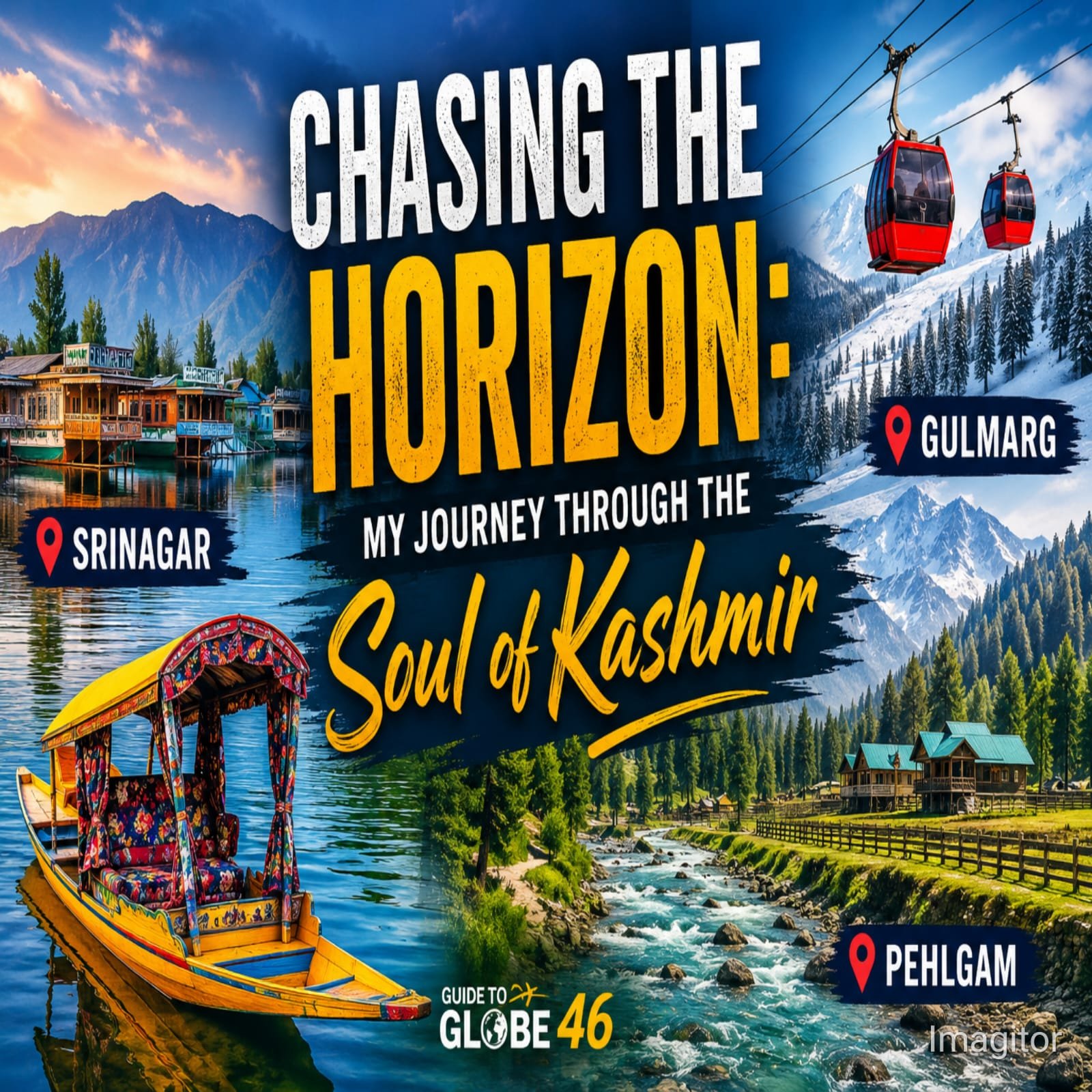
They refer to it as “paradise on earth,” and although clichés tend to lose their impact with repeated use, Kashmir effortlessly carries the moniker. My trip throughout the fabled trio of the valley—Srinagar, Gulmarg, and Pahalgam—was more than simply a typical holiday. It was a leisurely, intentional absorption into a world where time bends to the beat of flowing rivers.Whispering pine trees and the unparalleled warmth of local hospitality. Come along as I take you throughout my days in the Himalayas if you want to see the real heartbeat of the valley and remove the polished layers of vacation brochures.
Srinagar: Awakening by the Water
“The First Morning on Dal Lake”
Before dawn, I saw Srinagar for the first time when I got off the gangplank and boarded a traditional wooden houseboat that was silently moored on Dal Lake. Life on the sea has a unique, calming rhythm. The rich aroma of woodsmoke and moist cedar permeates the crisp, chilly air. The sky becomes a magnificent painting of liquid gold and bruised purple as the sun starts to rise over the Zabarwan mountain.
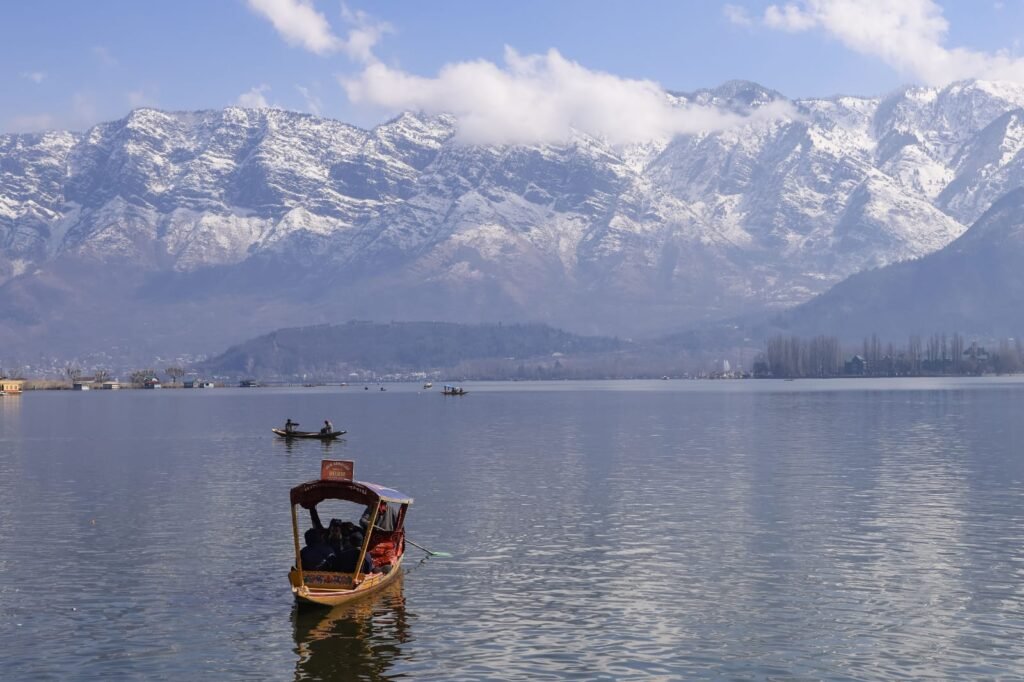
Peaceful view of Dal Lake in Srinagar surrounded by snowcapped Himalayas, featuring traditional
“Navigating the Labyrinth of Waterways”
As the mist began to lift from the lake’s sparkling surface, I jumped into a shikara, the indigenous wooden canoe. With a rhythmic, mesmerizing stroke, my oarsman, Ghulam. An elderly man whose face bore the deep lines of decades of winters, rowed. We cruised down winding water alleys dotted with weeping willows and past the floating vegetable markets. Where vendors sold bright orange carrots and fresh greens straight from their boats.
“Strolling Thru Mughal History”
I strolled into the ancient Mughal Gardens—Nishat and Shalimar—later that morning. These terraced lawns are masterpieces of landscape architecture, constructed centuries ago as emperors’ getaways. I experienced a profound sense of historical continuity as. I strolled beneath the enormous, old Chinar trees. Whose leaves were just starting to take on the caramel tones of late afternoon.
“Savoring Local Flavors in the Old City”
Without a steaming cup of Noon Chai (pink salty tea) and freshly baked girda bread from a local bakery. A day in Srinagar wouldn’t be complete. Afterward, you could spend the evening lost in the maze-like old city streets. Watching artisans weave elaborate pashmina shawls and carve walnut wood by hand. A genuine view into daily Kashmiri life is provided by the sensory explosion of spices, copperware, and amiable sellers shouting across busy passageways.
Gulmarg: The Place Where Snow and Sky Collide
“The Scenic Ascent Thru Pine Forests”
The drive to Gulmarg is a steady elevation into a more dramatic vertical realm, leaving behind the flat, reflected waters of Srinagar. The bright green paddy fields gave way to thick, shadowy pine and fir forests. As our vehicle wound higher through the Pir Panjal range’s foothills. The air became substantially sharper at each curve of the twisting mountain road, and the smell of damp dirt changed to sharp evergreen, creating a new microclimate.
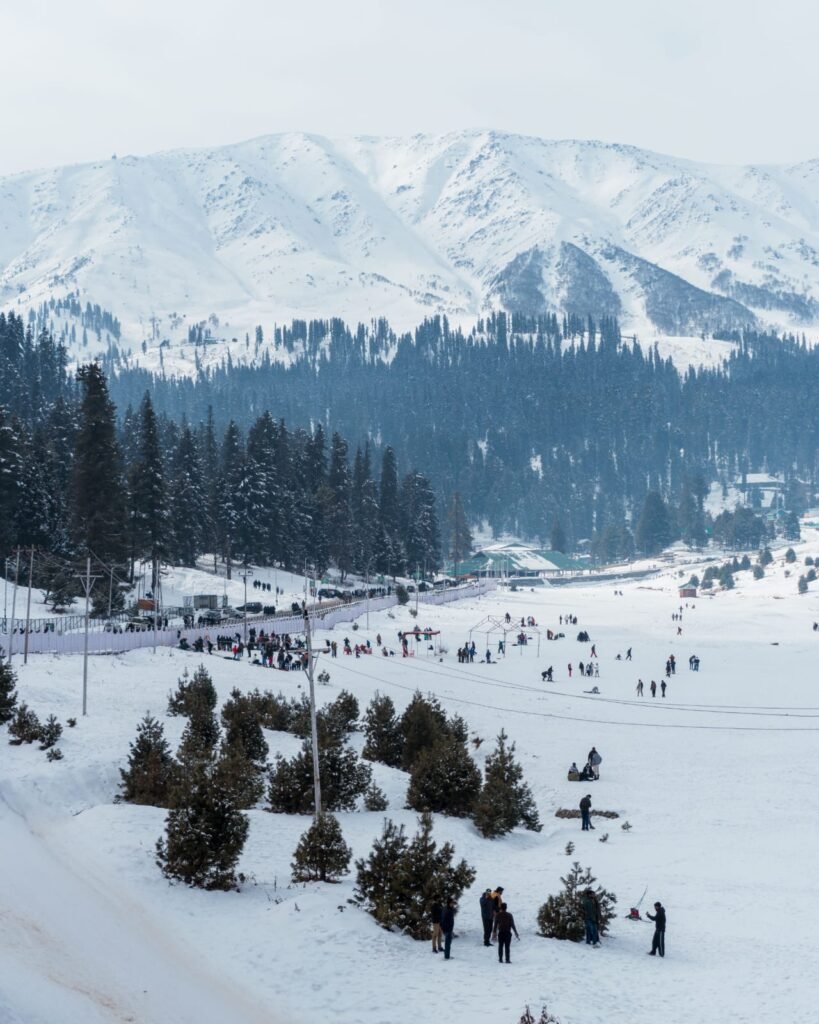
A picturesque view of Gulmarg, India in the winter, featuring snow-covered mountains, pine trees, and people having fun outside
“Riding the Roof of the Continent”
Gulmarg, which means “Meadow of Flowers” in exact translation, is a site that instantly humbles you. The meadows burst into a riot of alpine wildflowers during the warmer months. But even outside of peak bloom, the sheer size of the terrain is astounding. My main goal was to ride the renowned Gulmarg Gondola, one of the world’s tallest cable cars.
The environment changed as we ascended in the cabin to Phase 2 and gazed down at the meadow’s emerald bowl, which was getting smaller. The verdant lowlands quickly disappeared, to be replaced by wind-sculpted peaks that were permanently covered in snow. It was like walking onto the continent’s roof when I left the top station. The air was razor-sharp, frigid, and thin. A bunch of local skiers were getting ready to go down the snowy bowl, and I could hear their laughter against the blank white expanse.
“Finding Solitude in the Alpine Meadows”
Back down in the main meadow, I spent an afternoon simply sitting on the grass, watching horses graze lazily against the backdrop of snow-capped giants. There is a profound stillness in Gulmarg that forces you to unplug, breathe deeply, and just observe. Local children ran past playing cricket with improvised bats. Their infectious energy offering a lively contrast to the solemn, towering mountains guarding the horizon.
The Valley of Shepherds, or Pahalgam
“Following the Roaring Lidder River”
If Srinagar is about culture and Gulmarg is about raw alpine drama, Pahalgam is where your soul goes to heal. The drive from Srinagar to Pahalgam follows the course of the roaring Lidder River, its turquoise waters crashing violently over white boulders, flanked by terraced fields of yellow mustard and small farming settlements.
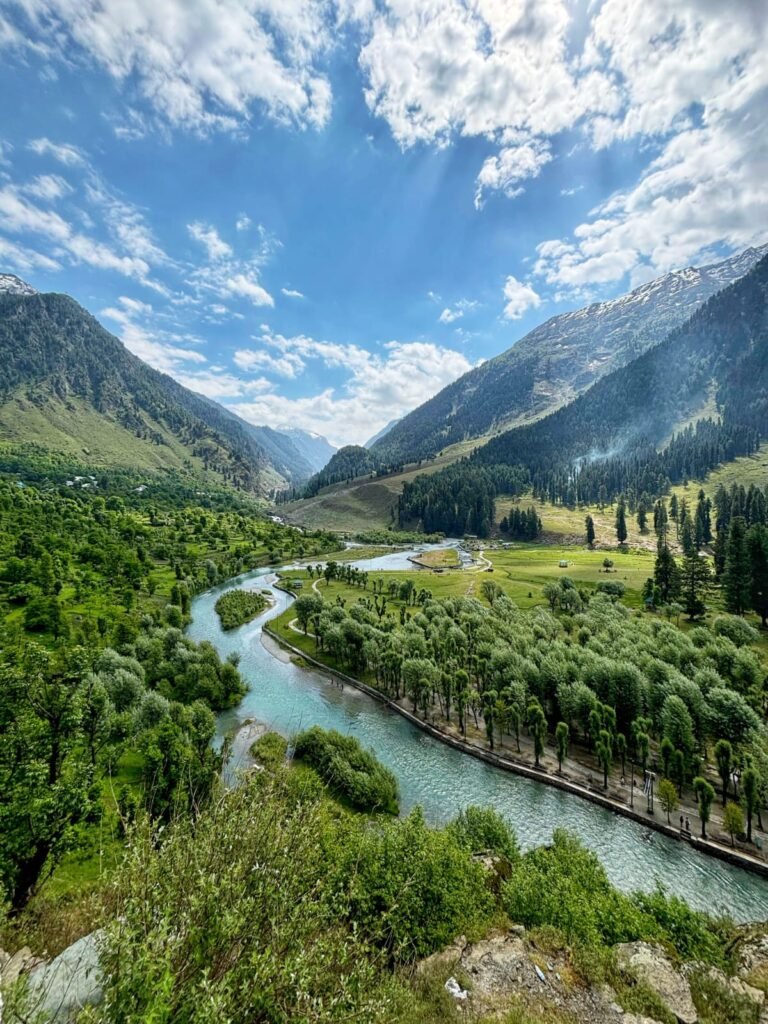
Breathtaking view of lush valleys and river in Kashmir under a vibrant blue sky.
“Warm Welcomes and Traditional Hospitality”
The Valley of Shepherds, or Pahalgam, is a very personal and loving place. In contrast to Gulmarg’s bleak peaks, Pahalgam envelops you with its thick pine trees, swift streams, and peaceful valleys. The host welcomed me with a copper samovar of spiced kahwa laced with saffron and crushed almonds while telling me tales of previous generations who had coexisted with these ancient woodlands. I stayed in a modest, family-run guesthouse situated away from the main tourist route.
“Wandering Thru Betaab and Aru Valleys”
I strolled up toward Betaab Valley one morning, which got its name from a well-known Bollywood movie that was filmed there. It was simple to understand why poets and filmmakers fall in love here, standing in the middle of a huge green meadow divided by a glistening stream and surrounded by towering cliffs. Afterward, I rented a native horse to help me climb the winding, steep mud tracks that led to Aru Valley. The clip-clop of hooves, the scent of damp ground and pine needles, and sporadic views of nomadic shepherds leading their flocks over high-altitude pastures were all part of the journey’s charm.
“Reflections by the Water at Dusk”
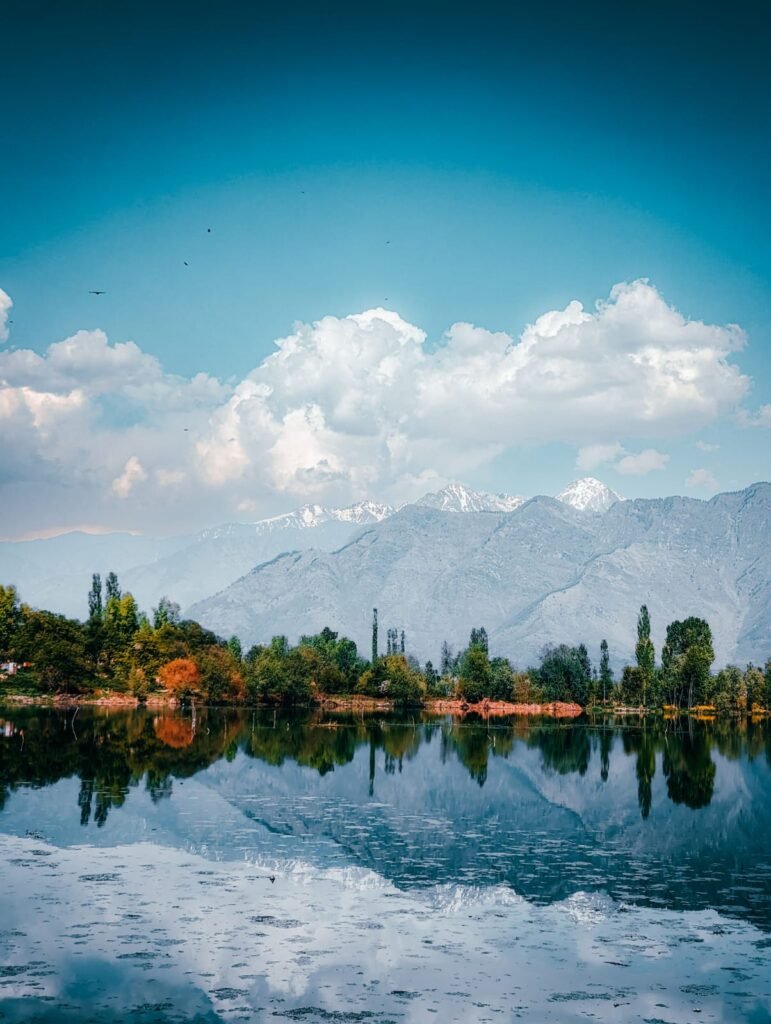
I came to understand what makes Kashmir genuinely unforgettable as I sat by the banks of the Lidder River at sundown, watching the water turn a deep, reflected indigo beneath the gathering twilight. It’s not just the picturesque scenery or the towering mountains; it’s also the serene elegance of the people who live in this turbulent yet stunning region. Long after you have packed your belongings and returned to the cacophony of the everyday world, you will still remember their natural fortitude and kind welcome.
Frequently Asked Questions (FAQs)
How many days are plenty to see Pahalgam, Gulmarg, and Srinagar?
A 6–7-day schedule is great if you want to really appreciate the scenery without feeling hurried. You can spend two days relaxing in the valleys of Pahalgam, two days climbing Gulmarg, and two days in Srinagar (with houseboat and garden excursions).
What time of year is ideal for traveling to Kashmir?
A: It is contingent upon your desired experience. April through June are ideal for beautiful flowers, verdant fields, and nice weather. December to February is the ideal time of year to enjoy Gulmarg’s harsh alpine winter, copious amounts of snowfall, and winter sports.
Is staying on a houseboat in Srinagar worthwhile?
A: Definitely. You may connect to the city’s historical rhythm by waking up on the water, which is a unique and anchoring experience. The warmth and the peaceful morning views of Dal or Nigeen Lake are remarkable, even if they range from basic to luxurious.
How do you get from one of these three locations to another?
A private taxi from Srinagar is the most practical and pleasant method to get around the triangle. The journeys are wonderfully scenic—especially the stretch along the Lidder River into Pahalgam—and having a native driver typically means you receive an unofficial, knowledgeable guide for the journey.
Are reservations for the Gulmarg Gondola required?
A: It is definitely advised. The Gulmarg Gondola is one of the tallest cable cars in the world, and tickets for both Phase 1 and Phase 2 sell out quickly, especially during busy tourist seasons. Booking online well in advance saves you from long waits and probable disappointment.

Welcome to Guide To Globe 46! I’m passionate about helping travelers explore the world with confidence and on a budget. Here you’ll find practical travel guides, hidden gems, solo travel tips, food experiences, and destination inspiration. My goal is to provide accurate, helpful, and easy-to-follow content that makes every journey memorable and enjoyable. Thank you for being part of this adventure!



Leave a Reply