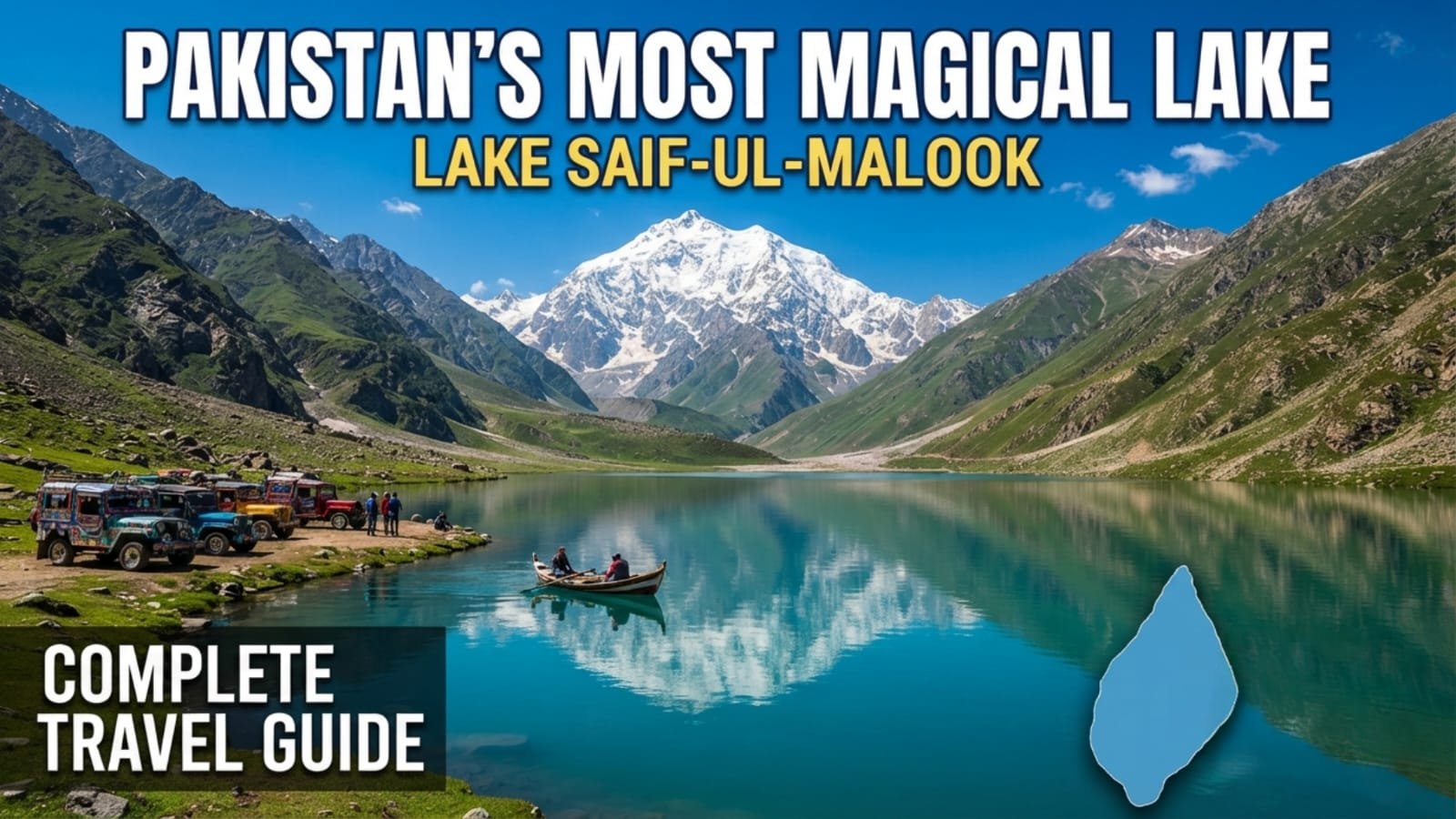
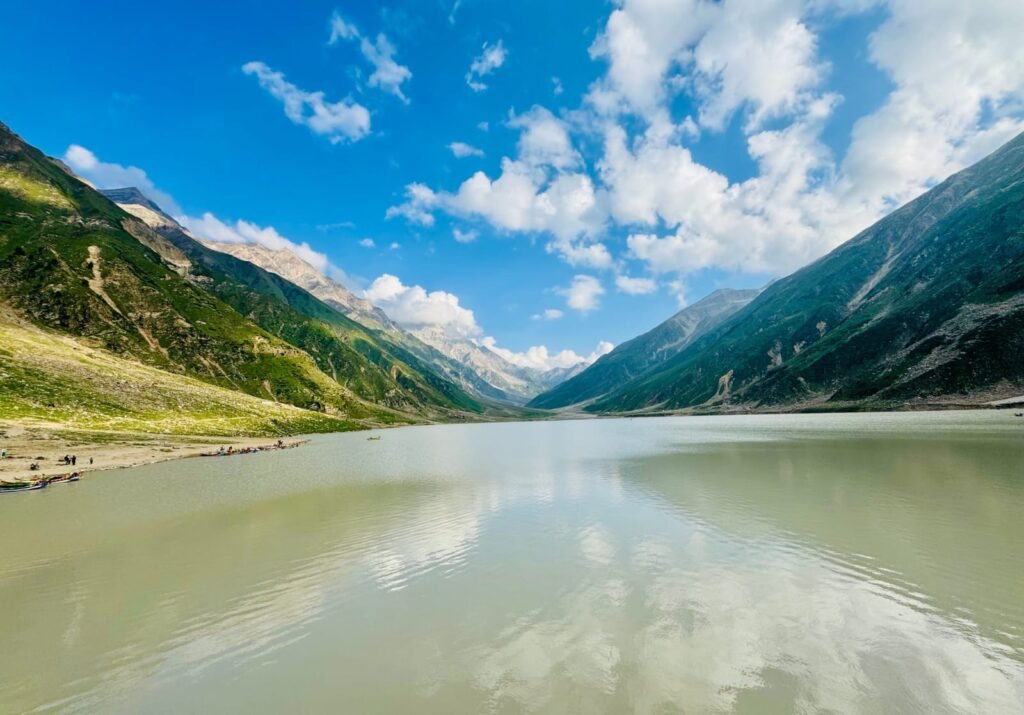
There are locations like Lake Saif-ul-Malook that you visit merely to cross them off a list. This fabled body of water, which is tucked away at the northernmost point of the Kaghan Valley in Khyber Pakhtunkhwa, Pakistan, feels more like a portal to another world than a geographical landmark. Perched at an astounding 3,224 meters (10,578 feet) above sea level, it is encircled by tall peaks, covered in alpine nature, and shrouded in eerily fascinating folklore.
You are in for a once-in-a-lifetime experience if you are organizing a trip to this high-altitude wonder. Everything you need to know is covered in this thorough travel guide, from the mythology surrounding its deep blue seas to how to get there and when to go.
The Myth and Magic: What Makes It Saif-ul-Malook?
Without knowing its history, Lake Saif-ul-Malook is impossible to fully comprehend. The lake was immortalized in Sufi poetry and local tradition long before it became a popular destination for road tripper and landscape photographers.
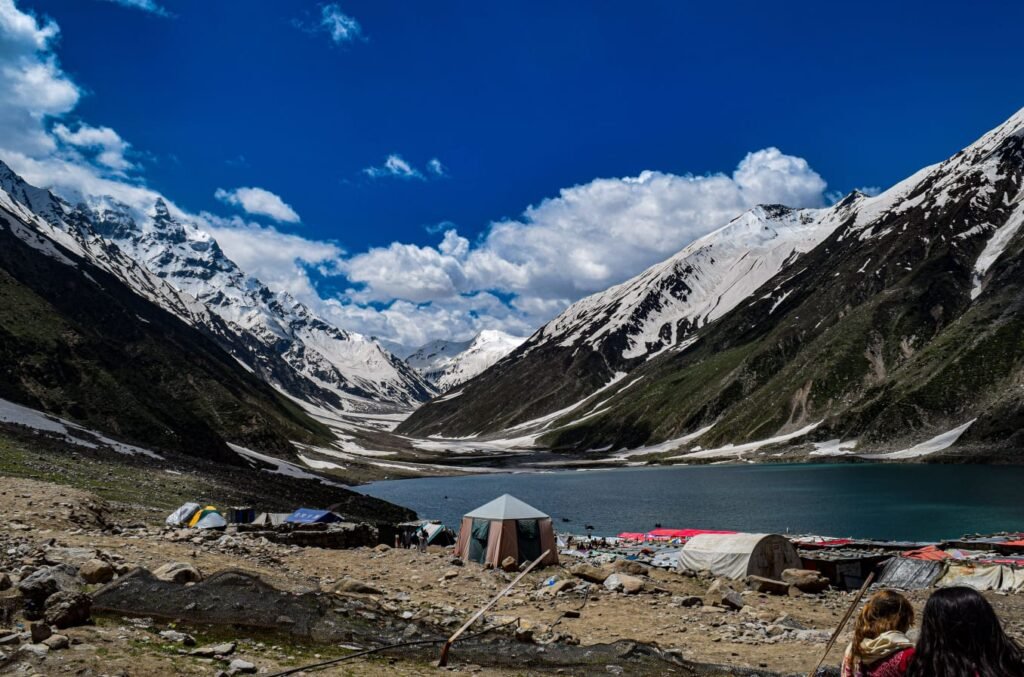
The lake is said to be name after Prince Saif-ul-Malook, an Egyptian prince who met Badi-ul-Jamal, a fairy princess, on these shores and fell madly in love. According to legend, the prince spent years looking for her under the guidance of visions before meeting her in this remote Himalayan paradise. Locals will still tell you that fairy spirits descend upon the glistening waters on peaceful, moonlit nights.
Whether you believe in fairy tales or not, it’s quite simple to understand why people thought magic existed here centuries ago as you stand at the water’s edge and watch the mist drift over the mountains.
Location and What to Anticipate
Situated in a vast basin surrounded by some of the most striking landscape in the area, the lake was created more than 300,000 years ago during the Pleistocene Epoch by retreating glaciers.
Malika Parbat, often known as “The Queen of Mountains,” is the tallest peak in the Kaghan Valley, rising to a height of more than 5,290 meters. On a calm day, its snow-covered summit creates a fantastic, artistic reflection of the lake’s surface.
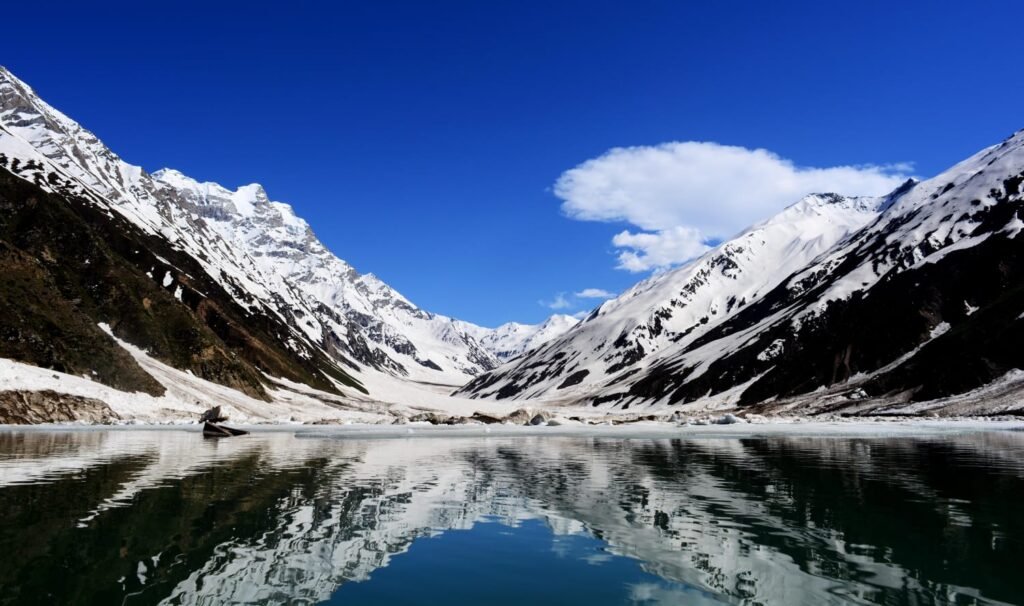
Depending on the angle and amount of sunshine, the water itself changes color, going from brilliant blue to deep indigo. Even in the height of summer, the water is bitter cold because it is solely supplied by glacial runoff.
The Journey: How to Get There
Half the adventure is getting to Lake Saif-ul-Malook. Usually, the trip starts in Islamabad, the capital of Pakistan.
Step 1: From Islamabad to Naran
The distance is between 250 and 300 kilometers.
Route: Follow the Naran-Babusar Top road after turning into the Karakoram Highway after taking the Hazara Motorway through Abbottabad and Mansehra.
Duration: To get to the base town of Naran, expect an 8–9-hour trip that winds along the Kunhar River through verdant gorges and busy mountain villages.
Step 2: From Naran to Saif-ul-Malook Lake
- Distance: About 8 to 9 kilometers north of Naran.
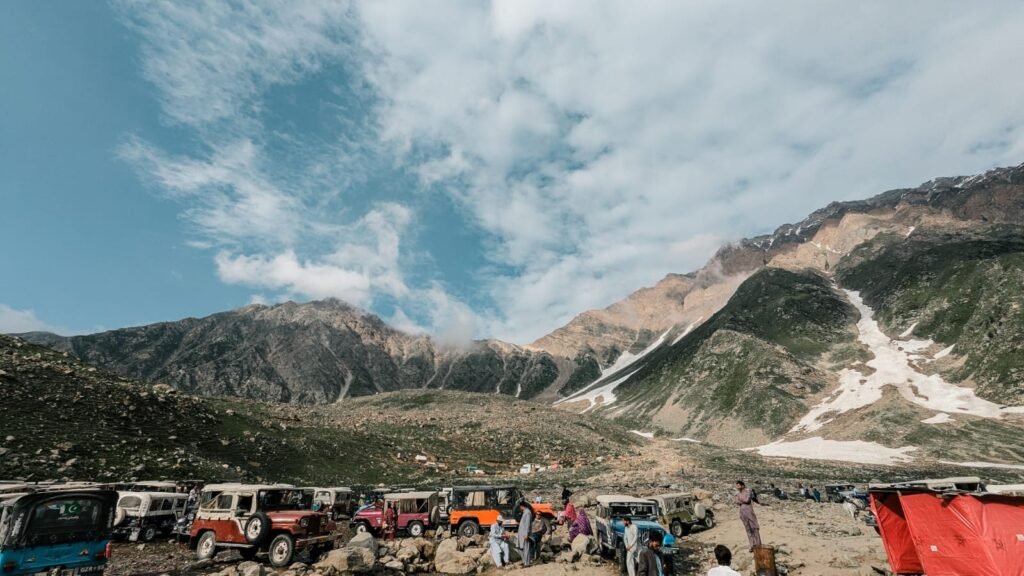
- The catch is that a regular car cannot be driven up to the lake. The track is steep, unpaved, incredibly rough, and prone to loose gravel and shifting mud.
- The 4×4 vehicle ride: Renting a native 4×4 Willys vehicle from the Naran Bazaar is your only option, unless you decide to trek. The drivers handle hairpin corners with casual skill, demonstrating their complete mastery of these cliffs. The exhilarating, bone-jarring ride lasts between thirty and forty-five minutes.
- The Hike: If you’re a serious hiker, you can hike up to the lake instead of taking the jeep. It takes about two to three hours of continuous uphill climbing through alpine meadows and pine forests, providing breathtaking vistas that you won’t get from a car.
The Ideal Time to Go
When traveling to Northern Pakistan, timing is crucial. Lake Saif-ul-Malook has harsh winters due to its high altitude.
June to September is peak season
This window is perfect. The access roads are fully open, the snow has melted, and the daytime temperatures range from 15°C to 20°C. Local stalls are fully operating, and wildflowers are in full bloom over the nearby meadows.
- Autumn (October): Crisp, peaceful, and breathtakingly golden, but as the month draws to a close, temperatures start to drop dramatically.
- Winter and Spring (November to May): The lake entirely freezes and is cover in a thick layer of snow. Regular tourists can seldom access there due to blocked roads and avalanches.
5. The Best Activities at the Lake
There are lots of things to do with your afternoon after you get to the shore:
- Boating: You can rent wooden rowboats right at the edge. You get a whole different sense of its size when you drift out into the center of the lake, encircled by imposing walls of snow and rock.
- Tasting Fresh Trout: Small lakeside bungalows and local vendors provide freshly caught trout that is immediately cooked. A typical Saif-ul-Malook experience is to eat hot, crispy fish while wearing a jacket against the mountain breeze.
- Trekking to Ansoo Lake: Saif-ul-Malook is the starting point for a strenuous hike to Ansoo Lake (Tear Drop Lake) for ardent adventure seekers. Situated much higher up in the mountains, this high-altitude alpine lake is truly shape like a human teardrop.
Caution
Only those who are physically healthy and experienced should try the walk, which takes roughly 6 to 7 hours round-trip and requires a local guide.
Riding a horse:
You can rent ponies or horses to go for a leisurely ride around the boundaries of the lake.
- Photography and stargazing: On Malika Parbat, photographers can easily spend hours following the shifting light. The lack of light pollution allows you to see the Milky Way arching directly over the lake if you stay late or camp overnight.
6. Useful Advice for Travelers
Remember these local suggestions to ensure a stress-free and seamless trip:
- Wear layers: Naran town may seem warm during the day, but as soon as you go to the lake, the temperature drops significantly, especially when the sun sets or the wind comes up. Always bring cozy walking shoes, warm fleece, and a waterproof jacket.
- Cash is King: Once you leave Naran, mobile network services may be weak or nonexistent, and there are no ATMs at the lake. Bring enough cash in Pakistani rupees for dinner, souvenirs, and jeep fees.
- Altitude Sickness: Due to the lake’s elevation above 10,000 feet, some visitors may have slight headaches or dyspnea. Before going up, take your time, drink plenty of water, and allow your body a day to adjust to Naran.
- Preserve Nature: There is a lot of demand from tourists on this delicate alpine ecology. Trash, wrappers and plastic bottles should never be left behind. To ensure that future generations can enjoy the same unspoiled magic, respect the environment.
Concluding Remarks
Lake Saif-ul-Malook is an emotional experience rather than merely a picturesque location on a map. Something genuine otherworldly is create by the sound of the melting glaciers, the sharp mountain air, the mirror-like reflections of Malika Parbat, and the subdued weight of old mythology. This magnificent lake in the center of Kaghan Valley will make a lasting impression on your soul, whether you’re looking for a tranquil getaway into nature or a challenging alpine adventure.
Frequently Asked Questions (FAQs): Ready for Schema Markup
Q1: How high is Lake Saif-ul-Malook?
A: Located in the Kaghan Valley of Khyber Pakhtunkhwa, Pakistan, Lake Saif-ul-Malook is impressively high at 3,224 meters (10,578 ft) above sea level.
Q2: Is it possible to reach Lake Saif-ul-Malook with a standard car?
A: Because of the incredibly rough, steep, and unpaved terrain, ordinary cars are unable to reach the lake. It is necessary for visitors to either climb up to the lake or rent a native 4×4 Willys jeep from Naran Bazaar.
Q3: When is the ideal time of year to go to the lake?
A: June through September is the busiest travel season. Alpine wildflowers are in full bloom during these months, the weather is pleasant, access roads are clear, and the snow has melted.
Q4: What is the distance between Naran and Lake Saif-ul-Malook?
A: The lake is situated between eight and nine kilometers north of the town of Naran. Hiking up takes two to three hours, while the 4×4 jeep ride takes about thirty to forty-five minutes.
Q5: Is Ansoo Lake linked to Lake Saif-ul-Malook?
A: The difficult hike to Ansoo Lake, which takes roughly 6 to 7 hours round-trip and calls for a local guide, does indeed begin at Lake Saif-ul-Malook.

Welcome to Guide To Globe 46! I’m passionate about helping travelers explore the world with confidence and on a budget. Here you’ll find practical travel guides, hidden gems, solo travel tips, food experiences, and destination inspiration. My goal is to provide accurate, helpful, and easy-to-follow content that makes every journey memorable and enjoyable. Thank you for being part of this adventure!





Leave a Reply