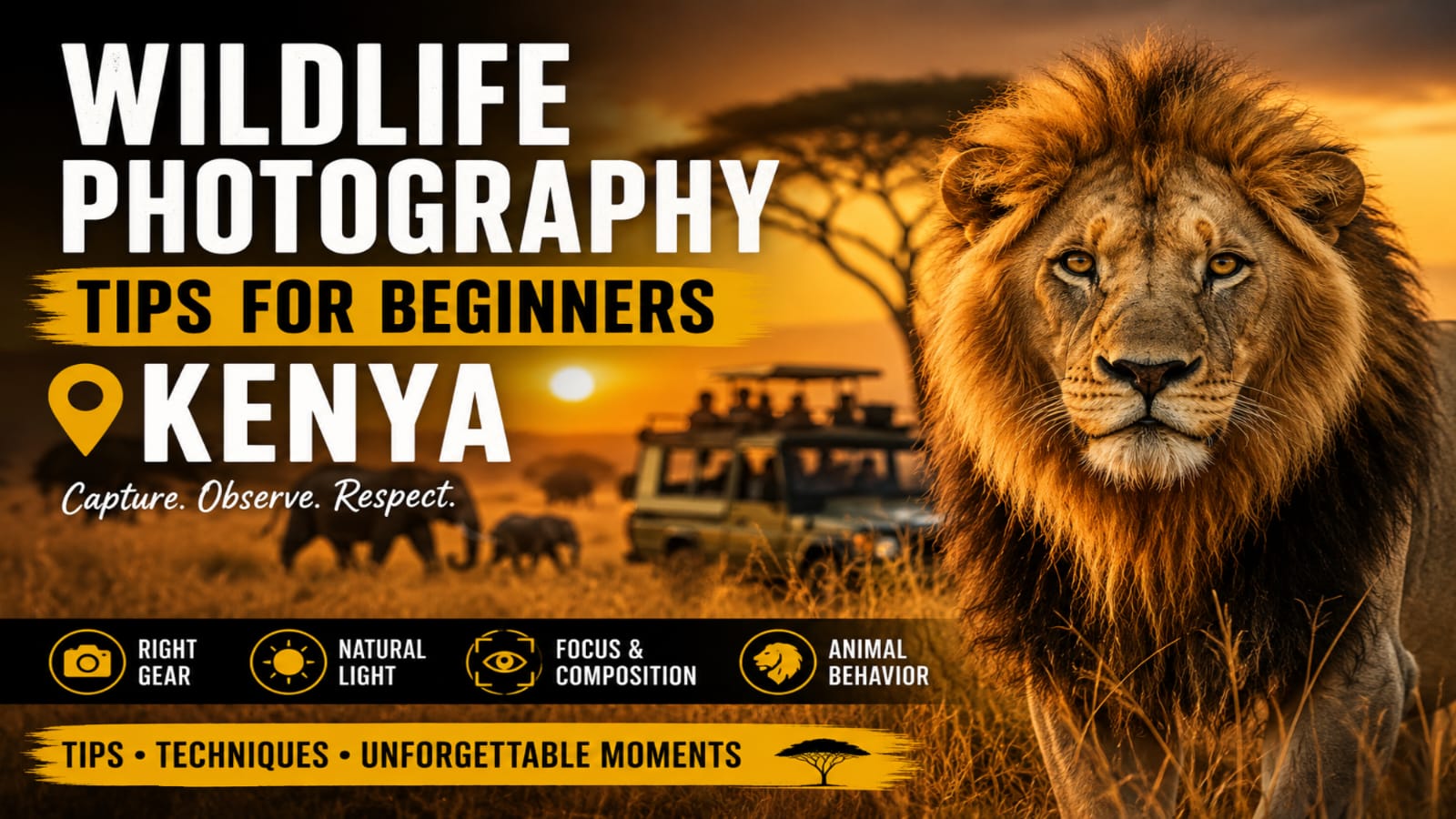
Kenya is one of the world’s greatest destinations for wildlife photography. From the vast savannas of the Maasai Mara to the elephant-filled landscapes of Amboseli, the country offers endless opportunities to capture incredible images of animals in their natural habitat. For beginners, a safari in Kenya can be both exciting and overwhelming. Knowing a few practical photography tips can make a huge difference in the quality of your photos and your overall experience.
Why Kenya is Perfect for Wildlife Photography
Kenya’s diverse ecosystems support an amazing variety of wildlife. Lions, elephants, leopards, cheetahs, giraffes, zebras, rhinos, and hundreds of bird species can all be found here. The open landscapes often provide clear views of animals, making it easier for photographers to observe and photograph wildlife than in many dense forest environments. One of the highlights is the annual Great Migration in the Maasai Mara, where millions of wildebeest and zebras move across the plains in search of fresh grazing land. Even outside migration season, wildlife sightings are frequent and rewarding.
Choose the Right Camera Gear
As a beginner, you do not need the most expensive equipment. A camera with a zoom lens is often enough to get started. A lens in the range of 200mm to 400mm is ideal for wildlife photography because animals are often at a distance. If you have a bridge camera or a camera with a superzoom lens, it can also produce excellent results.
Don’t forget:
- Extra memory cards
- Spare batteries
- Lens cleaning cloth
- Dust protection for your camera
Kenya’s safari roads can be dusty, especially during the dry season.
Learn to Use Natural Light
Wildlife photographers often refer to the first and last hours of daylight as the “golden hours.” During these times, the light is softer, warmer, and more flattering. Early morning game drives are especially rewarding because many animals are active before the heat of the day arrives. The low-angle sunlight can create dramatic shadows and beautiful colors in your photographs. Avoid relying heavily on flash photography, as it may disturb animals and often produces unnatural-looking images.
Be Patient
One of the biggest lessons in wildlife photography is patience. Great photographs rarely happen instantly. Sometimes you may spend twenty minutes watching a lion rest under a tree before it suddenly stands up and gives you the perfect pose. The more time you spend observing animal behavior, the better your chances of capturing unique moments. Patience often rewards photographers with images that tell a story rather than simply documenting an animal.
Focus on the eyes.
The eyes are usually the most important part of a wildlife photograph. Sharp, clear eyes create a connection between the viewer and the animal. When photographing birds, mammals, or predators, try to place focus directly on the eye whenever possible. Even if other parts of the image are slightly soft, a sharp eye can make the photograph feel alive.
Keep Your Background Simple
A cluttered background can distract from your subject. Before taking a photo, quickly check what appears behind the animal. Changing your position slightly can often help isolate the subject against grasslands, open skies, or distant vegetation. Simple backgrounds create cleaner and more professional-looking images.
Capture Animal Behavior
Instead of taking only portraits, look for interesting behavior.
Examples include:
- A lion yawning
- Elephants interacting with family members
- Giraffes feeding from acacia trees
- Birds taking flight
- Cheetahs scanning the horizon
Behavioral photographs often tell a stronger story and create more memorable images.
Use continuous shooting mode
Wildlife can move unexpectedly. Continuous or burst mode allows your camera to capture multiple frames in quick succession.
This is especially useful when photographing the following:
- Running animals
- Birds in flight
- Hunting predators
- River crossings during migration
A short burst of images increases the chance of capturing the perfect moment.
Respect Wildlife and Nature
The best wildlife photographers prioritize animal welfare over photographs. Never encourage drivers to get too close to animals. Avoid making loud noises to attract attention, and respect park regulations at all times. Ethical wildlife photography protects animals and helps preserve Kenya’s natural heritage for future generations.
Enjoy the Experience
Many beginners become so focused on camera settings that they forget to enjoy the safari itself. Take time to observe the landscapes, listen to the sounds of nature, and appreciate the incredible wildlife around you. Some of the most memorable moments may never be photographed, yet they become lifelong memories.
Final Thoughts
Wildlife photography in Kenya is an unforgettable experience for beginners and experienced photographers alike. With patience, good observation skills, and a basic understanding of light and composition, you can return home with photographs that capture the beauty and spirit of Africa’s wildlife. More importantly, you’ll gain a deeper appreciation for the animals and landscapes that make Kenya one of the world’s premier safari destinations.

Welcome to Guide To Globe 46! I’m passionate about helping travelers explore the world with confidence and on a budget. Here you’ll find practical travel guides, hidden gems, solo travel tips, food experiences, and destination inspiration. My goal is to provide accurate, helpful, and easy-to-follow content that makes every journey memorable and enjoyable. Thank you for being part of this adventure!





Leave a Reply