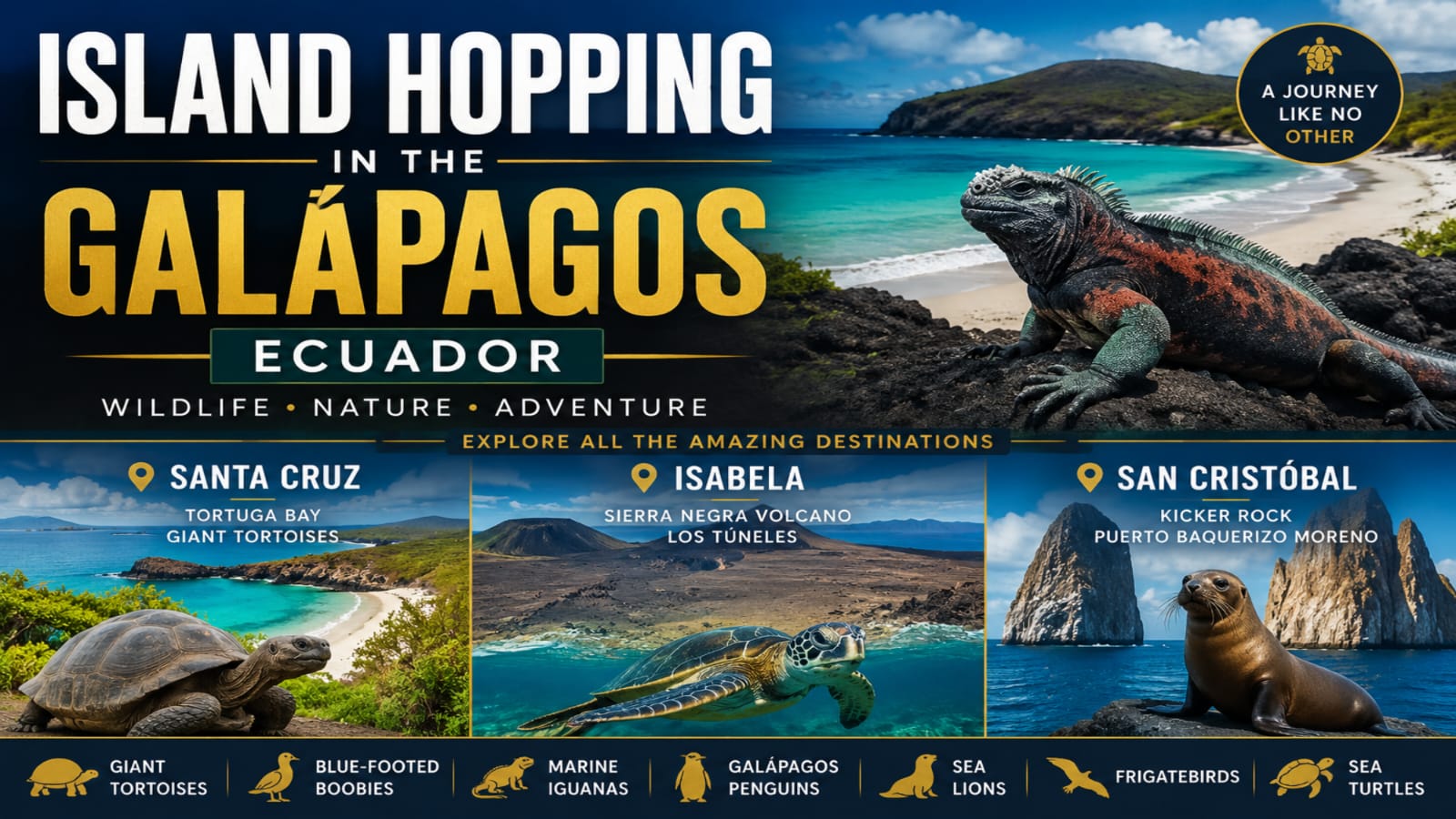
There are few places in the world that feel as untouched and extraordinary as the Galápagos Islands. Located about 1,000 kilometers off the coast of Ecuador in the Pacific Ocean, this volcanic archipelago is famous for its unique wildlife, crystal-clear waters, and landscapes that seem almost prehistoric. For travelers who love nature and adventure, island hopping in the Galápagos is an unforgettable experience. Unlike many tropical island destinations that focus on beaches and resorts, the Galápagos offers something much deeper. Every island has its own personality, wildlife, and scenery. Traveling between them allows visitors to experience a remarkable variety of ecosystems within a relatively small area.
Starting the Journey
Most travelers begin their Galápagos adventure by flying from mainland Ecuador to either Baltra or San Cristóbal Island. From there, ferries and small boats connect the main inhabited islands, making independent island hopping possible. The three islands most travelers visit are Santa Cruz, Isabela, and San Cristóbal. Each offers a different perspective on life in the Galápagos.
Santa Cruz: The Gateway to the Islands
Santa Cruz is often the first stop and serves as the hub of the archipelago. The town of Puerto Ayora has restaurants, shops, and tour operators, making it a convenient base for exploration. One of the highlights here is Tortuga Bay, a stunning white-sand beach where marine iguanas sunbathe along the shore. Walking through the cactus-lined trail to reach the beach is an experience in itself. Visitors can also explore the highlands of Santa Cruz, where giant Galápagos tortoises roam freely. Seeing these gentle creatures in their natural habitat is often one of the most memorable moments of the trip.
Isabela: A Volcanic Wonderland
The largest island in the Galápagos, Isabela feels wilder and less developed than Santa Cruz. Its dramatic volcanic landscapes create an atmosphere unlike anywhere else. A hike to Sierra Negra Volcano reveals one of the largest volcanic craters in the world. The trail offers breathtaking views of lava fields and rugged terrain shaped by thousands of years of volcanic activity. The island is also home to flamingos, penguins, marine iguanas, and sea turtles. Snorkeling near Los Túneles is particularly popular because of the chance to swim alongside sea turtles, reef sharks, and colorful tropical fish.
San Cristóbal: Wildlife Everywhere
San Cristóbal is often described as the island where wildlife comes to you. Sea lions can be found lounging on beaches, park benches, and even boat docks. One of the most enjoyable experiences is walking along the waterfront in Puerto Baquerizo Moreno while sea lions play in the water nearby. The island’s beaches are excellent for snorkeling, and visitors often encounter rays, sea turtles, and schools of fish. A visit to Kicker Rock is a must for marine enthusiasts. This dramatic rock formation rising from the ocean is one of the best snorkeling and diving sites in the archipelago.
Encounters with Unique Wildlife
The Galápagos Islands are famous because many of their animals are found nowhere else on Earth. During an island-hopping journey, travelers may encounter:
- Giant tortoises
- Blue-footed boobies
- Marine iguanas
- Galápagos penguins
- Sea lions
- Frigatebirds
- Sea turtles
One of the most surprising aspects of visiting the islands is how unafraid the wildlife is of humans. Strict conservation regulations help protect the animals and preserve their natural behaviors.
The Best Time to Visit
The Galápagos can be visited year-round. December to May generally brings warmer temperatures and calmer seas, making boat travel more comfortable. June to November is slightly cooler but offers excellent wildlife viewing opportunities and nutrient-rich waters that attract marine life.
Responsible Travel Matters
The Galápagos is one of the world’s most fragile ecosystems. Visitors are encouraged to follow park regulations, stay on marked trails, avoid touching wildlife, and support environmentally responsible tourism operators. Respecting these rules helps ensure future generations can experience the islands just as they are today.
Final Thoughts
Island hopping in the Galápagos is much more than a vacation. It is an opportunity to witness nature in one of its purest forms. From giant tortoises wandering through the highlands to sea lions playing along the shoreline, every day brings new discoveries. For travelers seeking adventure, wildlife encounters, and breathtaking natural beauty, the Galápagos Islands deliver an experience that remains unforgettable long after the journey ends.

Welcome to Guide To Globe 46! I’m passionate about helping travelers explore the world with confidence and on a budget. Here you’ll find practical travel guides, hidden gems, solo travel tips, food experiences, and destination inspiration. My goal is to provide accurate, helpful, and easy-to-follow content that makes every journey memorable and enjoyable. Thank you for being part of this adventure!





Leave a Reply