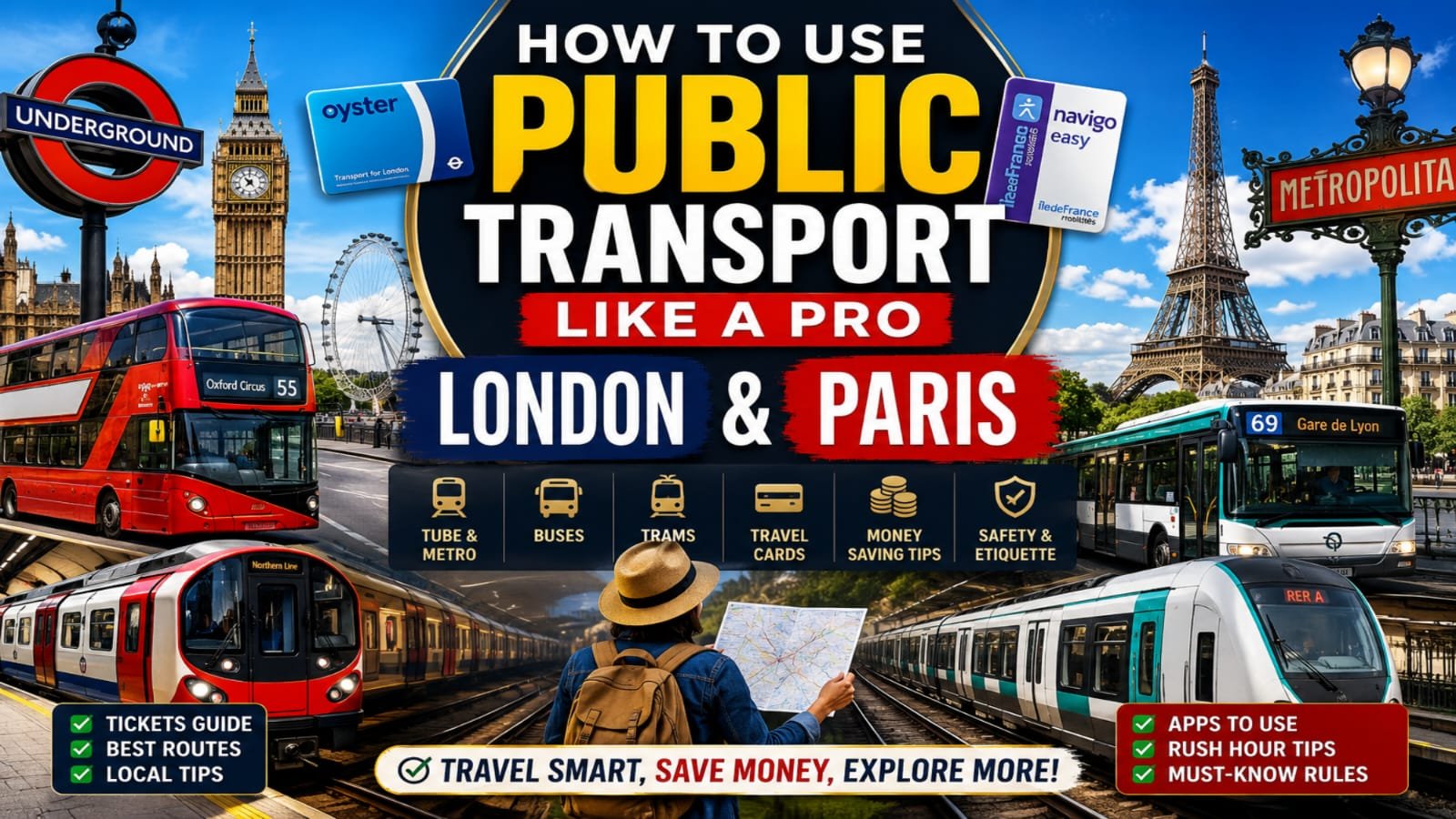
names. If you have ever looked at a subway map of London or Paris and felt overwhelmed, you are not alone. At first glance the colorful lines, station names, and various ticket options are confusing. But after a day or two of using these systems you quickly see why millions of people use them every day.
fears. One of the biggest mistakes first-time visitors make is relying solely on taxis or ride-hailing apps. Traffic is a pain, and transportation costs can be a significant part of your travel budget. Knowing how to navigate public transportation means you can go to iconic sites, peaceful communities, local coffee shops, and off-the-beaten-path sights without the stress of expensive fares. Whether you are planning a trip to London, Paris, or both, this guide will help you travel confidently like someone who has been using these transport networks for years.
Why Public Transport Is the Smart Option
Public transportation in both cities is reliable, affordable, and incredibly extensive. Most attractions are connected by underground trains, buses, trams, or regional rail services. Instead of sitting in traffic, you can often reach your destination much faster underground. It also allows you to experience daily local life. Watching office workers rush to work or students chatting on the train offers a glimpse of the city’s real character. For budget-conscious travelers, public transport is almost always the better choice.
Using London’s Public Transportation
London has one of the world’s most famous transport systems, operated by Transport for London (TfL). It includes the Underground (Tube), buses, Overground trains, Docklands Light Railway (DLR), Elizabeth Line, river buses, and trams. Although it looks complicated on paper, it becomes surprisingly simple after your first journey.
Comprehending London’s Zones
London is divided into fare zones.
Most tourist attractions are located within Zones 1 and 2, including:
- Tower Bridge
- Westminster Abbey
- Big Ben
- Buckingham Palace
- The Covent Garden of the British Museum
- Oxford Street
You won’t often need to travel outside of these zones if you stay close to central London.
Selecting the Best Payment Method
- The easiest way to pay is with a contactless debit or credit card.
- To enter and exit tube stations, just tap your card. When boarding a bus, tap once.
- Similar mobile payment methods, such as Apple Pay or Google Pay, are also widely used by travelers.
- You can purchase an Oyster Card if you would rather have a tangible travel card. It is compatible with nearly all of London’s public transportation systems.
- Daily fare caps mean you will never pay more than a particular amount in one day, making it easy to manage your budget.
The Tube is the fastest way to travel around central London.
Riding the London Underground
Stations are clearly marked with the famous red-and-blue Underground sign.
Inside every station you will find:
- Route maps
- Electronic departure boards
- Direction signs
- Platform numbers
One useful habit locals always follow is standing on the right side of escalators while leaving the left side open for people walking. Following this simple rule helps you blend in immediately.
Using London Buses
London’s iconic red buses are not just beautiful; they are practical. Sometimes buses offer better sightseeing than the Underground because you can enjoy city views during your journey. Popular routes pass many famous landmarks. Remember to board from the front door and tap your payment method when entering. Unlike Tube journeys, you do not tap again when leaving the bus.
Reading Station Signs
Every station has color-coded lines. Simply follow the color that matches your route.
Large signs clearly indicate:
- Northbound
- Southbound
- Eastbound
- Westbound
If you accidentally board the wrong train, simply get off at the next station and switch platforms. It happens even to locals.
Using Public Transport in Paris
Paris has an equally impressive transport network managed by RATP.
The city’s transportation includes:
- Metro
- RER regional trains
- Buses
- Trams
The metro is usually the fastest option for visitors exploring central Paris.
Recognizing the Paris Metro
- The Paris Metro has 16 numbered lines.
- Each line has its own color and direction.
- Instead of northbound or southbound, trains are identified by the final station on the line.
- For example, you may see signs pointing toward “La Défense” or “Nation.”
- Simply check which terminal station your train is heading toward.
- It becomes easy after one or two rides.
Buying Tickets
Visitors have several options.
You can purchase:
- Single tickets
- Day passes
- Multi-day travel passes
- Navigo Easy Card
If you plan to use public transport several times a day, travel passes usually offer better value than buying individual tickets. Keep your ticket until the end of your journey because inspectors occasionally check them.
Riding the Metro
- Metro entrances are marked with large “M” signs.
- Inside stations you will find ticket machines available in multiple languages.
- Trains generally arrive every few minutes.
- Doors sometimes require pressing a button or lifting a handle before opening, especially on older trains.
- Watch local passengers if you are unsure.
Travel by Bus in Paris
Paris buses are perfect for scenic journeys.
You can enjoy beautiful views of:
- The Eiffel Tower
- The Seine River
- Notre-Dame
- The Louvre
- Champs-Élysées
If you are not in a hurry, buses often provide a more enjoyable experience than traveling underground.
Crucial Applications to Install
Before arriving, download offline maps and transport apps.
Helpful apps include:
- Google Maps
- Citymapper
- Apple Maps
Citymapper is especially popular because it combines trains, buses, walking routes, cycling options, and real-time updates. Offline maps are incredibly useful if your mobile internet stops working.
Tips for the Rush Hour
Both London and Paris become extremely busy during weekday commuting hours.
The busiest times are usually:
- Morning:
7:30 AM to 9:30 AM - Evening:
5:00 PM to 7:00 PM - If possible, visit major attractions after the morning rush.
- You will enjoy quieter trains and shorter queues.
Public Transport Etiquette
Respecting local etiquette makes everyone’s journey smoother.
A few unwritten rules include:
- Let passengers leave before boarding.
- Offer seats to elderly people, pregnant women, or passengers with disabilities.
- Keep conversations quiet.
- Avoid blocking train doors.
- Remove large backpacks when trains become crowded.
These simple habits help you travel comfortably and respectfully.
Keeping Secure
- London and Paris are generally safe for tourists, but busy stations attract pickpockets.
- Keep your valuables secure.
- Avoid placing wallets or phones in back pockets.
- If someone creates an unusual distraction, stay aware of your belongings.
- Late at night, choose well-lit stations and remain alert while waiting for trains.
Saving Money
Transport costs can add up over several days.
Some easy ways to reduce expenses include:
- Use daily or weekly fare caps.
- Buy travel passes if making multiple journeys.
- Walk between nearby attractions.
- Combine buses and Metro journeys.
- Avoid unnecessary taxi rides.
Many famous attractions are closer together than they appear on the map. Walking often becomes one of the highlights of the trip.
Accessibility
Both cities continue improving accessibility for travelers with mobility needs. Many newer stations provide elevators and step-free access, although older Metro stations in Paris still have stairs. Before traveling, check station accessibility if required.
Typical Errors Made by First-Time Visitors
Many travelers repeat the same mistakes.
Some of the most common include:
- Buying unnecessary expensive tourist transport packages.
- Boarding trains without checking the destination.
- Standing on the wrong side of escalators in London.
- Forgetting to keep Metro tickets until leaving stations in Paris.
- Traveling during peak rush hours without expecting crowds.
Avoiding these mistakes will make your journey much smoother.
My Favorite Travel Habit
One habit that always improves my experience is allowing extra time for wandering. Instead of rushing from one landmark to another, I often leave a station and spend fifteen or twenty minutes exploring nearby streets before continuing my journey. Some of the best memories come from discovering quiet cafés, colorful markets, hidden gardens, or local bakeries that never appeared in any guidebook. Public transport makes these spontaneous moments possible because you know another train or bus is never far away.
Concluding Remarks
It’s considerably simpler than you would think to learn how to use public transport in London and Paris. After only a few trips, route charts begin to make sense, station signs become recognizable, and switching between lines feels effortless. You may commute effectively and enjoy daily city life without wasting time in traffic or paying exorbitant taxi prices.
Confidence is the true key. Make a plan for your initial trip, use a transportation app on your phone, and don’t stress if you turn in the incorrect direction. Sometimes even seasoned travelers get on the wrong train. In cities like London and Paris, public transportation is more than just a means of transportation; thus, it’s crucial to enjoy the ride. It is a component of the actual trip experience.

Welcome to Guide To Globe 46! I’m passionate about helping travelers explore the world with confidence and on a budget. Here you’ll find practical travel guides, hidden gems, solo travel tips, food experiences, and destination inspiration. My goal is to provide accurate, helpful, and easy-to-follow content that makes every journey memorable and enjoyable. Thank you for being part of this adventure!





Leave a Reply