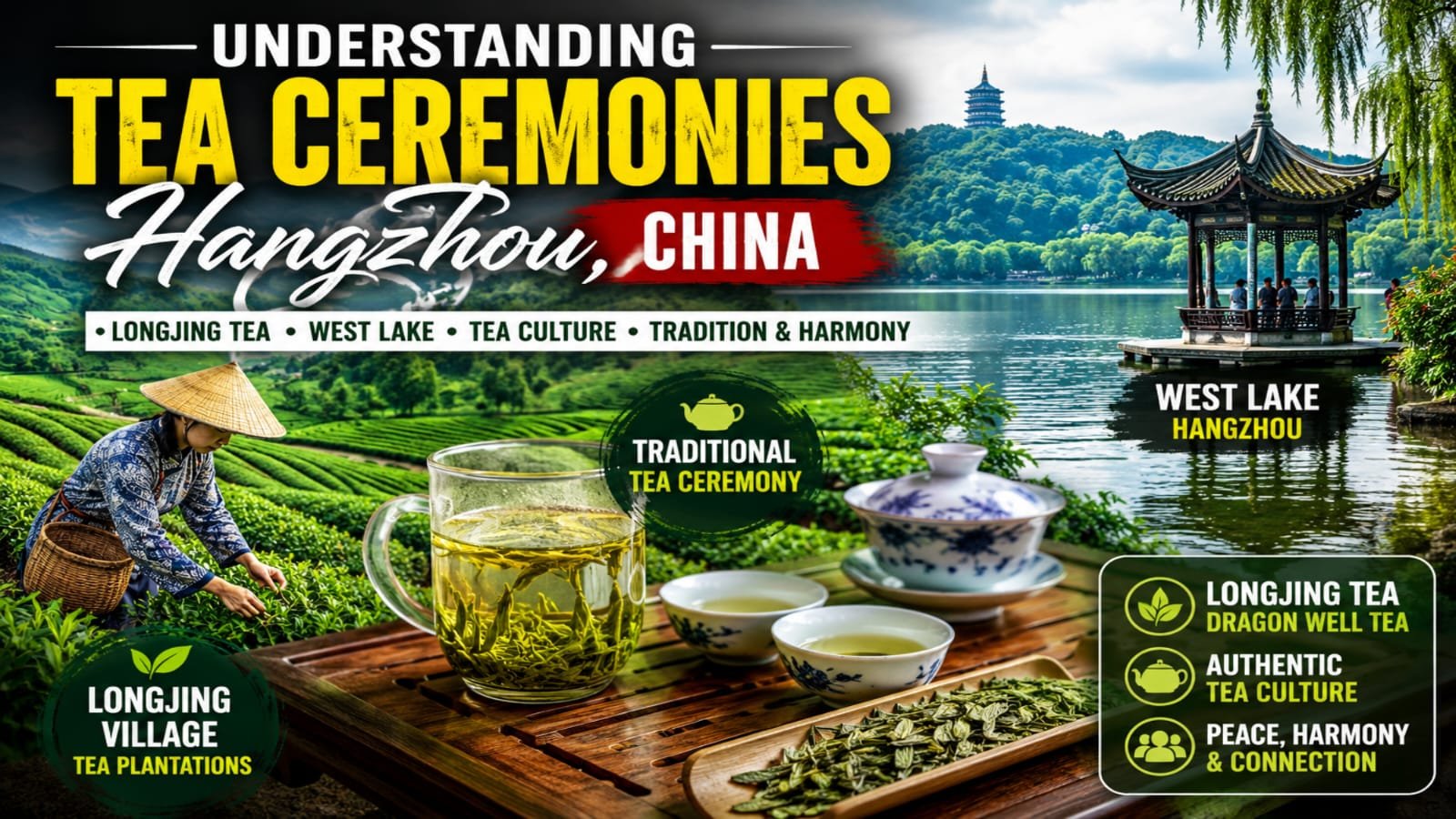
Few places in China are as closely connected to tea as Hangzhou. Known for its beautiful West Lake scenery and the famous Longjing (Dragon Well) tea, this historic city offers visitors a chance to experience tea not just as a drink, but as an important part of Chinese culture and daily life. Spending time in Hangzhou’s tea villages and traditional tea houses reveals a quieter side of China, where patience, respect, and appreciation for simple pleasures are celebrated.
Why Hangzhou is Famous for Tea
Hangzhou, located in Zhejiang Province, has been associated with tea cultivation for more than a thousand years. The city is home to Longjing tea, one of China’s most celebrated green teas. Its delicate aroma, smooth flavor, and fresh taste have made it a favorite among tea lovers for centuries. Many locals still consider tea an essential part of life. Whether meeting friends, welcoming guests, or taking a break from work, tea is often present. Visitors quickly notice that tea culture in Hangzhou feels natural and deeply rooted rather than something created only for tourists.
A Visit to Longjing Village
One of the most memorable experiences near Hangzhou is visiting Longjing Village, surrounded by rolling hills covered with tea plantations. Walking through the narrow paths between rows of tea bushes offers a peaceful escape from the city. In spring, tea pickers carefully harvest the young leaves by hand. Many family-run tea houses invite guests inside to learn about the tea-making process. Sitting on a wooden terrace overlooking the green hills while sipping freshly brewed Longjing tea is a simple but unforgettable experience.
The atmosphere is relaxed. There is no rush, and conversations often unfold slowly, matching the calm pace of tea preparation.
The Meaning Behind Chinese Tea Ceremonies
Unlike the highly formal Japanese tea ceremony, Chinese tea ceremonies are generally more relaxed and focus on harmony and appreciation.
In Hangzhou, the ceremony emphasizes several values:
- Respect for guests and hosts.
- Appreciation of nature.
- Mindfulness and patience.
- Enjoyment of aroma, taste, and appearance.
- Sharing conversation and friendship.
The process itself becomes an opportunity to slow down and focus on the present moment.
How a Traditional Tea Ceremony Works
A typical tea ceremony in Hangzhou follows a simple but elegant sequence.
Warming the Utensils
Hot water is first poured over the teapot and cups. This cleans and warms them, helping preserve the tea’s fragrance.
Adding the Tea Leaves
Fresh Longjing leaves are placed into a glass or porcelain cup. Their flat shape and bright green color are part of the visual beauty of the experience.
Brewing
Water heated to around 80–85°C is poured gently over the leaves. Using boiling water can damage the delicate flavors of green tea.
Observing the Leaves
One fascinating moment is watching the leaves slowly rise and sink in the water. Locals often appreciate this movement before taking the first sip.
Enjoying the Tea
Tea is sipped slowly rather than consumed quickly. Attention is given to its fragrance, sweetness, and changing flavors with each infusion.
Tea Houses Around West Lake
Several tea houses around West Lake provide peaceful settings where visitors can enjoy tea ceremonies. Some overlook the lake while others are hidden among bamboo groves and gardens. Many tea masters are happy to explain the history of Longjing tea and demonstrate proper brewing techniques. Even without speaking fluent
, visitors often find the experience welcoming and easy to appreciate.
Sitting beside West Lake with a cup of freshly brewed tea while listening to birds and watching the water creates a sense of calm that many travelers remember long after leaving Hangzhou.
Seasonal Tea Experiences
Spring is considered the best season for tea lovers. The fresh tea harvest begins, and the countryside turns vibrant green. Visitors can join tea-picking activities and watch traditional roasting methods performed by local farmers. Autumn also offers pleasant weather and fewer crowds. Tea houses become especially cozy as cooler temperatures encourage longer conversations over warm cups of tea.
Lessons Beyond the Cup
Perhaps the most valuable part of experiencing a tea ceremony in Hangzhou is not learning the perfect brewing method. Instead, it is understanding the Chinese philosophy behind tea: slowing down, appreciating small moments, and enjoying good company. In a world that often moves too fast, an afternoon spent in a tea house overlooking the tea fields of Hangzhou offers a reminder that simple experiences can sometimes leave the strongest impressions.

Welcome to Guide To Globe 46! I’m passionate about helping travelers explore the world with confidence and on a budget. Here you’ll find practical travel guides, hidden gems, solo travel tips, food experiences, and destination inspiration. My goal is to provide accurate, helpful, and easy-to-follow content that makes every journey memorable and enjoyable. Thank you for being part of this adventure!





Leave a Reply