There are few places in the world where history feels as alive as it does in the city of Rome. Walking through its ancient ruins is not like visiting a museum. Instead, it feels as though you have stepped into a living story where emperors, gladiators, senators, and ordinary citizens once shaped the course of history.
Known as the “Eternal City,” Rome is home to some of the most remarkable archaeological sites on Earth. Every stone, archway, and broken column tells a story that stretches back more than two thousand years. For travelers who love history and archaeology, exploring Rome is an unforgettable journey into the heart of the ancient world.
The First Glimpse of Ancient Rome
Arriving in Rome, one of the most surprising experiences is how ancient monuments stand side by side with modern life. Busy streets, cafés, and apartments surround structures that were already old when many civilizations were just beginning.
The city’s archaeological treasures are not hidden away. They are woven into everyday life, making Rome one of the most fascinating historical destinations in the world.
The Colosseum: Arena of Legends
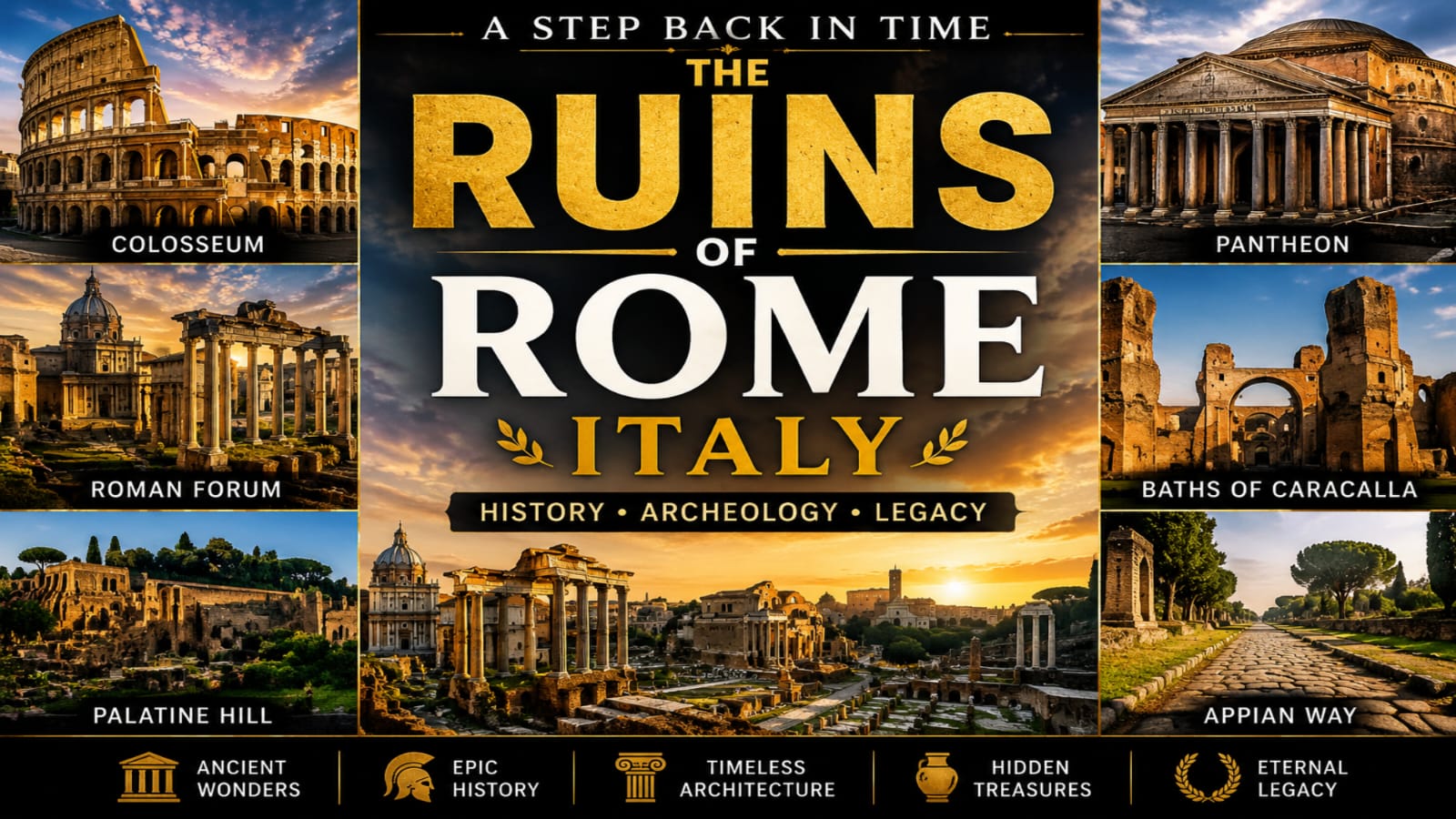
No visit to Rome is complete without seeing the iconic Colosseum.Completed around 80 AD, this massive amphitheater could hold tens of thousands of spectators. Here, gladiators fought, wild animal hunts were staged, and public spectacles entertained the citizens of the Roman Empire.
Standing inside the ruins today, it is easy to imagine the roar of the crowd echoing through the stone walls. Although much of the original structure has been damaged by earthquakes and centuries of stone removal, the Colosseum remains one of the greatest architectural achievements of the ancient world.
The Roman Forum: Heart of an Empire
Just a short walk from the Colosseum lies the remarkable Roman Forum.This was once the political, religious, and commercial center of ancient Rome. Emperors delivered speeches here, senators debated laws, and citizens gathered for public events.
Today, visitors can wander among the remains of temples, government buildings, and marketplaces. Though many structures are now only fragments, the Forum still offers a powerful glimpse into daily life during the height of the Roman Empire.
Palatine Hill: Birthplace of Rome
Overlooking the Forum is Palatine Hill, one of the most important archaeological sites in the city.According to Roman legend, this is where Romulus founded Rome in 753 BC. Archaeological discoveries have revealed evidence of settlements dating back even earlier.
The hill later became home to emperors and wealthy nobles who built luxurious palaces overlooking the city. Today, visitors can explore the ruins while enjoying panoramic views of Rome.
The Pantheon: A Marvel of Engineering
Among Rome’s best-preserved ancient monuments is the extraordinary Pantheon.Originally built as a temple and later converted into a church, the Pantheon is famous for its enormous concrete dome. Even after nearly two thousand years, it remains the largest unreinforced concrete dome in the world.
Stepping inside, the light streaming through the central opening, known as the oculus, creates an atmosphere that feels both peaceful and awe-inspiring. It is a masterpiece of Roman engineering and architectural innovation.
Hidden Archaeological Treasures
While famous landmarks attract most visitors, Rome also offers lesser-known archaeological gems.The ancient Baths of Caracalla reveal the scale and sophistication of Roman public life. These enormous bath complexes once featured libraries, gardens, exercise areas, and elaborate decoration.
Another fascinating site is the Appian Way, one of the oldest roads built by the Romans. Walking along its ancient stones offers a rare chance to experience a route that connected Rome to distant parts of the empire.
What the Ruins Teach Us
Rome’s ruins are more than tourist attractions. They are valuable archaeological records that help historians understand politics, engineering, religion, and everyday life in the ancient world.
Excavations continue to reveal new discoveries, proving that Rome still holds many secrets beneath its streets. Every artifact, inscription, and foundation adds another piece to the story of one of history’s most influential civilizations.
Tips for Exploring Rome’s Ruins
- Start early in the morning to avoid crowds and summer heat.
- Wear comfortable walking shoes, as many archaeological sites cover large areas.
- Consider hiring a knowledgeable guide to better understand the historical significance of each location.
- Allow time to explore beyond the major attractions, as some of Rome’s most rewarding experiences are found in lesser-known ruins.
- Carry water, especially during warmer months
Exploring the ruins of Rome is more than a sightseeing experience. It is a journey through centuries of human achievement, ambition, and creativity. From the mighty Colosseum to the quiet pathways of the Appian Way, every corner of the city reveals a chapter of history that helped shape the modern world.
Final Thoughts
For anyone interested in history, archaeology, or simply understanding how ancient civilizations lived, Rome offers an experience unlike any other. Long after leaving the city, the images of towering columns, ancient roads, and timeless monuments remain etched in memory, reminding visitors why Rome continues to captivate travelers from around the globe.

Welcome to Guide To Globe 46! I’m passionate about helping travelers explore the world with confidence and on a budget. Here you’ll find practical travel guides, hidden gems, solo travel tips, food experiences, and destination inspiration. My goal is to provide accurate, helpful, and easy-to-follow content that makes every journey memorable and enjoyable. Thank you for being part of this adventure!





Leave a Reply