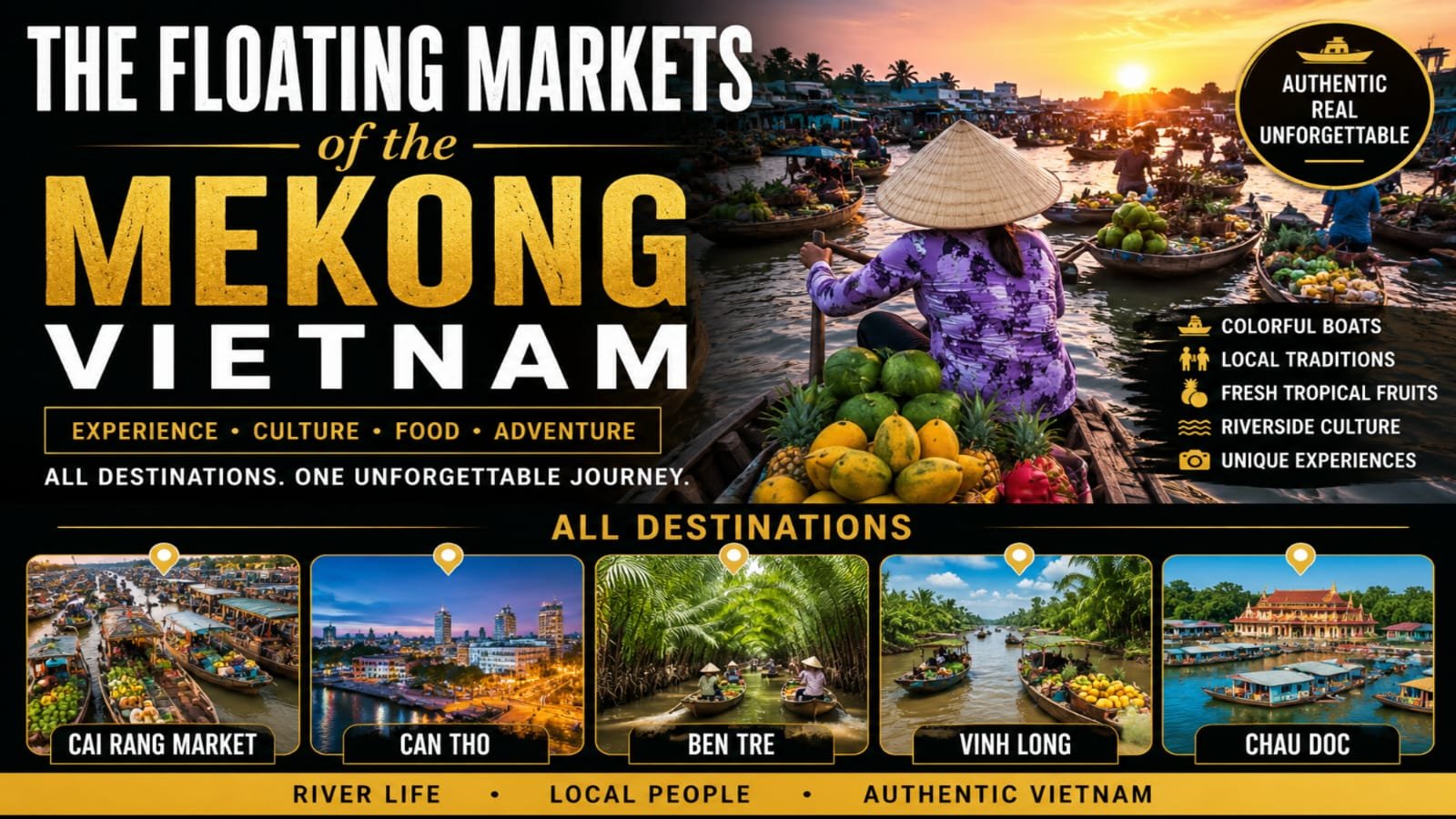
There are some places that leave an impression long after you return home. Vietnam’s floating markets in the Mekong Delta are one of those places. They are not built for tourists or designed as attractions. They are part of everyday life, where boats replace streets, rivers serve as highways, and local families have traded fresh produce on the water for generations. If you want to experience a side of Vietnam that feels genuine and deeply connected to local culture, waking up before sunrise to visit a floating market is well worth the effort.
First Impressions of the Mekong Delta
The Mekong Delta lies in southern Vietnam, where the mighty Mekong River spreads into a maze of rivers, canals, and fertile farmland before reaching the sea. Thanks to its rich soil and abundant water, the region produces much of Vietnam’s rice, tropical fruits, and vegetables. As dawn breaks, the waterways slowly come alive. Long wooden boats glide through the mist, engines hum softly across the river, and the scent of freshly cooked noodles drifts from floating kitchens. The atmosphere feels peaceful yet full of purpose. Unlike busy city streets, life here moves with the rhythm of the river.
The Famous Cai Rang Floating Market
Among the many floating markets in the Mekong Delta, Cai Rang Floating Market near Can Tho is the largest and most well-known. It begins before sunrise, and by early morning the river is crowded with boats loaded with pineapples, mangoes, coconuts, pumpkins, watermelons, and countless other fruits and vegetables. One of the most interesting traditions is how sellers advertise their products. Instead of displaying signs, they tie samples of their goods to a tall bamboo pole rising from the boat. From a distance, buyers can immediately see what each vendor is selling. It is a simple idea that has worked for decades.
Breakfast on a Boat
One of the highlights of visiting a floating market is eating breakfast without ever stepping onto land. Small boats weave between larger trading vessels, serving steaming bowls of noodle soup, fresh Vietnamese coffee, sticky rice, and sweet tropical fruit. Sitting on a gently rocking boat while enjoying a hot bowl of pho or hu tieu is an experience that feels completely different from dining in a restaurant. The food is fresh, affordable, and prepared with remarkable speed despite the floating kitchen.
Conversations That Stay With You
The floating markets are not only about buying and selling. They are also about people. Many vendors have spent their entire lives working on the river. Some families have traded here for several generations, passing their boats and customers from parents to children. Even with language differences, warm smiles and friendly gestures make visitors feel welcome. Watching buyers and sellers negotiate prices, exchange jokes, and share cups of coffee reminds you that these markets are living communities rather than tourist attractions.
More Than Just Commerce
The floating markets exist because of geography. Long before modern roads connected the villages, rivers were the fastest way to transport goods. Boats became the natural choice for commerce, and over time the markets grew into important trading centers. Today, roads and supermarkets have reduced the need for river trading in some areas. While tourism has helped preserve parts of the tradition, the number of large wholesale boats has gradually declined. That makes visiting these markets today feel even more meaningful, as you are witnessing a way of life that continues despite changing times.
Best Time to Visit
The best experience comes early in the morning, usually between 5:30 and 8:00 AM. This is when business is busiest, temperatures are cooler, and the soft morning light creates beautiful reflections across the river. Many travelers stay overnight in Can Tho so they can reach the market before sunrise. The dry season, generally from December through April, often offers calmer weather and easier travel, although the markets operate throughout the year.
Respecting Local Life
Because these are working markets, visitors should remember they are guests in someone’s daily routine.
*A few simple habits make a positive difference:
- Ask before taking close-up photographs of people.
- Buy a drink or snack from local boat vendors when possible.
- Avoid blocking boats while taking pictures.
- Keep plastic waste with you until you find a proper bin.
- Support local guides who know the waterways well.
Small gestures of respect help preserve the welcoming atmosphere that makes the Mekong Delta so special.
Final Thoughts
The floating markets of the Mekong are not about luxury or grand landmarks. Their beauty comes from ordinary people living extraordinary lives on the water. Watching the sunrise over hundreds of wooden boats, sharing breakfast on a floating kitchen, and seeing generations continue traditions that have shaped the region for centuries creates memories that feel authentic and lasting. If your travels bring you to southern Vietnam, make time for an early morning on the Mekong. It is one of those experiences that quietly reminds you that some of the world’s most remarkable places are simply where everyday life unfolds.

Welcome to Guide To Globe 46! I’m passionate about helping travelers explore the world with confidence and on a budget. Here you’ll find practical travel guides, hidden gems, solo travel tips, food experiences, and destination inspiration. My goal is to provide accurate, helpful, and easy-to-follow content that makes every journey memorable and enjoyable. Thank you for being part of this adventure!





Leave a Reply