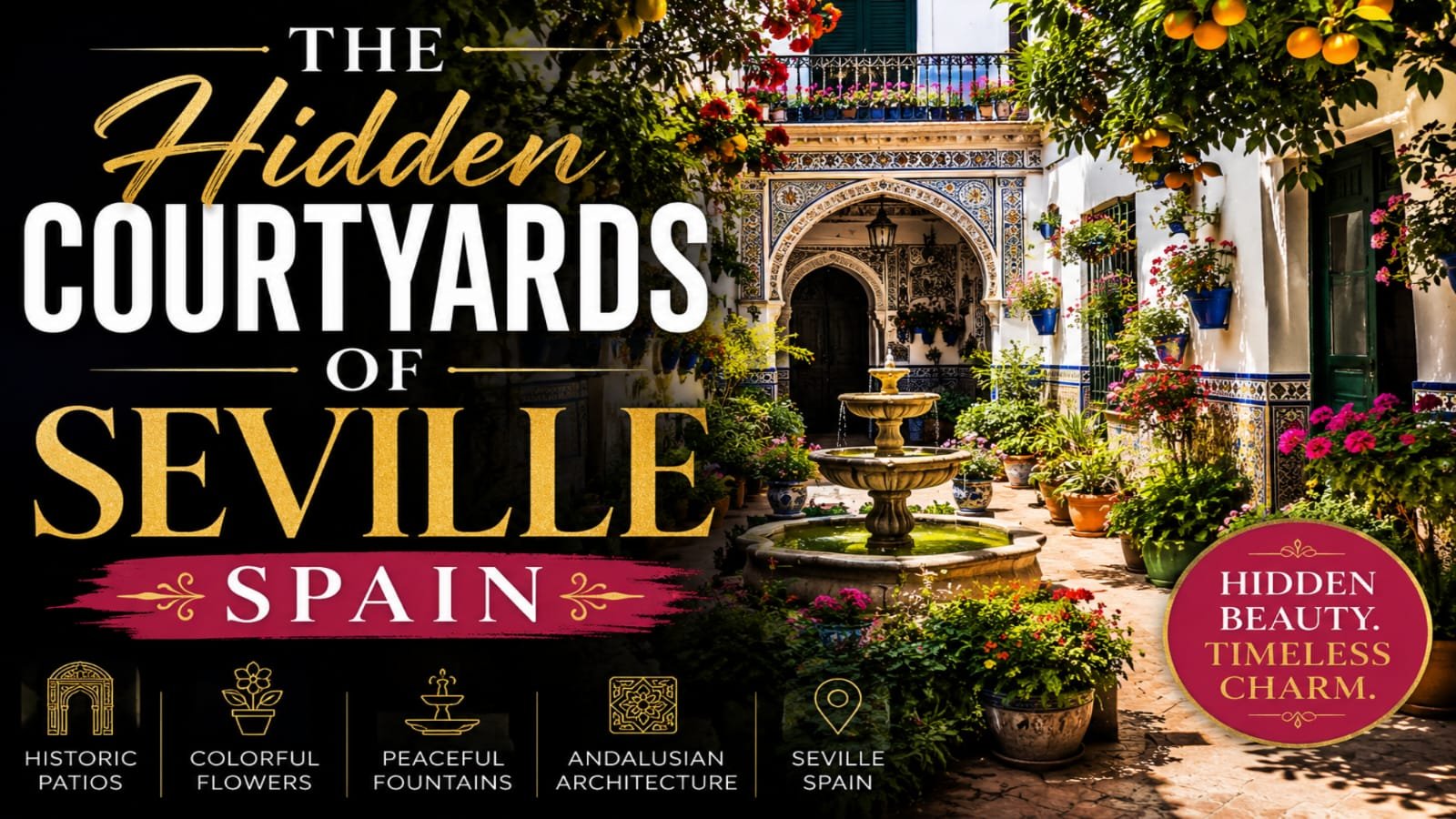
There are cities that impress you with famous landmarks, and then there are cities that quietly win your heart through small, unexpected moments. For me, Seville was the second kind. While most visitors come for the magnificent cathedral, flamenco performances, and the grand Plaza de España, I found myself slowing down and falling in love with something much simpler: its hidden courtyards.
Walking through Seville often feels like wandering through an open-air museum. Narrow streets twist between whitewashed houses, orange trees perfume the air, and every corner seems to hide another story. But the real magic begins when an old wooden door opens, revealing a peaceful courtyard that few tourists ever notice.
A Tradition Hidden Behind Closed Doors
One of the first things you notice in Seville is that many homes appear modest from the street. Tall walls and simple facades reveal very little. Then, if you’re lucky enough to step inside, everything changes. Traditional Andalusian homes are built around an interior courtyard, known locally as a patio. This architectural style dates back centuries and reflects influences from Roman and later Moorish design. Instead of facing outward, the house turns inward around a cool, shaded garden.
In Seville’s hot summers, these patios are more than beautiful. They naturally keep homes cooler by providing shade, airflow, and moisture from fountains and plants. It’s an elegant solution that has worked for generations.
Wandering Through Santa Cruz
The historic Santa Cruz neighborhood is probably the best place to begin exploring hidden courtyards.
Its maze-like streets were originally designed to provide shade from the intense Andalusian sun. As I wandered without a map, I found tiny squares decorated with ceramic tiles, balconies overflowing with flowers, and occasional open gates that offered glimpses into peaceful patios beyond.
Some belonged to private homes, while others were tucked inside small boutique hotels, restaurants, and cultural buildings. Every courtyard felt different, yet they all shared the same sense of calm.
It became clear that Seville rewards travelers who slow down rather than rush from one attraction to another.
The Sound of Water Everywhere
One detail that stayed with me was the constant sound of water. Nearly every traditional courtyard features a small fountain. The gentle trickle creates a soothing atmosphere while helping cool the surrounding air. Combined with the fragrance of jasmine, orange blossom, rosemary, and climbing vines, these spaces become little sanctuaries from the busy streets outside. Even after hours of walking, stepping into one of these patios felt refreshing.
Flowers That Bring Every Courtyard to Life
Flowers are part of Seville’s identity. Bright red geraniums spill from balconies. Bougainvillea climbs over white walls. Pots painted in vibrant blues and greens hang neatly along courtyards, adding bursts of color against the whitewashed buildings. Many residents care for these plants with incredible dedication. It’s common to see someone watering flowers early in the morning before the summer heat arrives. The result is a city that feels alive with color almost year-round.
Beautiful Patios You Can Actually Visit
Although many courtyards remain private, several are open to visitors. The Palacio de las Dueñas offers one of the most beautiful examples. Its peaceful gardens, fountains, and elegant patios provide a glimpse into aristocratic life in Andalusia while maintaining an intimate atmosphere.
Another wonderful stop is the Casa de Pilatos, where Renaissance and Mudéjar architecture blend beautifully around stunning courtyards decorated with marble columns, tiled walls, and lush greenery. Many small hotels throughout the old city also preserve historic patios. Even if you’re not staying overnight, enjoying a coffee in one of these hidden spaces is often possible.
Everyday Life Happens Here
Unlike grand monuments, courtyards are deeply connected to everyday life. Children play safely in shared patios. Neighbors chat in the evenings when temperatures become pleasant. Families gather for celebrations, meals, and quiet afternoons beneath the shade. These spaces aren’t simply historical attractions. They’re still an important part of daily living. That authenticity is what makes them so memorable.
The Best Time to Explore
Spring is undoubtedly one of the most rewarding seasons to experience Seville. Orange trees fill the streets with fragrance, flowers bloom everywhere, and temperatures remain comfortable for long walks. Early mornings are especially peaceful. Before crowds arrive, the city feels almost silent except for birds singing and fountains gently flowing inside hidden courtyards. If visiting during summer, exploring early in the day or after sunset is much more comfortable because afternoon temperatures can become extremely high.
Small Moments That Stay With You
One afternoon I stopped near an old doorway that had been left slightly open. Inside, sunlight filtered through lemon trees while a grandmother quietly watered dozens of flower pots. No tour guide was speaking, no crowds were taking photos, and no one seemed in a hurry. I simply stood there for a few seconds before continuing my walk. Oddly enough, that quiet moment became one of my strongest memories of Seville. Travel isn’t always about seeing the biggest attraction. Sometimes it’s about discovering places that remind you to slow down.
Final Thoughts
Seville’s hidden courtyards may never appear at the top of every travel guide, but they reveal the city’s true character better than almost anything else. Behind simple doors lie peaceful gardens, colorful flowers, elegant fountains, and centuries of history woven into everyday life. Exploring these patios offers a deeper connection with Seville, far beyond its famous landmarks.
If you ever visit this beautiful Spanish city, don’t rush. Wander through the old neighborhoods, keep an eye on open gates, and allow curiosity to guide you. You might discover that the most unforgettable part of Seville is hidden just beyond an ordinary doorway.

Welcome to Guide To Globe 46! I’m passionate about helping travelers explore the world with confidence and on a budget. Here you’ll find practical travel guides, hidden gems, solo travel tips, food experiences, and destination inspiration. My goal is to provide accurate, helpful, and easy-to-follow content that makes every journey memorable and enjoyable. Thank you for being part of this adventure!





Leave a Reply