There are some journeys that stay with you forever, and trekking to Everest Base Camp in Nepal is one of them. The moment you step onto the trail, surrounded by snow-covered peaks, fluttering prayer flags, and tiny mountain villages, you realize this is far more than just a hike. It is a test of endurance, patience, and mindset.
I still remember the first cold morning in Lukla. The air felt thinner than expected, my backpack suddenly seemed heavier, and the Himalayas looked impossibly huge. But every step toward Everest Base Camp felt meaningful. One thing I quickly learned was this: packing wisely can completely shape your experience. Too much gear will slow you down. Too little can make the trek uncomfortable and exhausting. The secret is finding the balance between comfort, warmth, and practicality.
Understanding the Everest Base Camp Trek
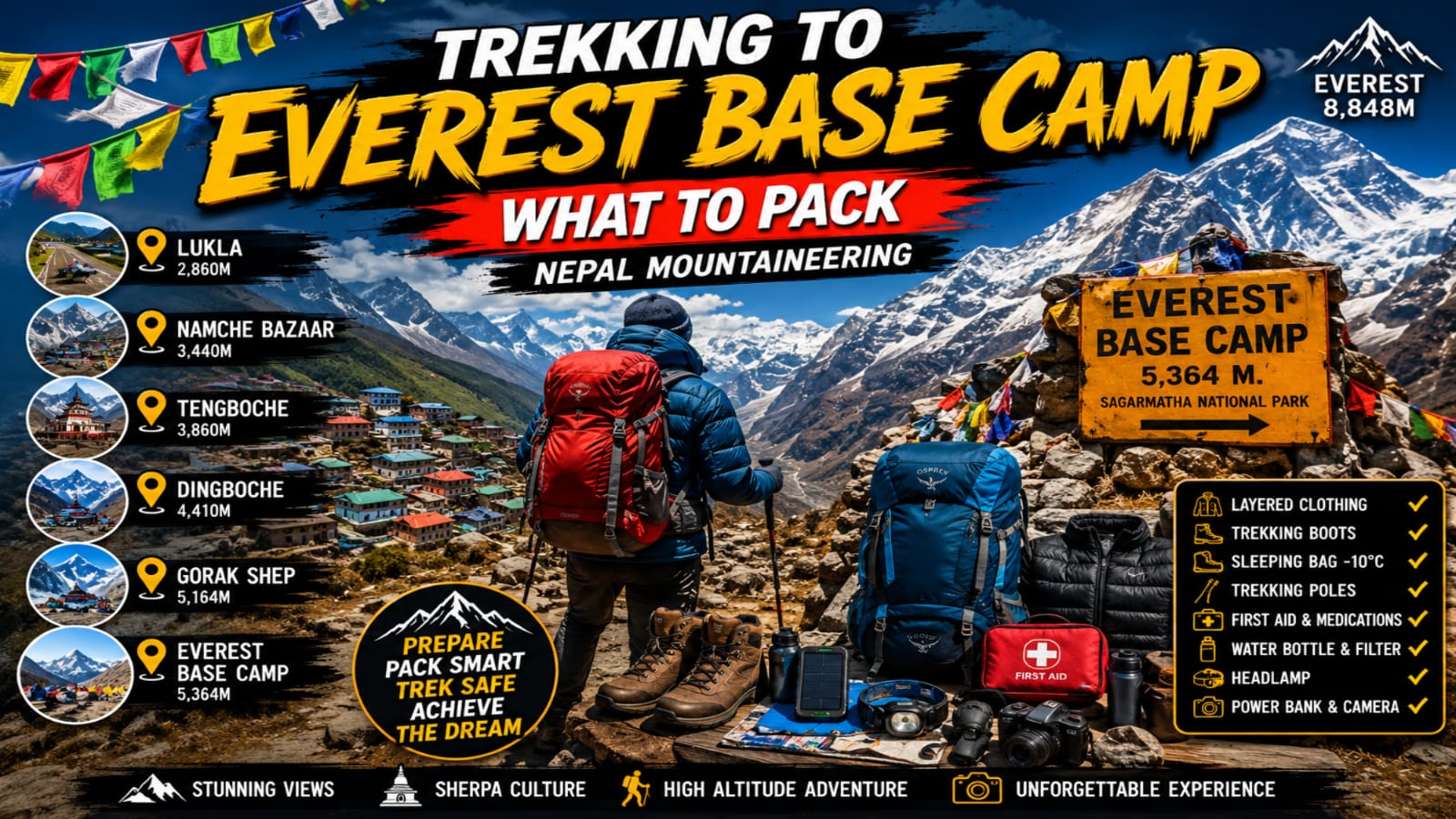
The Everest Base Camp trek usually takes around 12 to 14 days, depending on your route and acclimatization schedule. Trekkers walk through famous Sherpa villages like Namche Bazaar, Tengboche, Dingboche, and Gorak Shep before finally reaching Everest Base Camp at about 5,364 meters. The weather changes constantly. Mornings may feel pleasant while nights become freezing. You can experience sunshine, snow, rain, and strong winds all within a single day. That is why smart packing matters so much.
Choosing the Right Backpack
Your backpack becomes your closest companion on the trail. A trekking backpack between 40 and 55 liters is usually ideal if you are carrying your own gear. If you hire a porter, you can use a smaller daypack while the porter carries the larger duffel bag.
Look for these features:
Comfortable shoulder straps
- Waterproof material or rain cover
- Waist support belt
- Lightweight design
- You will be walking for hours every day, so comfort matters more than appearance.
Clothing: Layering is everything.
The biggest mistake first-time trekkers make is packing bulky clothes instead of layering properly.
In the Himalayas, layering keeps you warm while allowing flexibility as temperatures change throughout the day.
Base Layers
These sit close to your skin and help manage sweat.
Pack:
- 2 to 3 moisture-wicking thermal shirts
- 2 thermal leggings
- Quick-dry underwear
- Warm trekking socks
- Avoid cotton because it stays wet and cold.
Mid Layers
These provide insulation.
Pack:
- Fleece jacket
- Lightweight down jacket
- Warm trekking pants
- Wool sweater or hoodie
- A good fleece becomes incredibly valuable during cold evenings in teahouses.
Outer Layers
These protect you from wind, snow, and rain.
Pack:
- Waterproof jacket
- Waterproof trekking pants
- Windproof shell layer
- Mountain weather in Nepal can shift suddenly, especially at higher altitudes.
Trekking Boots Matter More Than Anything
Do not underestimate your footwear. A quality pair of waterproof trekking boots can save you from blisters, cold feet, and pain. Break them in before arriving in Nepal. Never start the Everest trek with brand-new boots.
Also pack:
- Lightweight sandals or camp shoes
- Extra wool socks
- Blister pads
- After long trekking days, removing heavy boots feels like heaven.
Essential Gear for High Altitude Trekking
Some items may seem small but become extremely important higher in the mountains.
Trekking Poles
These reduce pressure on your knees, especially during descents.
Headlamp
Electricity is limited in remote villages, and charging devices often costs extra. A reliable headlamp is useful during early morning hikes and nighttime bathroom trips.
Sleeping Bag
Even inside teahouses, temperatures can drop below freezing.
A sleeping bag rated for at least -10°C to -15°C is recommended.
Water Bottles and Purification
Hydration is critical at high altitude. Carry reusable water bottles and purification tablets or a portable water filter. Buying bottled water along the trail becomes expensive and creates unnecessary waste.
Health and Safety Items
Altitude affects everyone differently, no matter how fit they are.
Carry:
- Basic first aid kit
- Pain relievers
- Altitude sickness medication prescribed by a doctor
- Sunscreen
- Lip balm
- Hand sanitizer
- Wet wipes
- The Himalayan sun is surprisingly strong, especially with snow reflection.
Electronics and Small Comforts
- You do not need luxury on the Everest trail, but a few useful items make life easier.
- Consider packing:
- Power bank
- Universal charging adapter
- Camera
- Spare batteries
- Lightweight towel
- Snacks and energy bars
- Wi-Fi exists in some villages, but connections are often slow and unreliable. Honestly, that becomes part of the beauty of the trek. You spend less time looking at screens and more time appreciating the
- mountains around you.
What You Do Not Need
- Overpacking is one of the most common mistakes.
You probably do not need the following: - Multiple heavy jackets
- Too many clothes
- Hair dryers or unnecessary electronics
- Large bottles of toiletries
- Fashion accessories
Most trekkers end up wearing the same comfortable layers repeatedly.
Mental Preparation is Just as Important
Packing is not only about gear. You also need the right mindset. The Everest Base Camp trek can be physically demanding. Some days feel exhausting, especially at higher altitudes where every step takes more effort. But the rewards are unforgettable. Watching sunrise over Ama Dablam. Hearing yak bells echo through mountain valleys. Drinking hot tea while snow falls outside a small teahouse. Reaching Base Camp after days of effort.
Those moments stay with you long after the trek ends.
Final Thoughts
Trekking to Everest Base Camp is not reserved only for elite climbers or professional athletes. Ordinary people from all over the world complete this journey every year with determination, preparation, and patience. Packing smartly gives you confidence and allows you to focus on the experience instead of worrying about discomfort. Travel light, stay flexible, and respect the mountains. The Himalayas have a way of changing people. Somewhere between the steep trails, icy winds, and quiet monasteries, you discover strength you did not know you had.
And when you finally stand beneath the towering presence of Mount Everest, every difficult step feels worth it.

Welcome to Guide To Globe 46! I’m passionate about helping travelers explore the world with confidence and on a budget. Here you’ll find practical travel guides, hidden gems, solo travel tips, food experiences, and destination inspiration. My goal is to provide accurate, helpful, and easy-to-follow content that makes every journey memorable and enjoyable. Thank you for being part of this adventure!


Leave a Reply