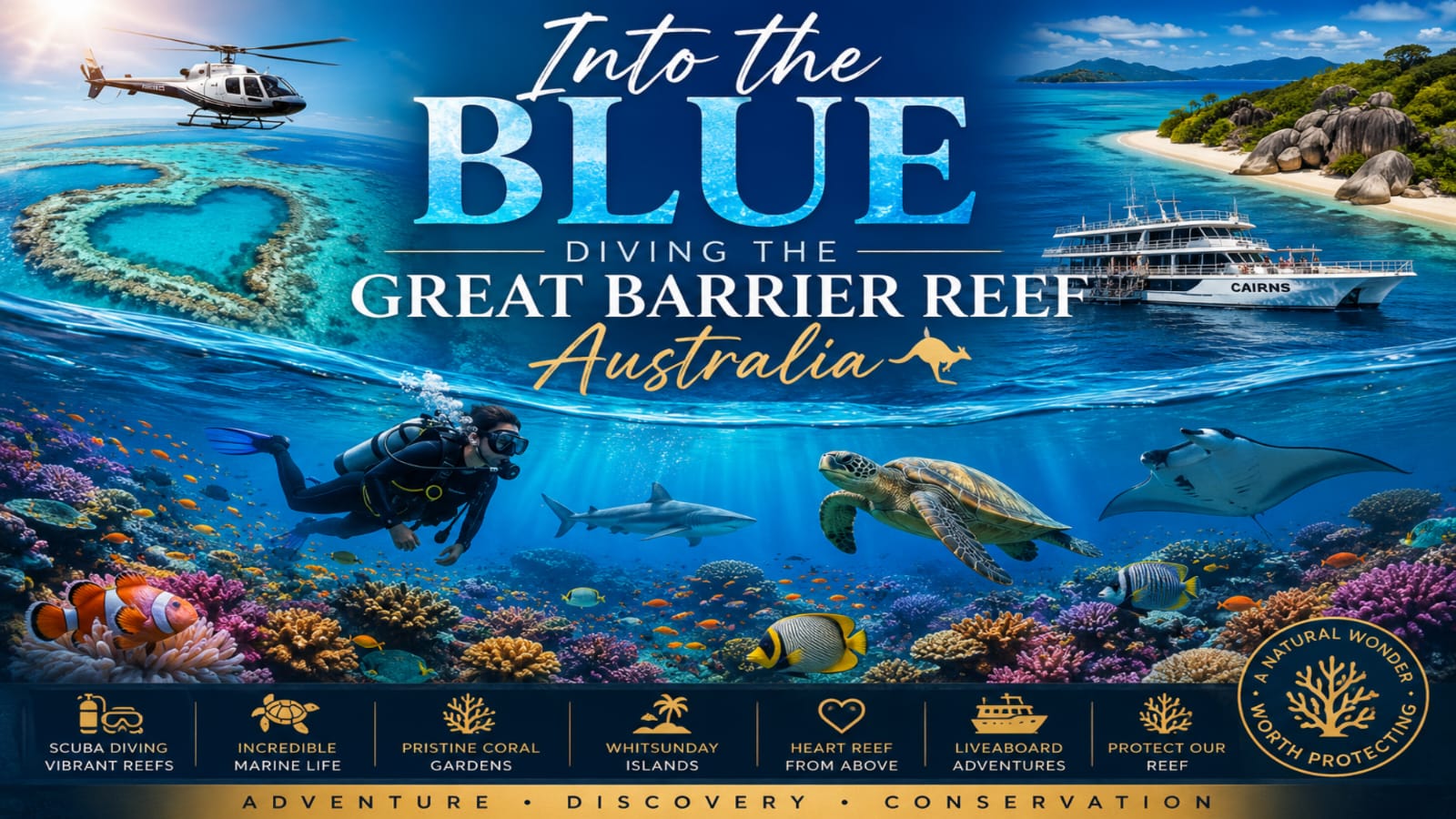
There are places in the world that look beautiful in photographs, and then there are places that completely overwhelm you the moment you arrive. The Great Barrier Reef in Australia belongs to the second category. No camera really prepares you for the first time you slip beneath the surface and see an entire underwater city alive beneath you.
I had seen documentaries for years. Giant coral gardens, sea turtles gliding through crystal water, schools of neon fish moving like clouds. Still, nothing compared to floating above the reef itself with only the sound of my own breathing echoing through the regulator.
The Great Barrier Reef is not just one reef. It stretches for more than 2,300 kilometers along the coast of Queensland and is the largest coral reef system on Earth. It is so massive that it can actually be seen from space. Yet underwater, it feels strangely intimate. Every section has its own personality, colors, and rhythm.
The Journey Begins in Cairns
Most diving adventures start in the tropical city of Cairns. The atmosphere there feels built for adventure. Dive shops line the streets, backpackers swap reef stories in cafés, and boats leave the marina before sunrise carrying excited travelers toward the Coral Sea.
The early morning ride out to the reef was part of the experience itself. The city slowly disappeared behind us while endless blue water stretched in every direction. Flying fish skimmed across the surface, and the crew briefed everyone on safety while the smell of salt filled the air. For first-time divers, the anticipation can be intense. There is excitement, but also nervousness. The ocean suddenly feels enormous when you are standing at the edge of a boat preparing to jump in. Then you do it. And the world changes.
The First Dive
The moment I descended below the surface, everything became silent and weightless. Sunlight filtered through the water in soft beams, and coral formations spread out beneath me like underwater forests.
Bright orange clownfish darted between sea anemones. Giant clams glowed electric blue. A sea turtle drifted lazily past as if it had all the time in the world.
What surprised me most was the scale of life everywhere. Tiny fish hid inside coral branches while larger reef sharks cruised calmly in deeper water. Nothing felt staged or artificial. It felt ancient and alive. The reef constantly changes color depending on sunlight and depth. In shallow areas, the coral appears bright pink, yellow, and turquoise. Deeper sections become darker and more mysterious, almost dreamlike. Even experienced divers on the boat admitted they never get tired of it.
Meeting the Marine Giants
One of the most unforgettable moments came during a dive near the outer reef. Visibility was incredibly clear that day, almost like floating through glass. Suddenly, a massive shadow appeared in the distance.
A manta ray.
It moved with unbelievable grace, almost flying through the water rather than swimming. Watching it glide overhead was one of those travel moments that stays in your memory forever. Depending on the season, divers can also encounter dwarf minke whales, reef sharks, dolphins, and even humpback whales migrating along the Queensland coast. The reef is home to thousands of marine species, making every dive unpredictable in the best possible way.
Night Diving on the Reef
If daytime diving feels magical, night diving feels like entering another planet. After sunset, the reef transforms completely. Creatures hidden during the day suddenly emerge from the coral. Flashlights reveal hunting lionfish, glowing plankton, and sleeping turtles tucked beneath rocky ledges. At first, diving in darkness can feel intimidating. But once your eyes adjust, the experience becomes strangely peaceful. The ocean at night carries a sense of mystery that is difficult to describe. Every beam of light reveals something unexpected.
Beyond the Diving
While scuba diving is the main attraction, the reef offers experiences for everyone. Snorkeling over shallow coral gardens can be just as breathtaking, especially for travelers who are not certified divers. Many visitors also take scenic helicopter flights over the famous Heart Reef, sail through the Whitsunday Islands, or stay overnight on liveaboard dive boats far from the mainland. The tropical islands scattered across the reef feel almost unreal, with white sand beaches and water so clear that boats appear to float in the air.
The Fragile Beauty of the Reef
As beautiful as the Great Barrier Reef is, it is also fragile. Climate change, coral bleaching, pollution, and rising ocean temperatures have placed enormous pressure on the ecosystem in recent years. Local conservation teams and marine scientists continue working to protect this natural wonder, but visitors also play an important role. Responsible tourism matters here. Choosing eco-certified dive operators, respecting marine life, and avoiding damage to coral can help preserve the reef for future generations.
Standing on the boat after my final dive, watching the sun disappear into the Coral Sea, I realized the Great Barrier Reef is more than just a travel destination. It is one of the few places left on Earth that truly reminds you how extraordinary nature can be. You leave with salt in your hair, sunlight on your skin, and the memory of an entirely different world hidden beneath the waves.

Welcome to Guide To Globe 46! I’m passionate about helping travelers explore the world with confidence and on a budget. Here you’ll find practical travel guides, hidden gems, solo travel tips, food experiences, and destination inspiration. My goal is to provide accurate, helpful, and easy-to-follow content that makes every journey memorable and enjoyable. Thank you for being part of this adventure!




Leave a Reply