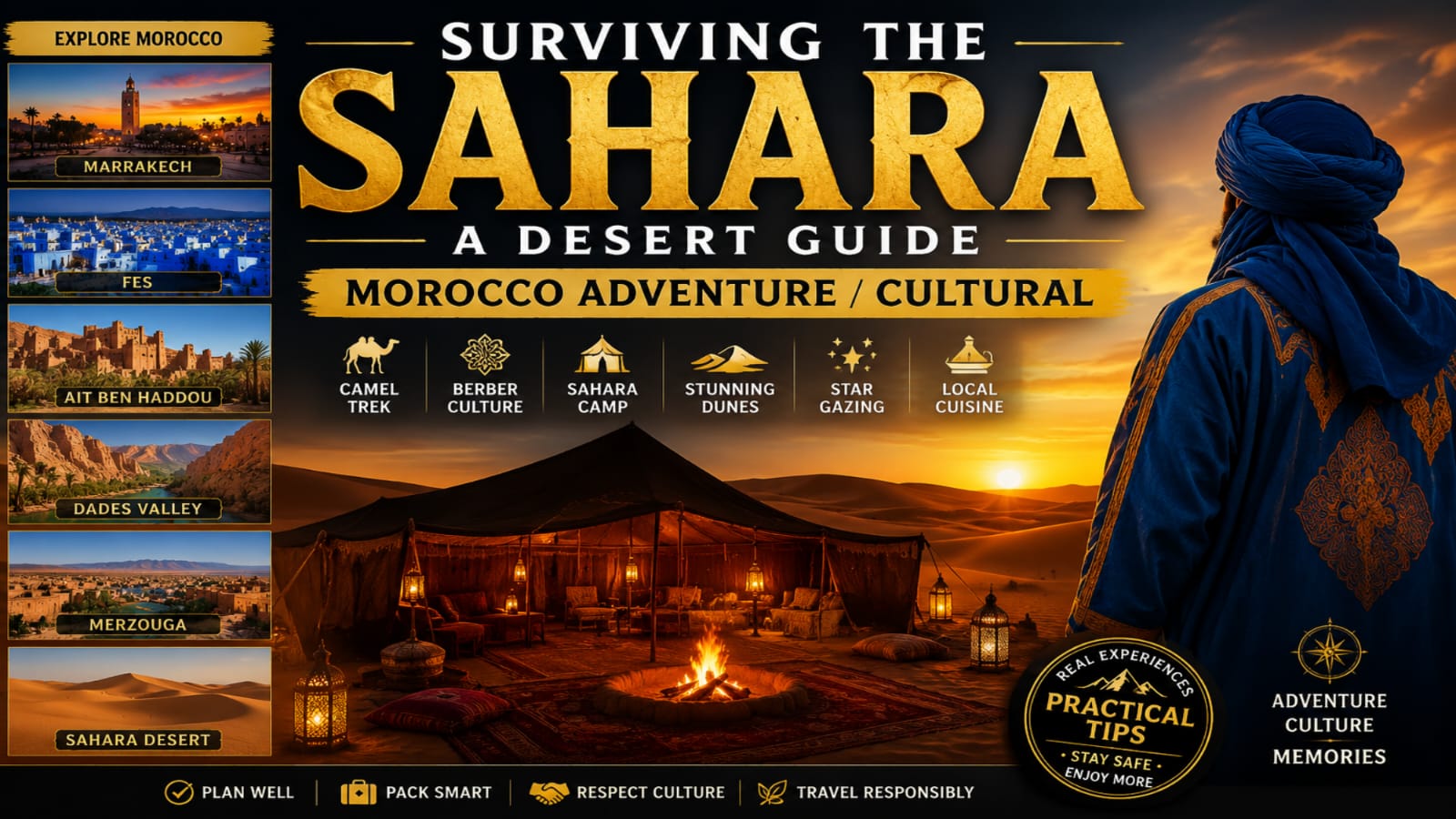
The first thing that surprised me about the Sahara wasn’t the heat. It was the silence. Standing on top of a golden dune near Merzouga in southeastern Morocco, I looked across an endless sea of sand stretching to the horizon. There were no traffic sounds, no crowds, and no city lights. Just the wind moving gently across the dunes. It felt like stepping into another world. For many travelers, visiting the Sahara Desert is the highlight of a trip to Morocco. It’s an adventure that combines breathtaking landscapes, traditional Berber culture, and a genuine test of preparation and endurance. While the Sahara is far from the dangerous wasteland often portrayed in movies, understanding the desert environment can transform your experience from uncomfortable to unforgettable.
Reaching the Desert
Most travelers begin their Sahara journey from Marrakech or Fes. The road to the desert passes through the Atlas Mountains, ancient kasbahs, and dramatic valleys before reaching the famous Erg Chebbi dunes near Merzouga. The drive itself is part of the adventure. Small villages cling to rocky hillsides, camel caravans occasionally appear in the distance, and the scenery changes constantly. By the time the first massive sand dunes appear on the horizon, the anticipation is impossible to ignore.
Understanding the Sahara Climate
One of the biggest misconceptions about the Sahara is that it’s always extremely hot. Summer temperatures can indeed exceed 45°C (113°F), but winter nights often drop close to freezing. The desert operates on extremes. During the day, lightweight and breathable clothing is essential. At night, especially between November and February, warm layers become surprisingly important. The best months to visit are generally from October to April, when temperatures are more comfortable for exploring.
What to Pack for Survival
You don’t need expensive expedition gear, but a few essentials make a huge difference. A wide-brimmed hat or desert scarf helps protect against the sun and blowing sand. Sunglasses are indispensable because sunlight reflects intensely from the dunes. Water is your most important companion. Even during cooler months, dehydration happens faster than many visitors realize. Reusable water bottles and electrolyte packets can be lifesavers during long excursions.
Other useful items include:
- Lightweight long-sleeved clothing
- Sunscreen with high SPF
- Lip balm
- Comfortable walking shoes
- Portable power bank
- Light jacket for evening temperatures
Packing light is wise, but packing smart is even more important.
The Camel Trek Experience
No Sahara adventure feels complete without riding a camel into the dunes. The experience is both magical and humbling. The slow rhythm of the camel creates a natural pace that allows travelers to absorb the landscape. As the sun begins to set, the dunes shift through shades of gold, orange, and deep red. Don’t expect luxury. Camel trekking can be physically demanding, especially for beginners. However, the reward arrives when you reach a desert camp and watch the sun disappear beyond the dunes. It’s a moment that photographs rarely capture fully.
Spending a Night Under the Stars
The desert sky may be the Sahara’s greatest attraction. Without city lights, thousands of stars become visible. The Milky Way stretches clearly overhead, creating one of the most spectacular night skies many travelers will ever witness. Most desert camps offer traditional Berber hospitality, including local meals, mint tea, music, and storytelling around a campfire. Listening to traditional drums while sitting beneath a sky filled with stars creates a connection to the desert’s cultural heritage that feels deeply authentic.
Learning from Berber Culture
The Sahara isn’t just a landscape. It’s home to communities that have adapted to desert life for centuries. The Berber people, also known as Amazigh, possess generations of knowledge about survival, navigation, and hospitality. Spending time with local guides offers valuable insight into traditions that remain strong despite modern changes. Sharing tea, learning about desert customs, and hearing local stories often become some of the most memorable parts of the journey. Respect for local culture goes a long way. Modest clothing, polite greetings, and curiosity about local traditions are always appreciated.
Staying Safe in the Desert
The Sahara is generally safe for tourists, especially when traveling with experienced local guides.
The biggest challenges are environmental rather than security-related. Heat exhaustion, dehydration, and sunburn are far more common concerns.
Simple precautions make a huge difference:
- Drink water regularly
- Avoid strenuous activity during peak afternoon heat
- Wear protective clothing
- Follow your guide’s advice
- Keep basic medical supplies available
Preparation allows you to focus on enjoying the experience rather than dealing with avoidable problems.
Why the Sahara Stays With You
Long after leaving Morocco, many travelers find themselves thinking about the desert. Perhaps it’s the vastness of the landscape. Perhaps it’s the silence. Or maybe it’s the reminder that some of the world’s most extraordinary experiences come from simplicity. The Sahara doesn’t offer constant entertainment. Instead, it offers space to slow down, observe, and appreciate a world that has changed very little over centuries. For anyone seeking adventure mixed with culture, history, and natural beauty, the Moroccan Sahara remains one of the most rewarding journeys on Earth.

Welcome to Guide To Globe 46! I’m passionate about helping travelers explore the world with confidence and on a budget. Here you’ll find practical travel guides, hidden gems, solo travel tips, food experiences, and destination inspiration. My goal is to provide accurate, helpful, and easy-to-follow content that makes every journey memorable and enjoyable. Thank you for being part of this adventure!





Leave a Reply