There is a distinct, unforgettable moment on the flight from Islamabad to Skardu when the Pakistan International Airlines (PIA) aircraft dips sharply between two towering walls of jagged, chocolate-brown rock. For a few agonizing seconds, the wingtips feel uncomfortably close to the sheer cliffs. Then, the plane banks left, and the Indus River opens up below you—looking like a thin, meandering ribbon of turquoise silk slicing through an endless sea of stone and dust.
If you happen to be seated on the left side of the aircraft, your breath catches entirely. You realize instantly that you aren’t just visiting another standard tourist town. You’ve dropped straight onto the raw, untamed edge of the earth.
Skardu isn’t a destination you casually pass through on a weekend getaway. It is a profound, humbling expanse tucked away in Pakistan’s northernmost region of Gilgit-Baltistan, where the massive ranges of the Karakoram, the Himalayas, and the Hindu Kush collide. Having spent considerable time navigating its dusty bazaars, freezing alpine lakes, winding mountain passes, and welcoming village hearths, I can tell you straight: travel brochures and glossy tourism boards only show you half the story.
If you are planning an expedition to this high-altitude frontier, here is an extended, firsthand, and deeply grounded guide to the best places to visit, authentic things to do, and the real-world practicalities of traveling through the roof of the world.
Getting Your Bearings: What Skardu Really Feels Like
Before you pack your bags, you need to understand what Skardu is. Sitting at an altitude of roughly 2,230 meters (7,320 feet) above sea level, Skardu town itself acts as the bustling hub and base camp for almost every major mountaineering and trekking expedition in Pakistan. This is where climbers gear up before attempting giants like K2, Gasherbrum, and Broad Peak.
Yet, despite its adventurous reputation, the town has a distinct rustic charm. The main bazaar is a chaotic, vibrant mix of men in traditional Shalwar Kameez wearing woolen pakols (traditional caps), rugged 4×4 Jeeps kicking up dust, and tiny local shops selling everything from dried apricots and yak cheese to heavy-duty climbing gear. However, the real magic doesn’t lie in the town center. It lies hidden in the valleys, plateaus, and glacial pockets that radiate outward for miles.
The Ultimate Places to Visit in Skardu
Upper Kachura Lake (Skip the Lower One)
Most commercial tour operators and crowded tourist buses make their first stop at Lower Kachura Lake—more widely known as the Shangrila Resort. It is famous for its distinct red-roofed cottages built in the shape of a pagoda and an old, crash-landed aircraft resting near the gardens. While it is undeniably scenic, it is heavily commercialized, fenced off, and often packed with day-trippers.
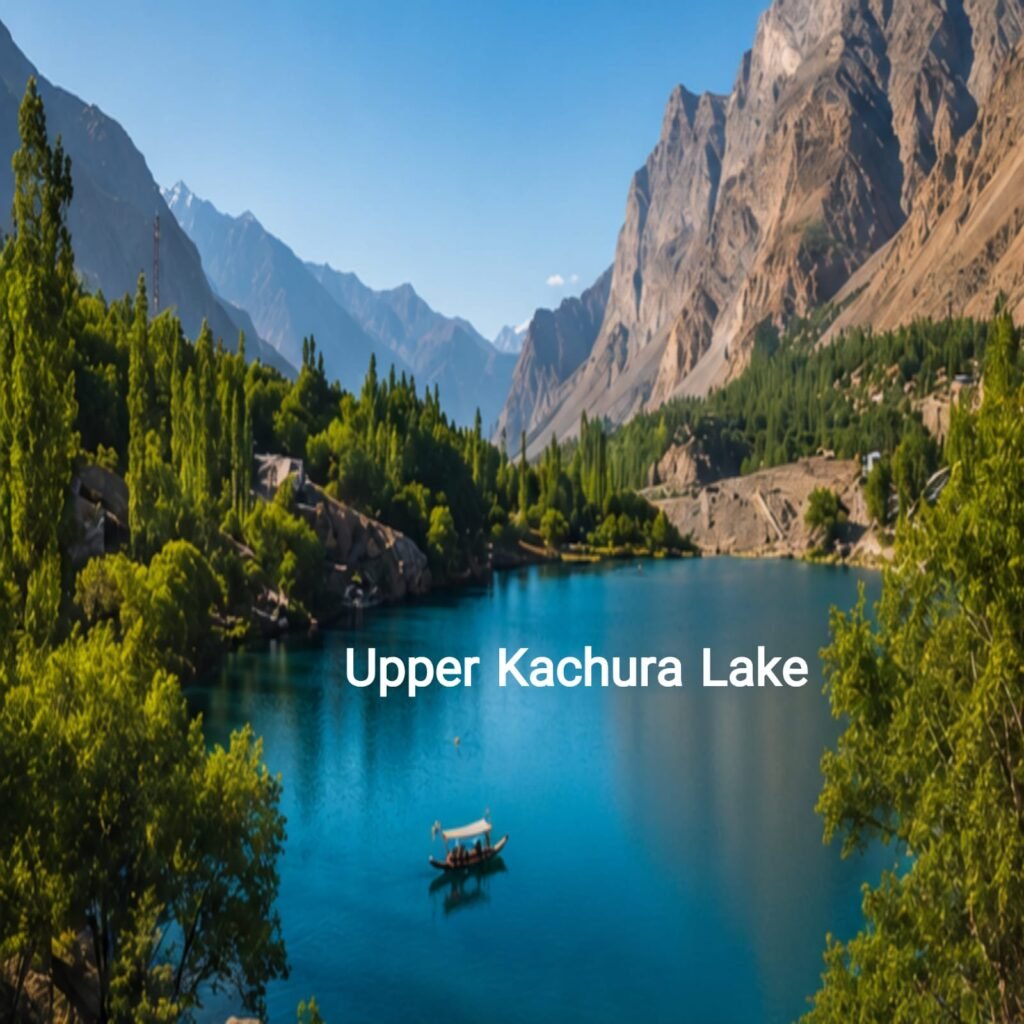
Instead, bypass the resort gates and walk 20 to 30 minutes uphill along a dirt track to Upper Kachura Lake. This hidden alpine jewel is entirely natural, untouched by heavy commercial development, and surrounded by wild fruit orchards and sheer rock cliffs.
The water here is a deep, startling sapphire blue, and it is so crystal clear that you can watch small fish darting meters away from the shore. There are no luxury resorts here—just a few tiny local tea shacks. Find a quiet spot by the water’s edge, buy some freshly caught trout fried over an open wood fire, and simply sit in silence while the wind rustles through the surrounding pine trees. It is an experience that instantly resets your nervous system.
Deosai National Park: The Land of Giants
If Skardu is a dramatic valley, Deosai is another planet entirely. Sitting at an average elevation of over 4,000 meters (13,000 feet) above sea level, Deosai is the second-highest alpine plateau in the world. The name literally translates to “The Land of Giants” in local folklore because ancient locals believed the plateau was inhabited by mythical giants. Standing up there, you begin to understand why they thought so.
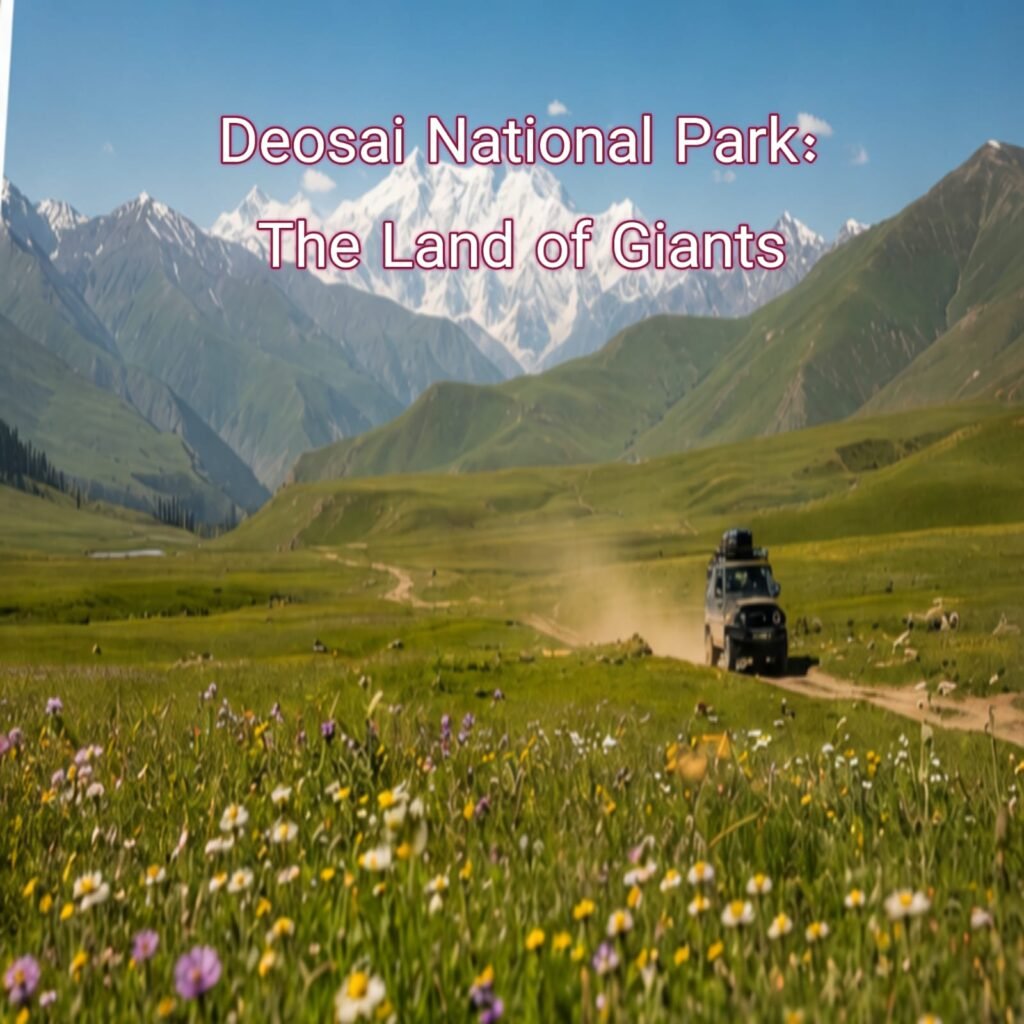
There are no trees on the plateau. Instead, you are greeted by an endless, undulating carpet of green hills and vibrant wildflowers during the summer months. Crisscrossed by crystal-clear glacial streams and backed by distant, towering snow-capped peaks.
- Sheosar Lake: Tucked deep within the national park, Sheosar Lake is an absolute must-visit. Its deep blue waters reflecting the towering Nanga Parbat massif in the distance feel entirely surreal.
- The Practical Reality: You cannot take a standard sedan or low-clearance car to Deosai. You must rent a robust 4×4 Jeep from Skardu town. The road is a grueling, deeply bumpy dirt track, and crossing rushing glacial streams like Bara Pani is a thrilling adventure in itself. Keep your eyes peeled Deosai is also the final sanctuary for the endangered Himalayan Brown Bear. Though spotting one requires a fair amount of luck.
Kharpocho Fort (The King of Forts)
Perched menacingly on a massive rocky cliff directly overlooking Skardu town and the sweeping curve of thpeeled;s Rive. Kharpocho Fort offers a heavy dose of local history. Builbrown bear.te 16th century by King Ali Sher Khan Anchan, one of the most powerful rulers of the region. The fort’s weathered stone walls have stood guard over the valley for centuries.
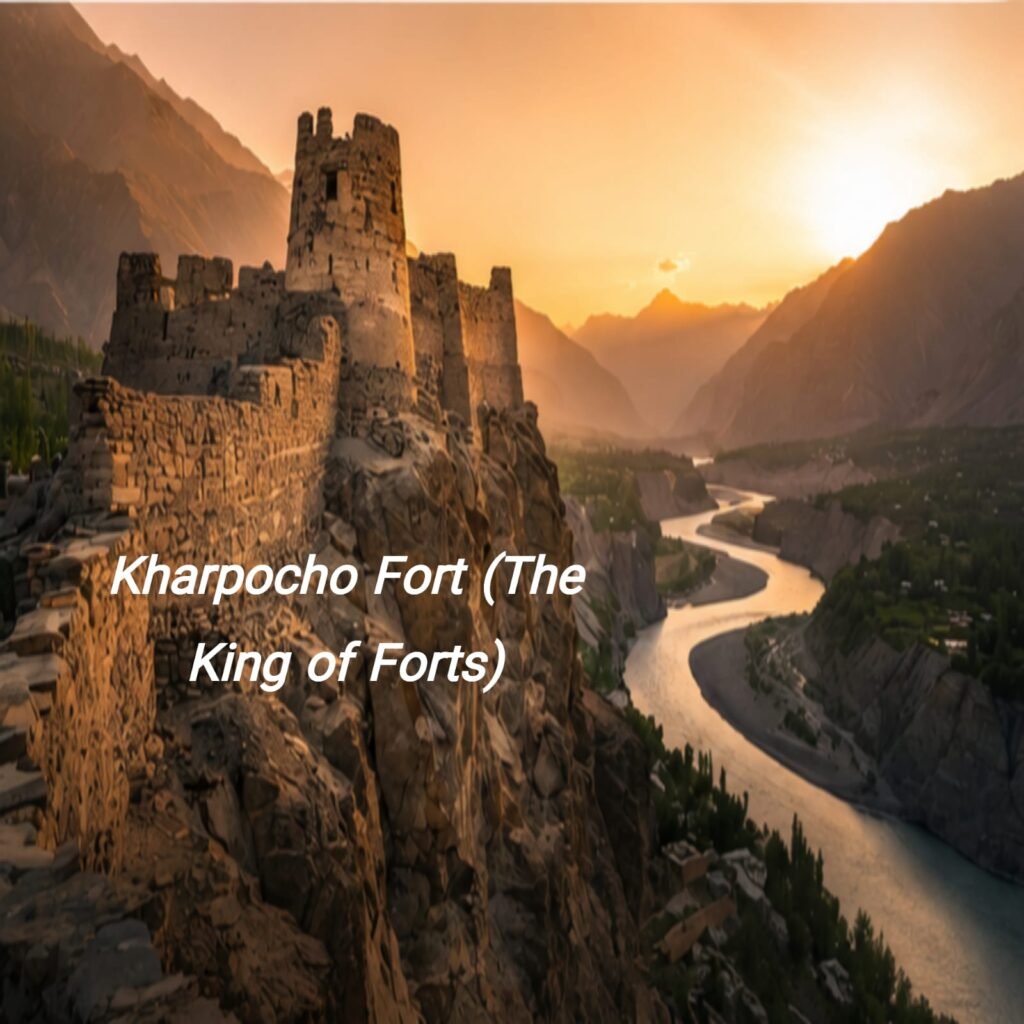
Reaching it requires a brisk 20-minute uphill hike starting from the edge of the main Skardu bazaar. The trail is safe but steep, winding through arid slopes. Once you reach the top, the ruins are quiet and largely unmonitored. Climbing up here an hour before sunset rewards you with the absolute finest panoramic view of the valley. The emerald-green fields, the sprawling town below, and the mighty Indus River cutting. A dramatic path through the desert landscape.
Katpana and Sarfaranga Cold Deserts
One of the most mind-bending geographical quirks of Skardu is its high-altitude cold deserts. It completely messes with your brain to stand on rolling sand dunes while staring up at massive, blinding white glaciers just a few miles away.
- Katpana Desert: Located just a short drive from Skardu town, Katpana is easily accessible. The sand dunes are fine, golden, and wind-carved.
- Sarfaranga Cold Desert: If you want a more pristine, remote experience, drive out a bit further toward Shigar. The Sarfaranga Cold Desert features much taller dunes, softer sand, and absolute silence as dusk settles over the mountains. It is also the venue for the annual international desert jeep rally, though on any normal day, it feels like you’ve been dropped onto Mars with a backdrop of the Himalayas.
Shigar Valley and Historic Fort
A short, scenic one-hour drive from Skardu takes you into the neighboring Shigar Valley, following the winding Shigar River. The valley is lush, dotted with endless rows of pear, apple, and apricot orchards.
At the heart of the valley sits Shigar Fort (Fong Khar), a 400-year-old palace built by the Amacha rulers of Shigar. Painstakingly restored by the Aga Khan Cultural Service and now managed as a heritage hotel, walking through its low-beamed wooden rooms, carved balconies, and stone courtyards feels like stepping straight back into Balti royalty. Even if you aren’t staying overnight, walking through the museum and having tea in the sprawling courtyard is well worth the trip.
Discoveries Off the Beaten Path
If you have a few days in the region, be sure to get out of the usual tourist tracks:
- Nansoq Organic Village: Located just behind Kharpocho Hill, Nansoq is considered one of the first organic villages in the area. Walking down its narrow, stone-paved pathways lets you witness authentic village life untouched by modern rush. You can buy freshly harvested organic apricots, watch locals spin wool, and experience genuine Balti hospitality.
- Manthoka Waterfall: Situated in the Kharmang district about two hours from Skardu, this roaring waterfall cascades down a massive black rock face into a clear pool. There is a trout farm nearby where you can pick your fish and have it cooked fresh on the spot. while listening to the thunderous roar of the water.
- Khaplu Palace & Chaqchan Mosque: If you drive further east toward Khaplu (about 3 hours from Skardu), you will find another stunning heritage palace. Nearby stands the Chaqchan Mosque, one of the oldest mosques in the region, dating back to 1370 AD, showcasing a mesmerizing blend of Tibetan, Kashmiri, and Persian wooden architecture. Authentic Things to Do Beyond Sightseeing
To truly connect with Skardu, you have to engage with its culture and environment rather than just checking off landmarks:
- Stargaze Away from Light Pollution: Because of its high altitude, thin air, and total absence of major industrial light pollution, Skardu boasts some of the clearest night skies in the world. If you camp out near Deosai or even spend a night in the open landscapes of Katpana, the Milky Way arcs across the velvet sky with startling, breathtaking clarity. Bring a warm blanket, a thermos of local tea, and just look up.
- Feast on Local Balti Cuisine: Forget standard urban Pakistani food; Balti cuisine has its own distinct identity influenced by Tibetan and Central Asian traditions. Make sure to try Chapshuro (a savory, meat-stuffed flatbread baked or fried to crispy perfection). Soup Lawas (a hearty traditional noodle soup), and local butter tea (Gurqergur), which is salty, rich, and designed to keep you warm against the mountain chill.
- Wander the Fruit Orchards During Harvest Season: If you visit between July and September, Skardu transforms into a fruit bowl. Apricots, chersoup) andes, and peaches hang heavy from branches lining the roadsides. Local farmers are remarkably generous; if you politely ask, they will often let you pick fresh fruit straight from the tree for free. Real-World Travel Tips for Surviving and Thriving in Skardu
Traveling to a high-altitude mountain frontier requires a bit of preparation. The infrastructure is rugged, the weather is unpredictable, and things rarely run on a strict metropolitan schedule. Keep these practical tips in mind:
Altitude Sickness is Real and Unforgiving
Skardu sits at over 7,000 feet, and places like Deosai push past 13,000 feet. Do not try to run up mountain trails the moment you step off the plane. Give your body at least 24 to 48 hours to acclimate to the thinner air. Drink double the amount of water you normally would. Avoid heavy physical exertion on your first day, and keep headaches or dizziness seriously in check. If symptoms worsen, descend immediately.
Connectivity and Digital Realities
Forget about seamless, high-speed streaming or constant social media updates while exploring remote valleys. SCOM is the only mobile network that reliably functions across Gilgit-Baltistan. Expect total dead zones once you head deep into Deosai, Khaplu, or upper valleys. Pro tip: Download your offline Google Maps, travel itineraries, and emergency contacts before leaving Islamabad or Gilgit.
Pack Smart Layers (Even in Summer)
A common mistake travelers make is assuming that July and August mean tropical weather in the mountains. While the sun can feel intensely hot during midday, the temperature plummets dramatically. The exact second the sun dips behind the towering mountain peaks. Always pack a reliable windproof jacket, a warm fleece, sturdy hiking boots with good grip, and plenty of sunscreen.
Road vs. Air Travel Dilemma
- Flying: The flight from Islamabad to Skardu offers some of the most majestic aerial mountain views on earth. However, these flights are entirely dependent on clear weather conditions. If it is cloudy or windy, flights get canceled instantly, sometimes leaving travelers stranded in Islamabad for days.
- Driving: If you choose to drive via the legendary Karakoram Highway (KKH) and the Skardu Road. It is a magnificent two-day road trip carved into sheer mountain rock. However, it requires nerves of steel. Ensure you hire an experienced, local 4×4 driver. Who knows how to navigate hairpin bends, narrow cliffside edges, and potential landslide-prone stretches safely?
Skardu is not a vacation destination where you lounge by a pool and wait to be pampered. It is a raw, elemental wilderness that demands respect, rewards patience, and leaves. An indelible mark on your soul long after you’ve returned to the lowlands. Pack your bags, keep your mind open, and let the Karakoram work its magic.

Welcome to Guide To Globe 46! I’m passionate about helping travelers explore the world with confidence and on a budget. Here you’ll find practical travel guides, hidden gems, solo travel tips, food experiences, and destination inspiration. My goal is to provide accurate, helpful, and easy-to-follow content that makes every journey memorable and enjoyable. Thank you for being part of this adventure!

Leave a Reply