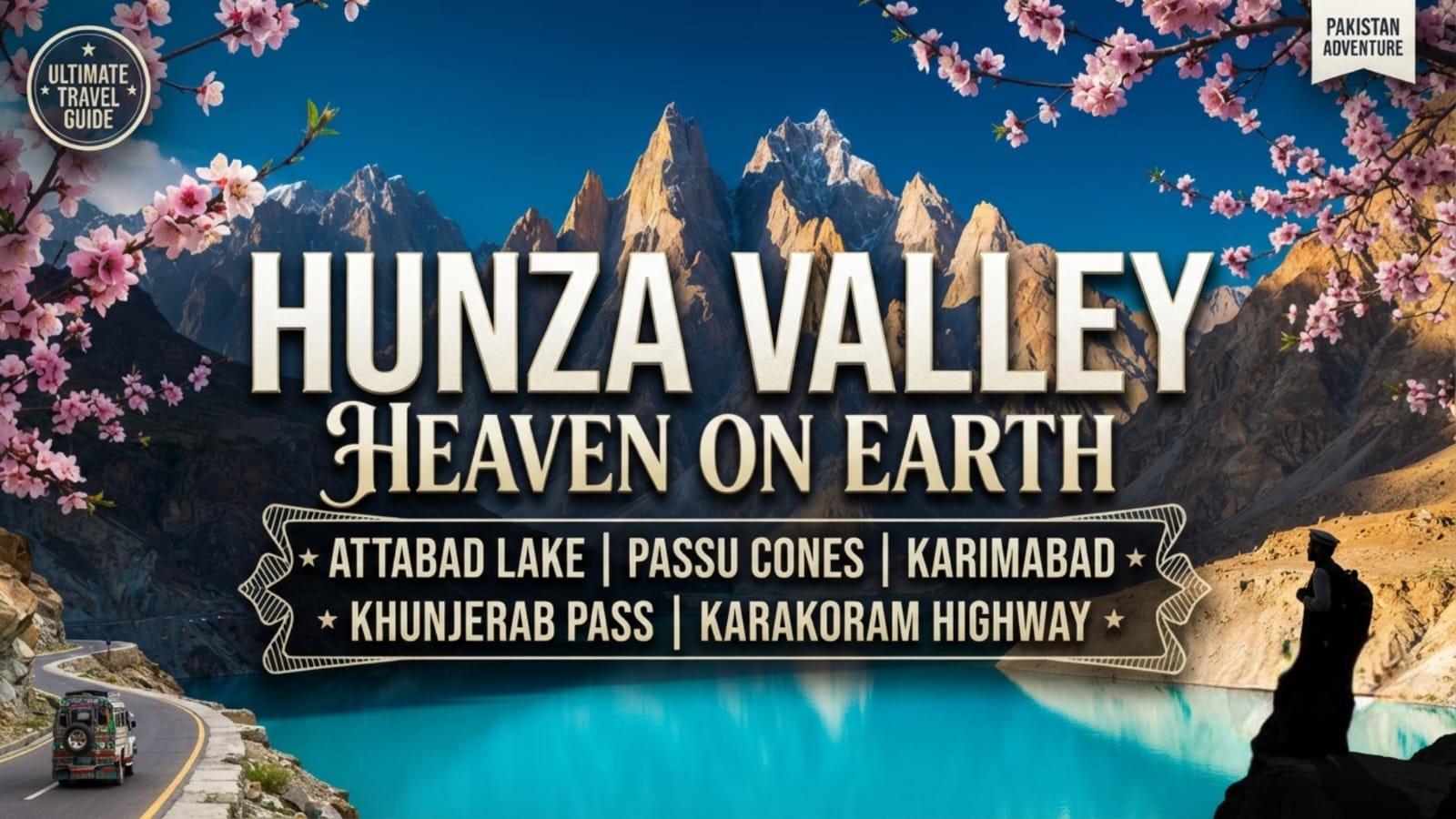
There are places like Hunza that you visit just to cross things off a tourist itinerary. Nestled in Pakistan’s far north, surrounded by snow-crowned giants like Rakaposhi, Ultar II, Diran Peak, and the angular, cathedral-like Passu Cones, Hunza is more than just a picture-perfect place; it’s like entering a completely different dimension of space, time, and profound tranquility.
Throw away business travel brochures and shallow checklists if you are organizing a trip to this fabled alpine retreat. The authentic heartbeat of a valley sometimes referred to as heaven on earth, raw moments on winding cliffside roads, unexpected cups of hot milk tea shared with hospitable elders, and real, boots-on-the-ground human experiences are all the foundation of this tour.
The Epic Journey: Arriving and Getting Around
The road to Hunza is an adventure, a psychological journey and a test of endurance all rolled into one. Most travelers begin in the capital of Islamabad and head north on the legendary Karakoram Highway (KKH)—a road that’s been called the Eighth Wonder of the World and an engineering marvel carved right into the face of the steep rock.
The Road Over Land
Traveling from Islamabad through Besham or Naran (via the Babusar Pass when accessible), beyond the dust-laden plains of Chilas, and further into Gilgit takes approximately 14 to 16 hours of non-stop driving. The path twists beside swirling, milky-turquoise streams and clings to frightening cliff edges where landslides frequently occur as part of nature’s everyday cycle. It may be dusty, rough, and sometimes anxiety-inducing, yet each curve reveals another breathtaking expanse of geography that humbles the human soul.
The Flight Alternative
If exhausting road journeys aren’t for you, you can take a domestic flight from Islamabad to Gilgit (weather permitting, since flights often get canceled due to clouds around Nanga Parbat). Hunza is a picturesque 2-hour taxi or shared van journey from Gilgit airport, welcoming you softly into the valley’s charm.
Local Transport Realities
Inside the valley, shared vans are the affordable lifeblood of local movement between Karimabad, Aliabad, and the villages of Gojal. However, if you want to explore remote, rugged tracks like Hoper Glacier, Naltar, or Chapursan Valley without the stress of rigid schedules, renting a sturdy 4×4 jeep with an experienced, local mountain driver is your absolute best bet. Local drivers know every loose rock and seasonal washout on these historic tracks.
2. Unmissable Beauty and Top Destinations
Hunza is geographically split into Lower, Central, and Upper Hunza (Gojal), with each sub-region offering a radically different landscape, microclimate, and cultural flavor.
Karimabad and Central Hunza
Karimabad, the cultural center of the region, remains the most popular base for travelers from inside and outside the country. Here terraced orchards, stone-paved alleys, and historic homes cling dramatically to steep mountain slopes.
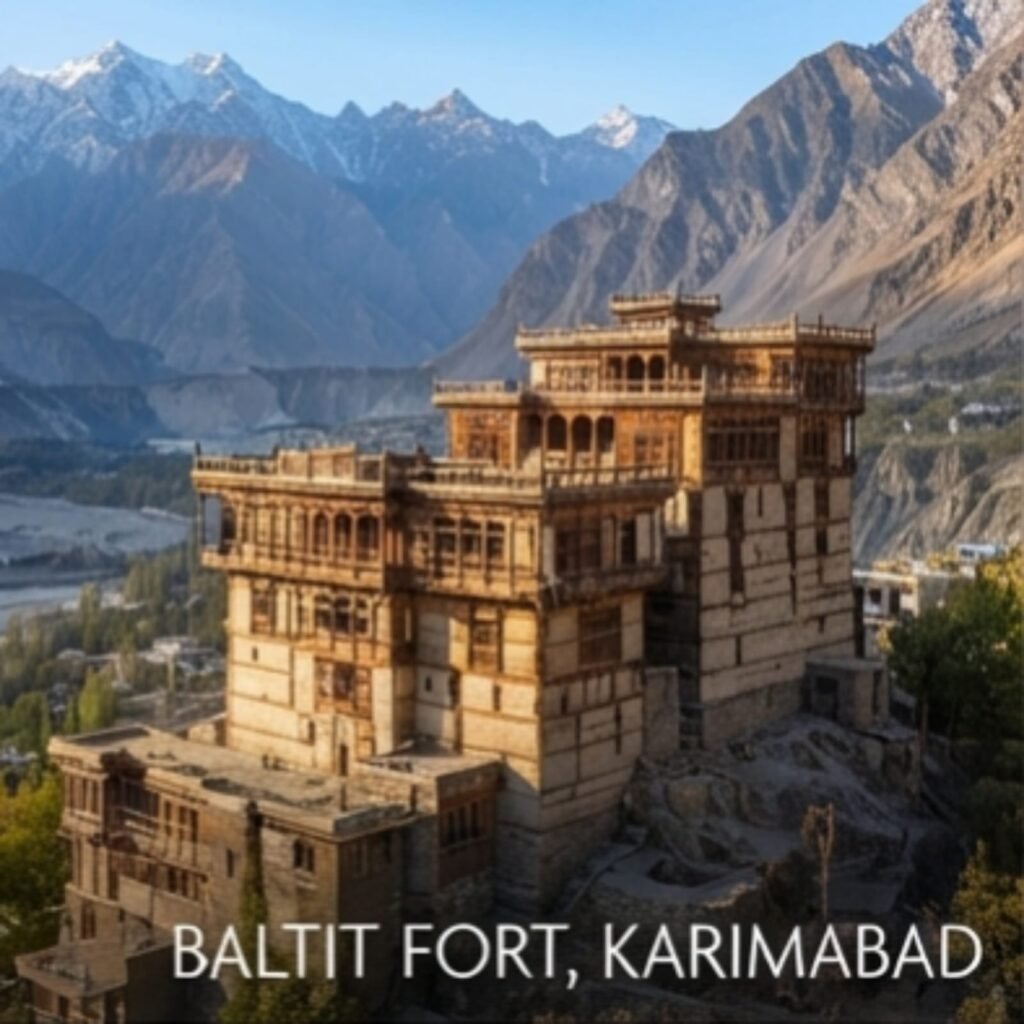
Altit and Baltit Forts:
These ancient fortresses, between 700 and 900 years old, are a testimony to the royal, spiritual, and strategic history of the area. The low-ceilinged timber rooms and steep ladder staircases, and the ancient wooden balconies looking out over the whole valley, put you right there with the ancient Silk Road spirit. You could spend hours listening to local heritage guides and stories of old trade caravans, local rulers, and strategic mountain warfare.
Eagle’s Nest (Duikar):
Perched high above Karimabad at nearly 3,000 meters, this is the ultimate panoramic spot for sunrise and sunset photography. Watch the last golden rays of light set the massive crown of Rakaposhi glowing a brilliant pink, while the deep valley floor far below plunges into cool blue shadow.
Upper Hunza (Gojal)
As you travel north beyond the enormous, striking landslide mark of Attabad Lake—where the waters shine with an extraordinary, bright turquoise from glacial mineral flour—the terrain becomes fiercely alpine, wild, and rough.
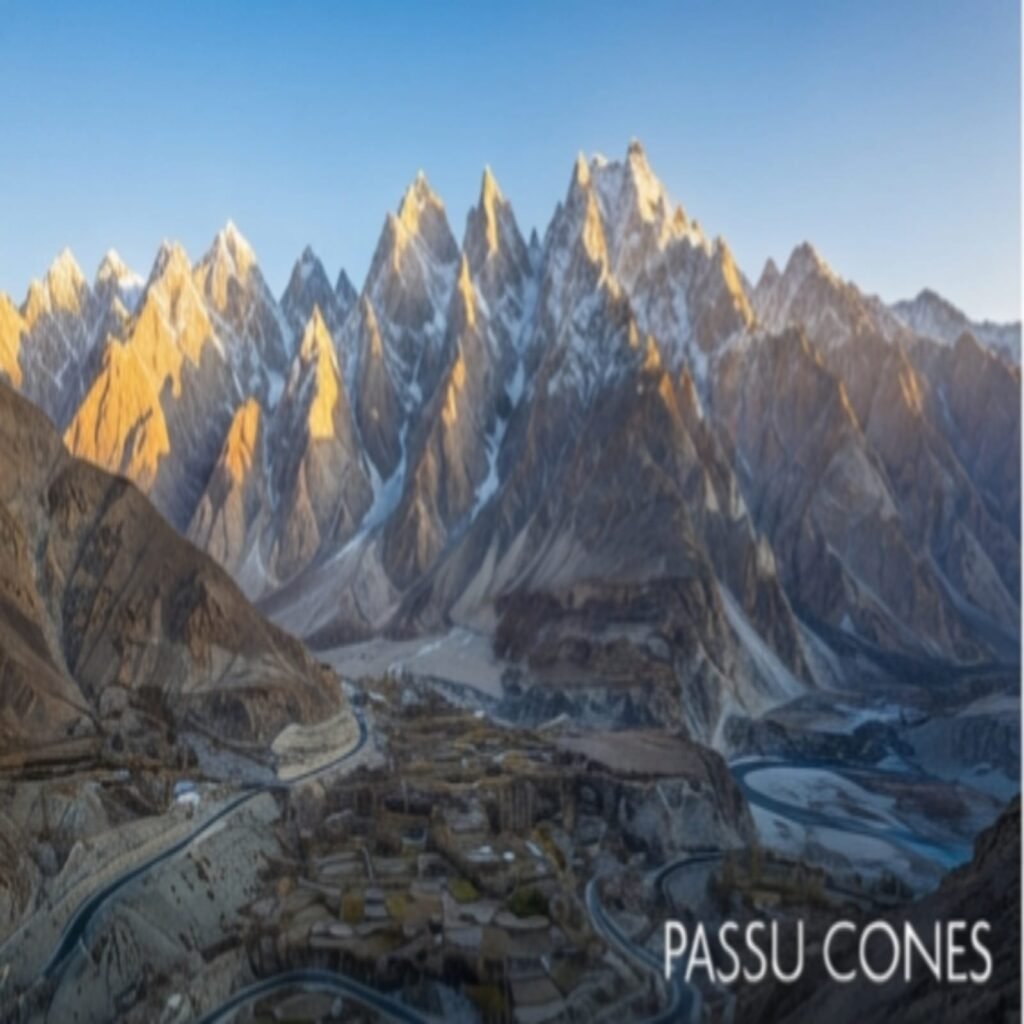
Passu Peaks and Glacier
The finely edged granite peaks of the Passu Cones rise into the sky, resembling natural Gothic cathedrals. A brief, uneven trek to the base of the Passu Glacier allows you to hear the deep, rolling moan of ancient ice moving and melting in real-time, enveloped in complete stillness.
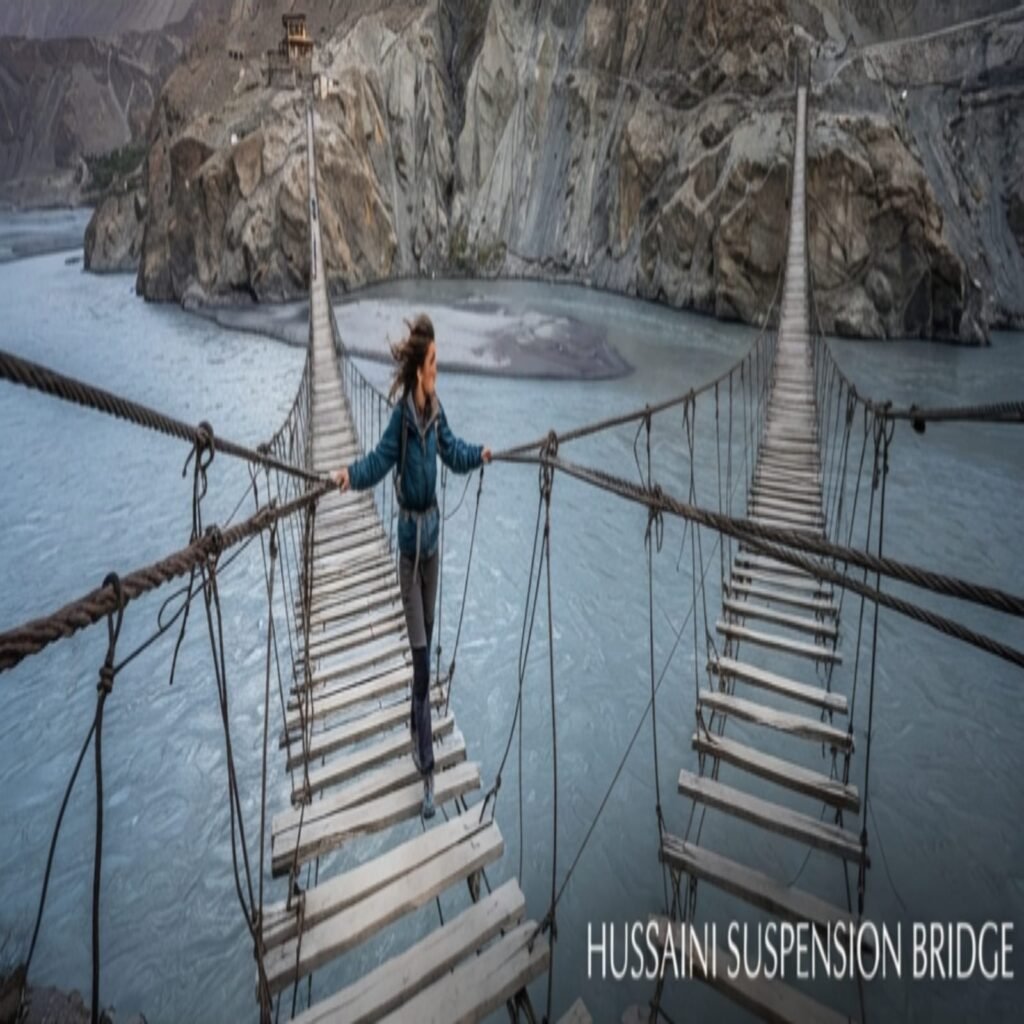
Hussaini Suspension Bridge
Walking across this rickety, widely spaced wooden plank bridge over the roaring, ice-fed Hunza River is a true test of mental nerve. Locals cross it casually carrying heavy loads of firewood or supplie, while tourists usually cross it with white knuckles, trembling legs, and nervous laughter.
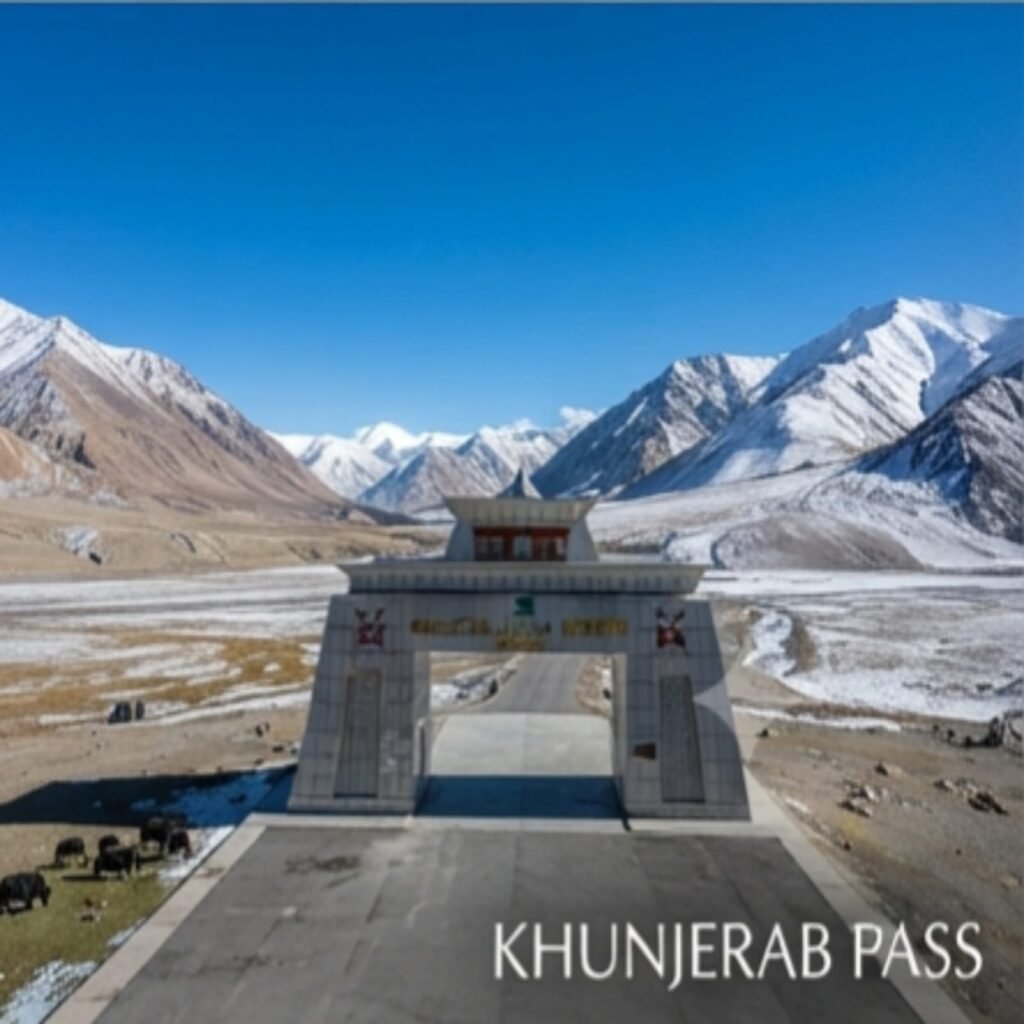
Khunjerab Pass
The final northern endpoint of your trip. At an astonishing 4,693 meters (15,397 feet), it is the tallest paved international border crossing globally, connecting Pakistan and China. Stay vigilant for wild Himalayan ibex and marmots feeding close to the icy roadside, and be sure to wear warm clothing as the wind here pierces right through thick layers.
3. Culture, Society, and Everyday Living
What truly remains in your recollection long after you depart from Hunza isn’t merely the immense size of the peaks—it’s the remarkable kindness of the locals. The local inhabitants are mainly Ismaili Muslims, acknowledged throughout Pakistan for their outstanding hospitality, exceptionally high literacy levels, advanced social principles, and profoundly peaceful way of life.
Language and Communication:
While Urdu and basic English are widely understood by shopkeepers, hoteliers, and youth, the native tongues here are Burushaski in central Hunza and Wakhi in upper Gojal. Learning a simple “Shukriya” (thank you) or a bright, cheerful “Maadoosh” (local greeting) goes a long way in breaking the ice and winning genuine local smiles.
Safety, Respect, and Community:
Hunza boasts one of the lowest crime rates in the entire world. Solo travelers, female backpackers, and families routinely report feeling completely safe walking alone at night. However, because it is a tightly-knit, culturally conservative mountain community, wearing modest clothing, asking permission before taking close-up portraits of elder and respecting local religious sensitivities are deeply appreciated.
4. Culinary Delights: What to Eat in Hunza
Hunza food is simple, deeply organic, and purposefully design by generations past to keep the body warm against the biting mountain chill.
Chapshuro: Often affectionately called Hunza’s answer to a gourmet meat pie, this is a crispy, griddled flatbread crust stuffed generously with finely minced beef, mutton, or organic yak meat, heavily spiced with onions, chilies, and fresh mountain herb.
Giyal (or Gyaling): A traditional breakfast pancake made from wholesome buckwheat or wheat flour, heavily drizzled with locally pressed apricot oil and pure organic valley honey. It is earthy, sweet, comforting, and remarkably high in energy.
Dawdo: A soul-warming noodle soup packed with fresh garden vegetables, small chunks of tender meat, and a lightly buttery, creamy broth that hits the spot perfectly on a freezing autumn evening.
Café Culture & Local Treats: In Karimabad Bazaar, stop by the iconic Café de Hunza for a slice of their world-famous walnut cake paired with local tea. If you travel up to Passu, try a juicy yak-meat burger at Yak Grill, or bite into fresh, sun-warm organic apricots pluck straight off the branch if you happen to visit during the vibrant summer harvest seasons.
5. Where to Stay: Hotels and Accommodations
Whether you are a budget backpacker carrying your entire life in a 40-liter rucksack or a luxury traveler looking for high-end comfort amidst the wilderness, Hunza caters effortlessly to all styles.
For Luxury and Modern Comforts:
Properties like the Luxus Attabad Lake Resort put you right on the water’s edge with floor-to-ceiling glass windows facing the blue expanse. In central Hunza, heritage-style boutique spaces and high-end inns offer pristine modern comfort paired with organic, farm-to-table dining.
For Mid-Range Travelers:
Comfortable, family-run hotels dot Karimabad, Aliabad, and Gulmit, featuring traditional stone architecture, private balconies ,overlooking orchards, and warm host families who treat you more like visiting relatives than paying customers.
For Backpackers and Budget Explorers:
Cozy hostels and social guesthouses in Karimabad and Passu offer budget dorm beds, communal outdoor fire pits, and a vibrant community atmosphere to share travel stories, trade tips, and jam with musicians from around the globe.
6. Practical Travel Tips for Your Trip
Best Time to Visit:
The sweet spot runs from April to October. April brings breathtaking spring blossoms (vibrant pink apricot flowers contrasting sharply against jagged snow peaks), summer brings lush green fields and fruit harvesting, and October delivers legendary autumn foliage with blazing gold and deep red poplar trees lining every path.
Carry Sufficient Physical Cash:
While digital banking, mobile wallets, and ATMs exist in main hubs like Karimabad and Aliabad, they frequently go offline due to regional power fluctuation, internet drops, or winter weather. Always carry enough physical Pakistani Rupees (PKR) for your remote excursions.
Acclimatization is crucial:
You are gaining altitude very rapidly. Take it easy on your first day in Karimabad to avoid the throbbing headaches of altitude sickness, and stay well-hydrated with water and local herbal teas.
Pack Versatile Layers:
Mountain weather is famously changeable and difficult to forecast. Even in the height of summer, a bright, scorching afternoon can change into a cool, breezy evening the instant the sun descends behind a high peak. Consistently include a dependable windbreaker, a cozy fleece, and well-worn, sturdy walking shoes.

Welcome to Guide To Globe 46! I’m passionate about helping travelers explore the world with confidence and on a budget. Here you’ll find practical travel guides, hidden gems, solo travel tips, food experiences, and destination inspiration. My goal is to provide accurate, helpful, and easy-to-follow content that makes every journey memorable and enjoyable. Thank you for being part of this adventure!

Leave a Reply