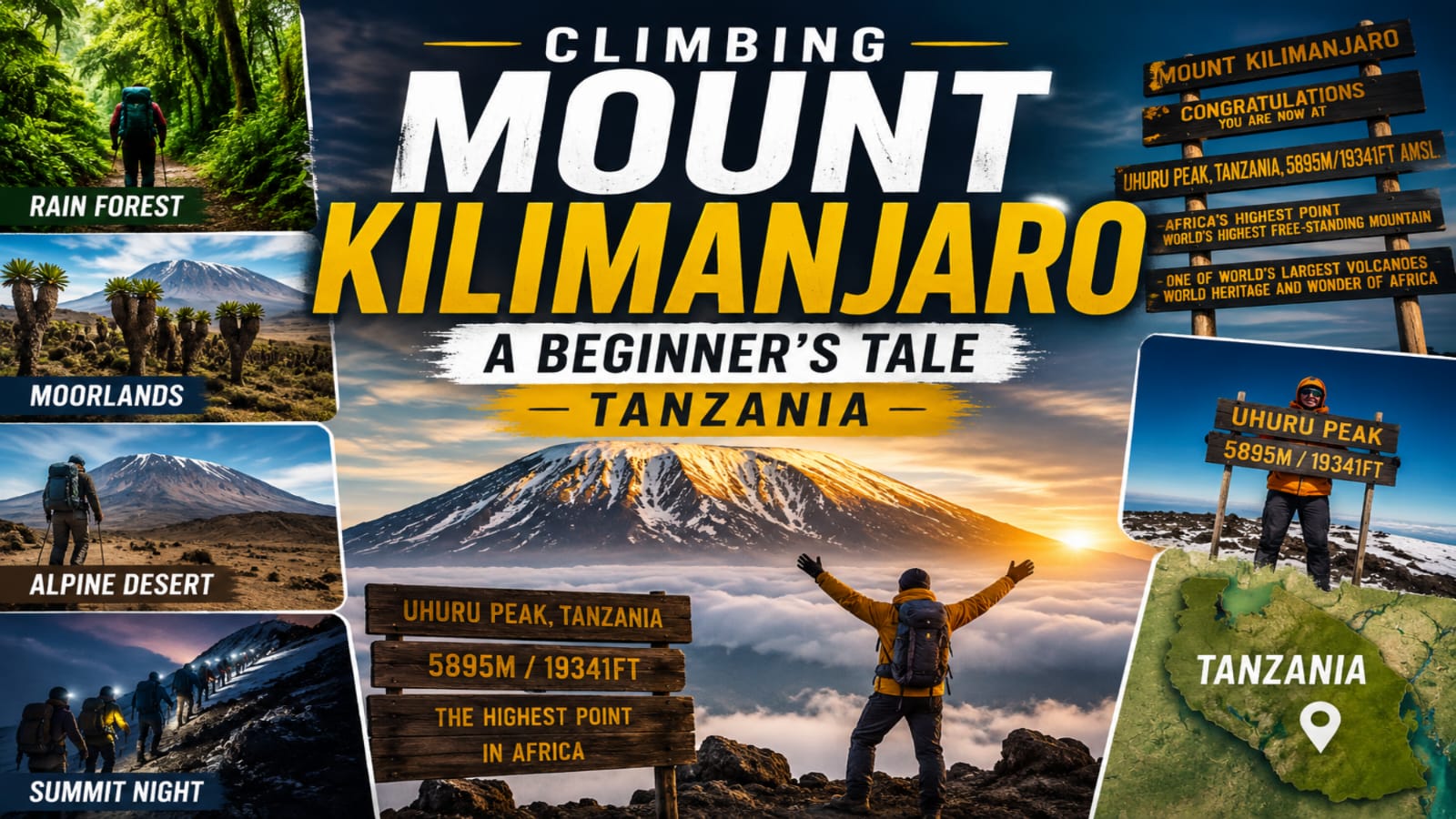
For many travelers, climbing Mount Kilimanjaro is more than just a hiking adventure. It is a personal challenge, a test of determination, and an unforgettable journey through some of Africa’s most stunning landscapes. Standing at 5,895 meters (19,341 feet), Mount Kilimanjaro is the highest mountain in Africa and the tallest free-standing mountain in the world. As a beginner with no previous experience climbing high mountains, I arrived in Tanzania with excitement, nervousness, and a backpack full of hope. Looking back, the journey was far more rewarding than I had imagined.
First Impressions of Tanzania
My adventure began in the town of Moshi, a lively place at the foot of Kilimanjaro. On clear mornings, the mountain rises above the clouds like a giant watching over the town. Seeing it for the first time made the challenge feel very real. The local guides welcomed our group warmly. They shared stories, checked our equipment, and explained what to expect during the climb. Their confidence helped calm my nerves.
Choosing the Right Route
There are several routes to the summit, each offering different scenery and levels of difficulty. For beginners, the Machame Route is one of the most popular choices because it provides enough time for acclimatization and offers incredible views. Our trek would take six days, gradually moving through different climate zones. What surprised me most was how quickly the landscape changed.
Day 1: Through the Rainforest
The first day felt more like a nature walk than a mountain climb. The trail wound through a lush rainforest filled with giant trees, colorful birds, and playful monkeys. The air was humid and fresh. Every step revealed something new. By evening, we reached our first campsite surrounded by thick forest. Listening to the sounds of nature while lying in my tent was a memorable experience.
Day 2 and 3: Into the Moorlands
As we climbed higher, the rainforest slowly disappeared. The landscape opened into vast moorlands dotted with unusual plants that looked like something from another planet. The days became cooler, and walking at a slow pace became essential. The guides constantly reminded us, “Pole pole,” which means “slowly, slowly” in Swahili. At first, I thought they were being overly cautious. Later, I realized their advice was one of the secrets to reaching the summit.
The Challenge of Altitude
The higher we climbed, the thinner the air became. Simple tasks like walking uphill required more effort. Some members of the group developed headaches, while others struggled to sleep. I experienced mild fatigue and shortness of breath, but drinking plenty of water and maintaining a steady pace helped. For beginners, altitude is often the biggest challenge, not the steepness of the trail.
Day 4 and 5: The Alpine Desert
The scenery changed once again. Trees disappeared completely, leaving behind rocky terrain and wide open spaces. During the day, the sun felt intense. At night, temperatures dropped dramatically. The mountain seemed both beautiful and intimidating. Every day brought us closer to the summit but also reminded us how small we were compared to nature. One evening, as the sun set behind distant peaks, the sky turned shades of orange, pink, and purple. It was one of the most breathtaking sunsets I have ever witnessed.
Summit Night
slowly. The final ascent began around midnight. Wrapped in multiple layers of clothing, we stepped into the darkness with headlamps lighting the path ahead. The air was freezing, and every step felt difficult. This was the toughest part of the journey. The combination of exhaustion, cold temperatures, and high altitude pushed everyone to their limits. Hours passed slowly. Then, just before sunrise, we reached Stella Point. From there, the final stretch led to Uhuru Peak, the highest point on Mount Kilimanjaro.
Reaching the Roof of Africa
As the sun rose over the horizon, I stood at the summit staring across a sea of clouds. The glaciers sparkled in the morning light, and the endless African landscape stretched far into the distance. It was a moment filled with pride, relief, and gratitude. All the early mornings, aching muscles, and difficult climbs suddenly felt worthwhile. For a beginner, standing on the roof of Africa felt like proof that ordinary people can achieve extraordinary goals with patience and determination.
The Descent
Descending the mountain was much faster, though my legs certainly felt the impact. Returning to lower elevations brought more oxygen and renewed energy. Back in Moshi, celebrating with the guides and fellow climbers was one of the most enjoyable parts of the adventure. We had started as strangers and finished as friends who shared an unforgettable experience.
Tips for First-Time Climbers
- Choose a route that allows proper acclimatization.
- Walk slowly and conserve energy.
- Drink plenty of water throughout the trek.
- Pack warm clothing for summit night.
- Listen carefully to your guides.
- Focus on one step at a time rather than the entire mountain.
- Maintain a positive attitude, especially during difficult moments.
Final Thoughts
Climbing Mount Kilimanjaro is not just about reaching the summit. It is about the journey through rainforests, moorlands, deserts, and snowy peaks. It is about meeting local people, overcoming personal challenges, and discovering what you are capable of achieving. For beginners, the mountain may seem intimidating at first. But with preparation, patience, and determination, Kilimanjaro offers one of the most rewarding adventures in the world. Long after the climb ends, the memories remain. Every time I look at my summit photo, I remember the feeling of standing above the clouds on Africa’s highest peak and realizing that some dreams are worth every step.

Welcome to Guide To Globe 46! I’m passionate about helping travelers explore the world with confidence and on a budget. Here you’ll find practical travel guides, hidden gems, solo travel tips, food experiences, and destination inspiration. My goal is to provide accurate, helpful, and easy-to-follow content that makes every journey memorable and enjoyable. Thank you for being part of this adventure!


Leave a Reply