There are some places in the world that look unreal even when you are standing right in front of them. Patagonia was one of those places for me. I had seen hundreds of photos before going, but nothing prepared me for the feeling of waking up inside a valley surrounded by jagged granite towers, glaciers cracking in the distance, and winds so strong they almost pushed me off the trail.
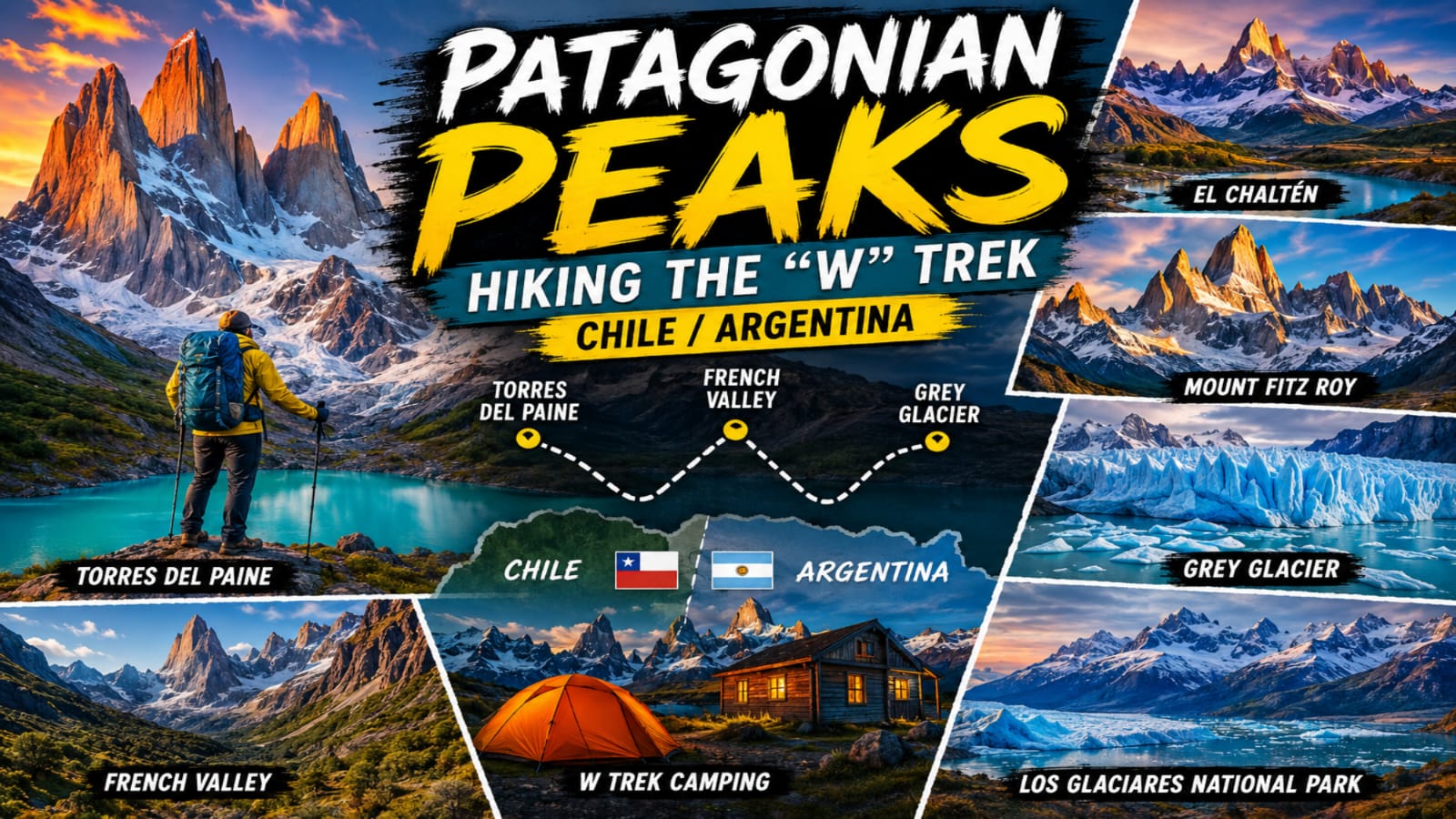
The famous “W” Trek in Patagonia is one of South America’s most unforgettable hiking experiences. Most of the trek is located inside Torres del Paine National Park in southern Chile, though many travelers combine it with adventures across the border in Argentina, especially around Los Glaciares National Park and the mountain town of El Chaltén.Patagonia is wild in the best possible way. It feels untouched, dramatic, and completely alive.
Arriving in Patagonia
My journey began in Puerto Natales, the small Chilean town that acts as the main gateway to Torres del Paine. Backpackers from all over the world gather here before starting the trek. The cafés are filled with hikers checking weather forecasts, renting gear, and comparing blisters from previous trails.The atmosphere itself builds excitement.Getting there takes effort. Most travelers fly into Punta Arenas and continue north by bus. Patagonia sits at the edge of the world, and that remoteness is part of its magic.
Why It’s Called the “W” Trek
The route gets its name from the shape it creates on the map. The trail moves through three major valleys that together form a rough “W.”
The highlights include:
- The iconic granite
- towers of Torres del Paine
- The French Valley
- Grey Glacier
Most hikers complete the route in four to five days, though some take longer to enjoy the scenery more slowly.
Every single day on the trail felt different. One morning I was walking through golden grasslands under bright sunshine. By afternoon, icy rain and fierce wind rolled in without warning. Patagonia’s weather changes constantly, sometimes within minutes.
The Towers at Sunrise
The hardest climb of the entire trek was the final ascent to the Torres viewpoint before sunrise. Hikers usually begin around 3 or 4 a.m. using headlamps in complete darkness.It was freezing cold, and the final rocky section felt endless. But once the first sunlight touched the granite towers, the entire lake below turned orange and gold. Everyone standing there went silent for a moment.That sunrise alone made every aching step worth it.The towers are massive and sharp, rising almost vertically above the turquoise glacial lake. Photos cannot truly capture the scale.
Hiking Through the French Valley
The French Valley was probably my favorite section of the trek. Unlike the towers, which feel dramatic and intimidating, this valley feels peaceful and cinematic.The trail cuts through forests, rivers, and hanging glaciers. At one point we stopped for lunch while hearing thunder-like sounds echo across the mountains. It was actually chunks of glacier ice collapsing in the distance.Patagonia constantly reminds you how powerful nature really is.
The wind here is famous for a reason. Some gusts were so strong that hikers had to lean sideways just to stay balanced. Locals joke that Patagonia teaches you how small humans really are.
Grey Glacier: The Ice Giant
Reaching Grey Glacier felt like arriving on another planet.
The glacier stretches endlessly across the landscape in shades of blue and white. Large pieces of ice float silently in Grey Lake, and every now and then you hear deep cracking sounds coming from inside the glacier itself.Some hikers take kayaking or boat excursions near the glacier, while others simply sit quietly near the shoreline and admire the view.After several exhausting hiking days, that peaceful moment beside the ice felt unforgettable.
Life on the Trail
One thing I loved about the W Trek was the sense of community among hikers. People from different countries share campsites, cooking areas, and stories every evening.You quickly stop caring about luxury. A hot bowl of pasta after hiking all day feels incredible. Dry socks become valuable. Even a simple cup of coffee in cold weather feels like a reward.Accommodation options range from tents to mountain refugios. Many people rent camping equipment in Puerto Natales if they do not bring their own gear.The trail itself is well marked, but it still feels adventurous enough to make you feel disconnected from everyday life.
Crossing Into Argentina
After finishing the Chilean side, many travelers continue into Argentine Patagonia. I spent a few extra days in El Chaltén, often called Argentina’s hiking capital.The mountains there are different but equally stunning. The sharp peak of Mount Fitz Roy dominates the skyline and offers some of the best day hikes in South America.
Compared to Torres del Paine, El Chaltén feels more relaxed and less structured. Trails begin directly from town, and the atmosphere is quieter.Together, Chilean and Argentine Patagonia create one of the greatest hiking regions on Earth.
Things I Wish I Knew Before Going
A few lessons became very clear during the trek:
- Waterproof clothing is essential
- Layering matters more than heavy jackets
- Weather forecasts change constantly
- Book campsites early during peak season
- Hiking poles help a lot on steep descents
- Carry snacks because distances can feel longer than expected
- The best hiking season is usually from November to March, when temperatures are milder and daylight hours are longer.
- Even then, Patagonia remains unpredictable.
Final Thoughts
The W Trek is not just a hike. It is one of those journeys that stays with you long after you leave.
Patagonia has a rawness that is difficult to describe. The mountains feel larger, the skies seem wider, and everyday worries slowly disappear somewhere along the trail.I arrived expecting beautiful scenery. I left feeling humbled by nature itself.For anyone who loves mountains, adventure, and unforgettable landscapes, Patagonia deserves a place at the very top of the travel list.

Welcome to Guide To Globe 46! I’m passionate about helping travelers explore the world with confidence and on a budget. Here you’ll find practical travel guides, hidden gems, solo travel tips, food experiences, and destination inspiration. My goal is to provide accurate, helpful, and easy-to-follow content that makes every journey memorable and enjoyable. Thank you for being part of this adventure!


Leave a Reply