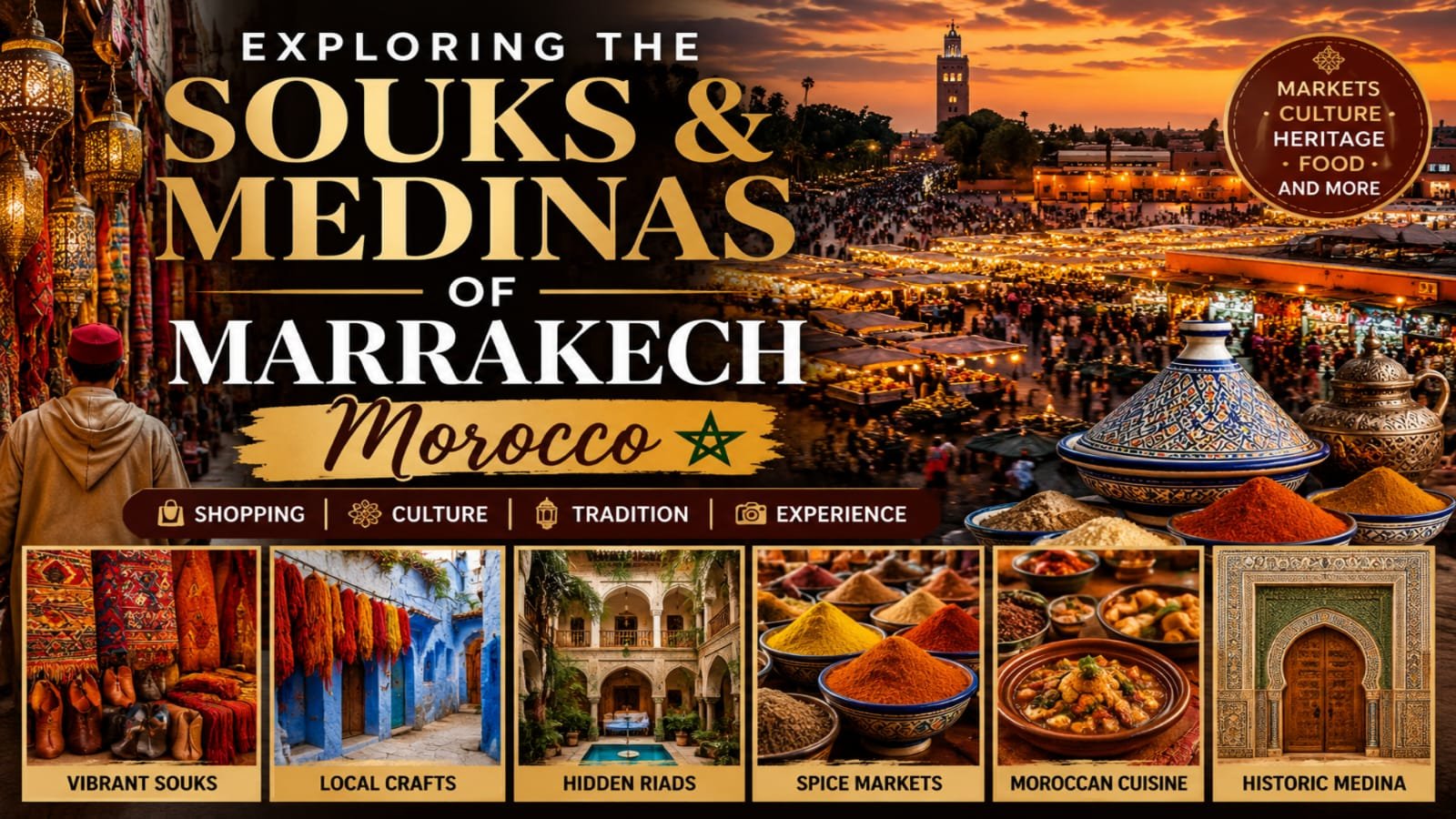
A Journey Through the Heart of Moroccan Culture
The first thing that strikes you about Marrakech is its energy. The city feels alive in a way that few places do. Behind its ancient walls lies a maze of narrow streets, bustling markets, hidden courtyards, and centuries of history. Exploring the souks and medinas of Marrakech is not simply a shopping trip. It is an immersion into Moroccan culture, craftsmanship, and daily life. Whether you are searching for handmade treasures, tasting local food, or simply wandering through the winding alleyways, Marrakech offers an experience that stays with you long after you leave.
Understanding the Medina
The Medina of Marrakech is the city’s historic old quarter and a designated UNESCO World Heritage Site. Founded in the 11th century, it remains the cultural and commercial heart of the city. Walking through the medina feels like stepping into another era. The streets are narrow and often crowded with shoppers, merchants, motorbikes, and carts carrying goods. Around every corner, there is something new to discover, from beautifully carved wooden doors to hidden riads and traditional workshops. Getting lost here is almost inevitable, but it is part of the charm. Many travelers find that their most memorable moments come when they abandon the map and simply explore.
The Famous Souks of Marrakech
The souks are traditional marketplaces where merchants have traded goods for centuries. Marrakech is home to one of the largest and most famous souk networks in North Africa. Each section of the market specializes in different products.
Souk Semmarine
One of the busiest and most popular souks, Souk Semmarine is filled with colorful textiles, leather bags, lanterns, rugs, and traditional Moroccan clothing. The atmosphere is lively and often crowded, making it an exciting place to experience local commerce.
Souk des Teinturiers
Known as the Dyers’ Souk, this area is famous for its brightly colored wool hanging overhead to dry. Watching artisans use traditional dyeing techniques offers a fascinating glimpse into Moroccan craftsmanship.
Souk Haddadine
This section is dedicated to metalworkers. Here, craftsmen shape brass, copper, and iron into decorative lamps, trays, and household items. The rhythmic sound of hammering metal echoes through the narrow streets.
Spice Markets
The scent of cinnamon, saffron, cumin, and countless other spices fills the air. Vendors display colorful piles of herbs and spices that are essential to Moroccan cuisine. Even if you do not buy anything, the aromas alone make the visit worthwhile.
The Art of Bargaining
Bargaining is a normal part of shopping in Marrakech. Unlike fixed-price stores in many countries, negotiating prices is expected and often done with good humor. The key is to remain polite and patient. Many locals view bargaining as a friendly interaction rather than a confrontation. Taking time to chat with shopkeepers can make the experience more enjoyable and may even lead to better deals.
Handcrafted Treasures Worth Discovering
One of the greatest pleasures of exploring the souks is discovering handmade products created by local artisans.
Popular items include:
- Handwoven Berber rugs
- Leather slippers known as babouches
- Hand-painted ceramics
- Brass lanterns
- Traditional Moroccan tea sets
- Argan oil products
- Handmade jewelry
- Colorful textiles and scarves
Many of these crafts are made using techniques passed down through generations.
Jemaa el-Fnaa: The Soul of Marrakech
No visit to Marrakech is complete without spending time in Jemaa el-Fnaa, the city’s legendary central square. During the day, the square is filled with juice vendors, market stalls, and performers. As evening approaches, the atmosphere transforms dramatically. Food stalls appear, musicians begin playing, and crowds gather to enjoy the vibrant nightlife. Sampling traditional Moroccan dishes such as tagine, grilled meats, and harira soup here offers a genuine taste of local culture.
Hidden Riads and Quiet Corners
While the markets can be busy and energetic, the medina also contains peaceful retreats. Hidden behind unassuming walls are beautiful riads, traditional Moroccan houses built around interior courtyards. Many riads have been converted into guesthouses, offering travelers a tranquil escape from the bustling streets outside. The contrast between the lively souks and the quiet elegance of these spaces is one of Marrakech’s most appealing qualities.
Cultural Etiquette for Visitors
Respecting local customs helps create positive interactions with residents.
A few useful tips include:
- Dress modestly, especially when visiting religious or traditional areas.
- Ask permission before photographing people.
- Be courteous when bargaining.
- Carry cash, as many small vendors do not accept cards.
- Learn a few basic Arabic or French greetings to connect with locals. Why Marrakech Leaves a Lasting Impression
Marrakech is a city of contrasts. Ancient traditions exist alongside modern influences, and bustling markets lead to peaceful courtyards hidden from view. The souks and medina offer more than shopping opportunities; they provide a window into Morocco’s rich history and cultural heritage. For travelers seeking authentic experiences, vibrant colors, unforgettable aromas, and genuine human connections, few places are as rewarding as the heart of Marrakech. Every turn reveals a new story, making exploration itself one of the city’s greatest attractions.

Welcome to Guide To Globe 46! I’m passionate about helping travelers explore the world with confidence and on a budget. Here you’ll find practical travel guides, hidden gems, solo travel tips, food experiences, and destination inspiration. My goal is to provide accurate, helpful, and easy-to-follow content that makes every journey memorable and enjoyable. Thank you for being part of this adventure!





Leave a Reply